Travel
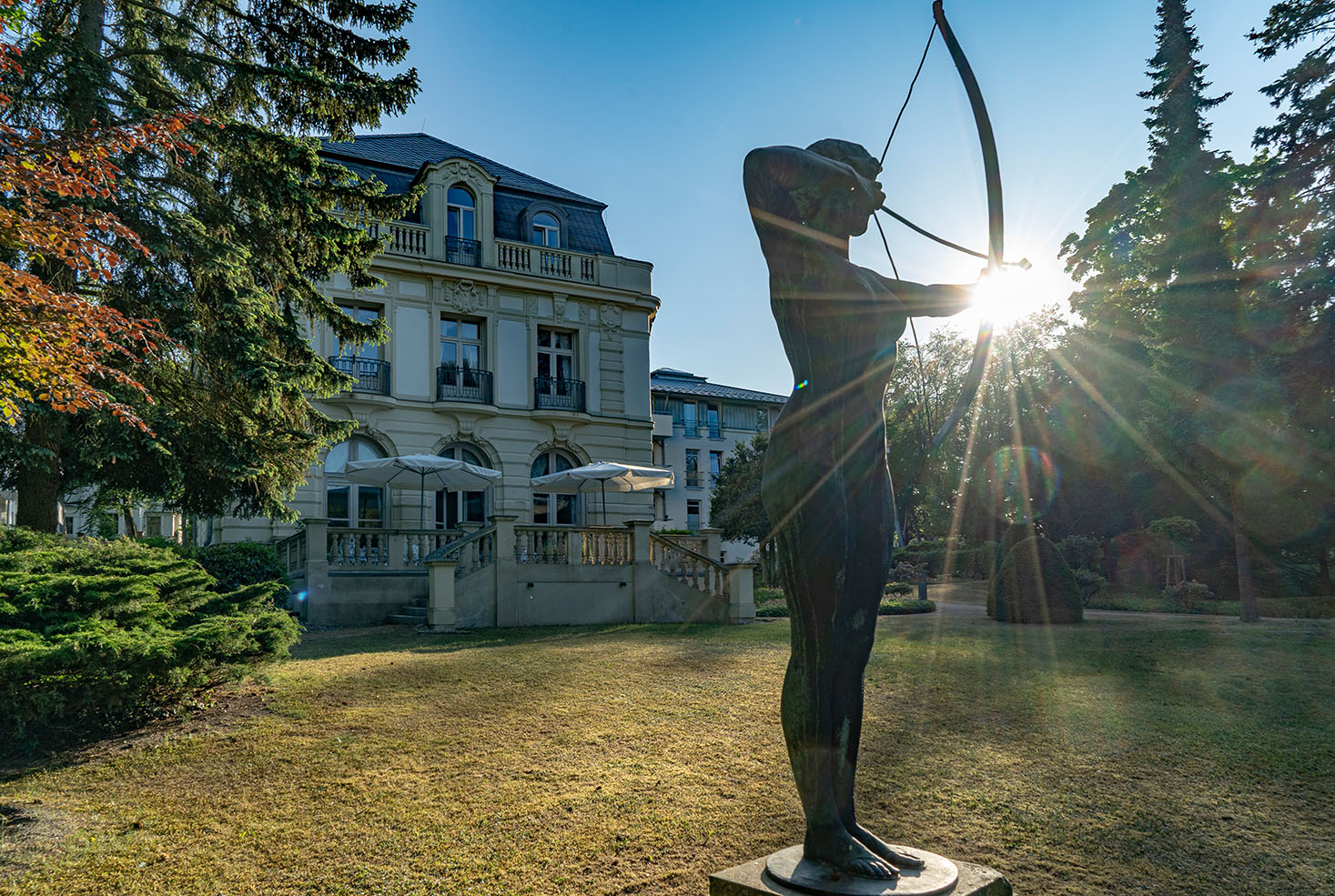
A Quiet Dialogue Between Past and Present
Just steps from the beach, Villa Bleichröder is an intimate 13-room retreat where historic elegance meets contemporary design, surrounded by lush gardens and an atmosphere of effortless tranquillity.
READ MORE →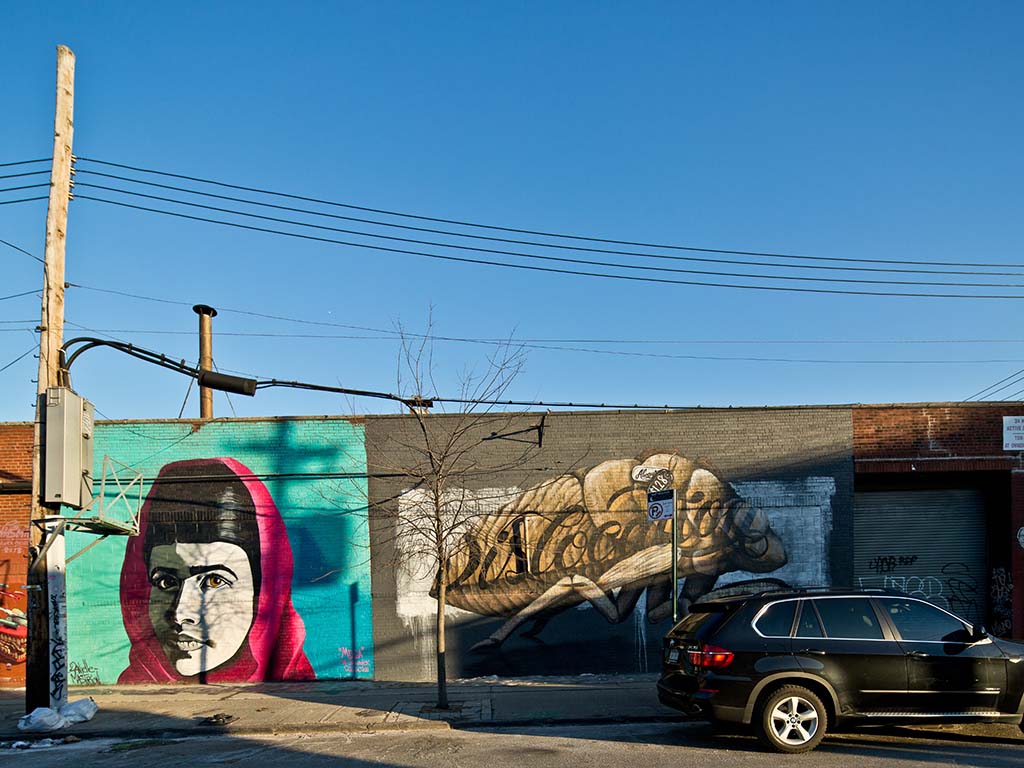
Vibrant murals abound at this open-air gallery in Brooklyn where façades of old factories replace traditional white walls. Imprinted on brick and mortar, inspired artistic visions illuminate a New York City neighborhood’s vast cultural progress. Founded by native Joseph Ficalora, The Bushwick Collective pays tribute to a daring artistic medium and bares testament to positive change. Ficarola’s family, Bushwick to the core—his father owned the steel factory that he now runs—was affected by some of the violence that once ran roughshod over the streets. In the ’70s and ’80s, Bushwick was notorious for its riots and gang warfare. Ficarola’s own father was killed in 1991 during a mugging. With support from longtime residents and gentrifiers, Ficarola mobilized a forward-thinking movement with art as its foundation. He aligned with other factory owners to carve a living, thriving canvas out of the crude cityscape. The Collective’s epic display of street art changes every few months as commissioned artists from around the world come and go. Running from Jefferson to Wyckoff Avenue, respected virtuosos such as Gaia, Hellbent, and Pixel Pancho splash, spray paint, and wheat-paste their oeuvre on manufacturing plants and warehouses once dilapidated and covered in graffiti. Political and social commentaries meet surreal images and monumental portraits. The Collective highlights Bushwick’s tenacious sense of community, signaling a bright future for the area and beyond.
READ MORE →
Cool Escapes interviewed former Parisienne chef Yves Paladeau, how created and owns Ondas Divinas (divine waves), a currently 14 house collection full-service vacation rentals resort in Santana village at São Tomé & Principe. Produced by Martin Nicholas Kunz and Heike Fademrecht in 2020 Music "Future Bass-Beat" by Frederic Storm, "Summer Stream" and "Guitar Dreams" by Bruce Zimmerman More on https://www.cool-escapes.com/news/29005/ Reservations on http://ondasdivinas.com
READ MORE →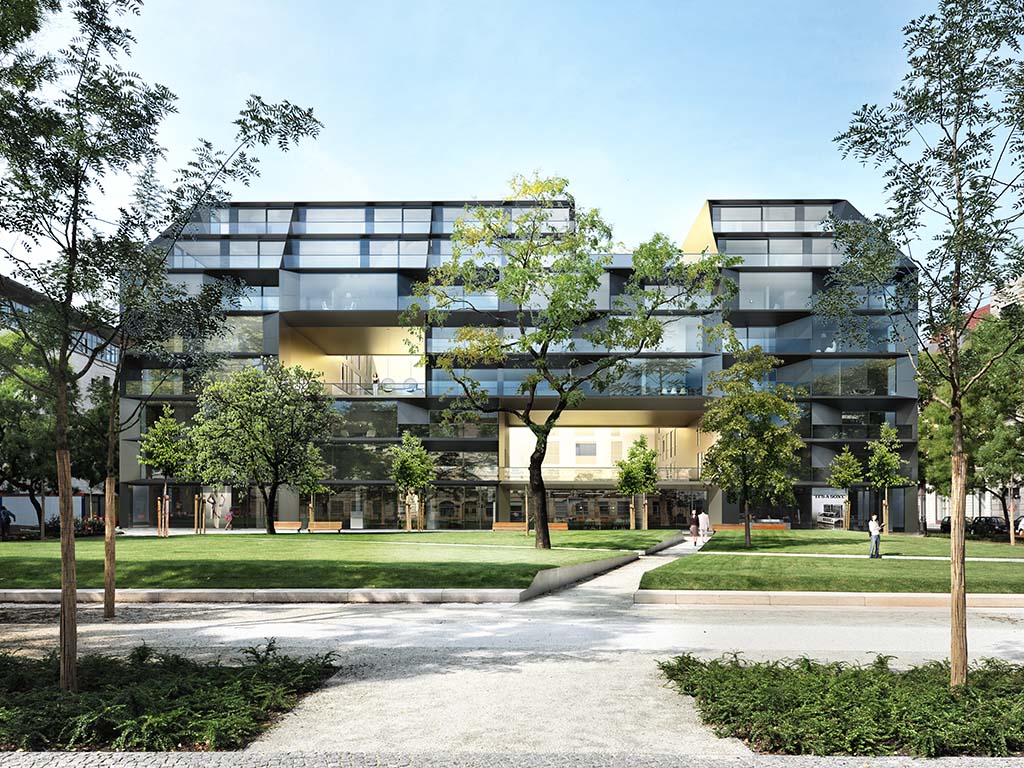
Berlin-Mitte—“there is currently nowhere in Germany that’s more prominent for building a house,” says Annette Axthelm. “The whole world wants to be here.” Although Berlin-Mitte was initially “a wasteland, which had no meaning after the fall of the wall—apart from the historical meaning,” Henner Rolvien explains. The Potsdam-based architects have designed a residential building for the real estate company Ziegert Immobilien. It is currently built at the Neustädtischer Kirchplatz, about 600 meters from the Brandenburg Gate. “It is an honor for us to be allowed to build there,” says Axthelm. When she and Rolvien saw the previously undeveloped property for the first time, one thing was clear: “Here you have the opportunity to build something different. Here, a sculpture can be created—not just a roadside structure.” The building will be called Lux, because light is the main theme of the design. “And there are few sites where you can glorify this theme like this,” says Axthelm. “It’s also about a way of life that this city radiates,” adds Rolvien—a feeling of spaciousness and freshness that this building will capture with floor-to-ceiling windows, a light-filled courtyard and a sophisticated interaction between inside and outside.
READ MORE →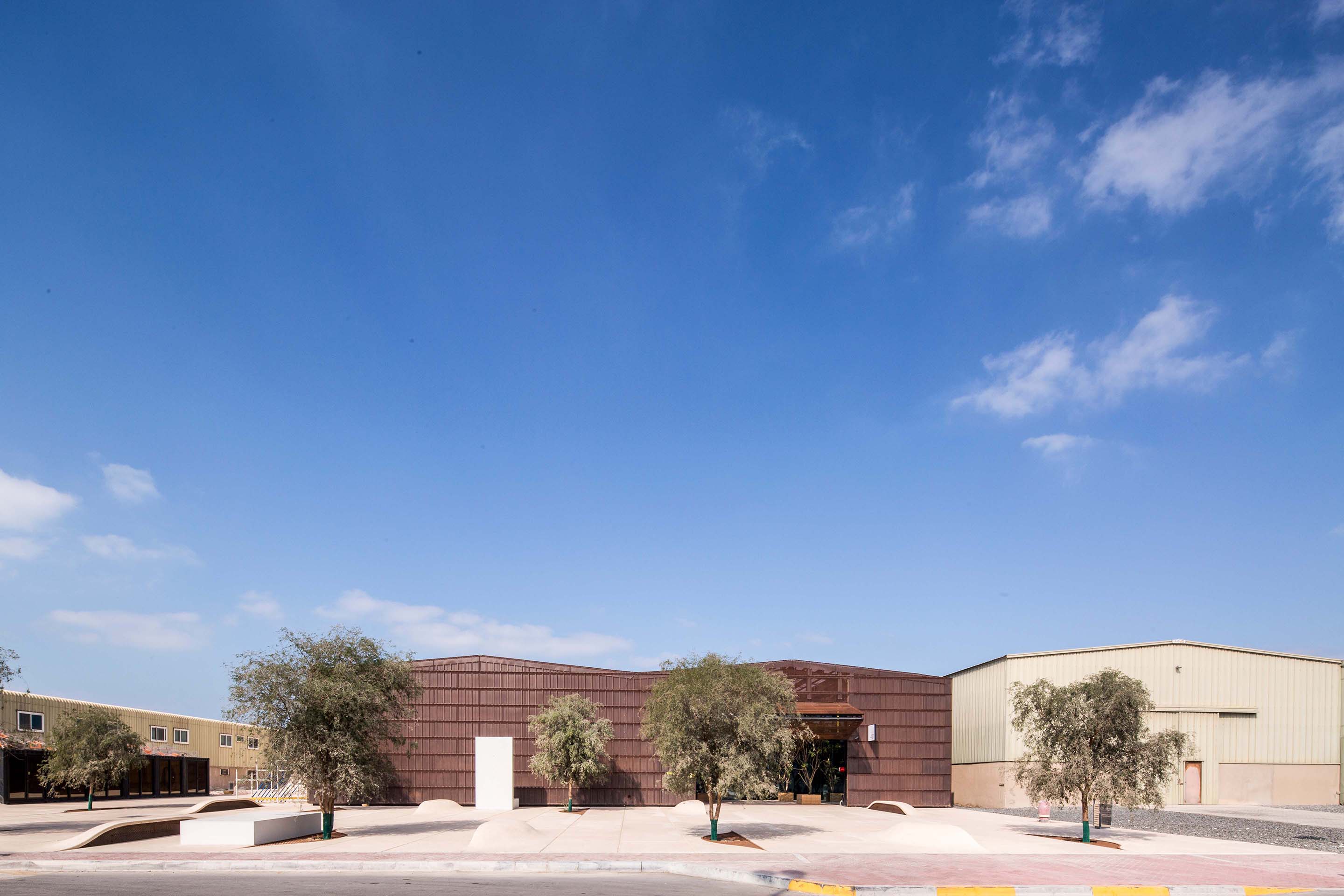
Warehouse421 is a venue for arts and culture located in the historic Mina Zayed district of Abu Dhabi that has been converted from two of the port’s former industrial warehouses. The mission is to celebrate art and culture, design and creativity, performance and music, from artists and designers based in the United Arab Emirates and from around the world, and to let people experience these disciplines in a unique and original space. The latest project is “Wednesdays at the Warehouse” which was created in response to the public’s enthusiasm and support expressed during the launch of Warehouse421. It is a curated program of creative activities and events. Held every other Wednesday evening from 20 January until 27 April 2016. It invites the public to participate in a diverse selection of arts activities including workshops, film screenings, panel discussions and exhibitions. All activities are free to attend. Online registration is required. See more on Warehouse421
READ MORE →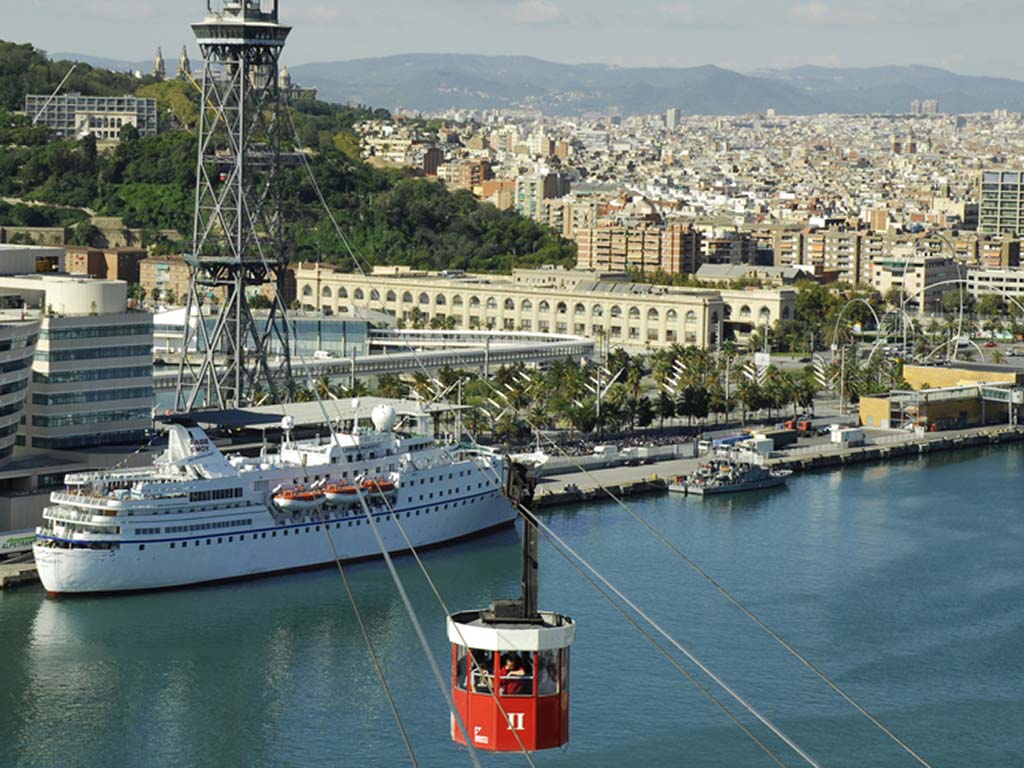
Jordi Canudas lives in the historic center of Barcelona. “The thing I like the most about my neighborhood is that it still belongs to the residents,” explains Jordi. “In the historic center, that’s becoming more and more rare.” He thinks that people actively participating in shaping their living spaces and curating the public spaces according to their own expectations and needs is a type of democratic movement. The designer is a member of the OKAY Studio collective and especially enjoys working with light. He sees the creation of his products—lamps, furniture, design objects—as an adventure with an unforeseeable outcome. Jordi loves Barcelona because of its remarkably multifaceted attractions, like the traditional Mercat de Santa Caterina located in the historic center, and, of course, the beautiful weather. Read the complete article
READ MORE →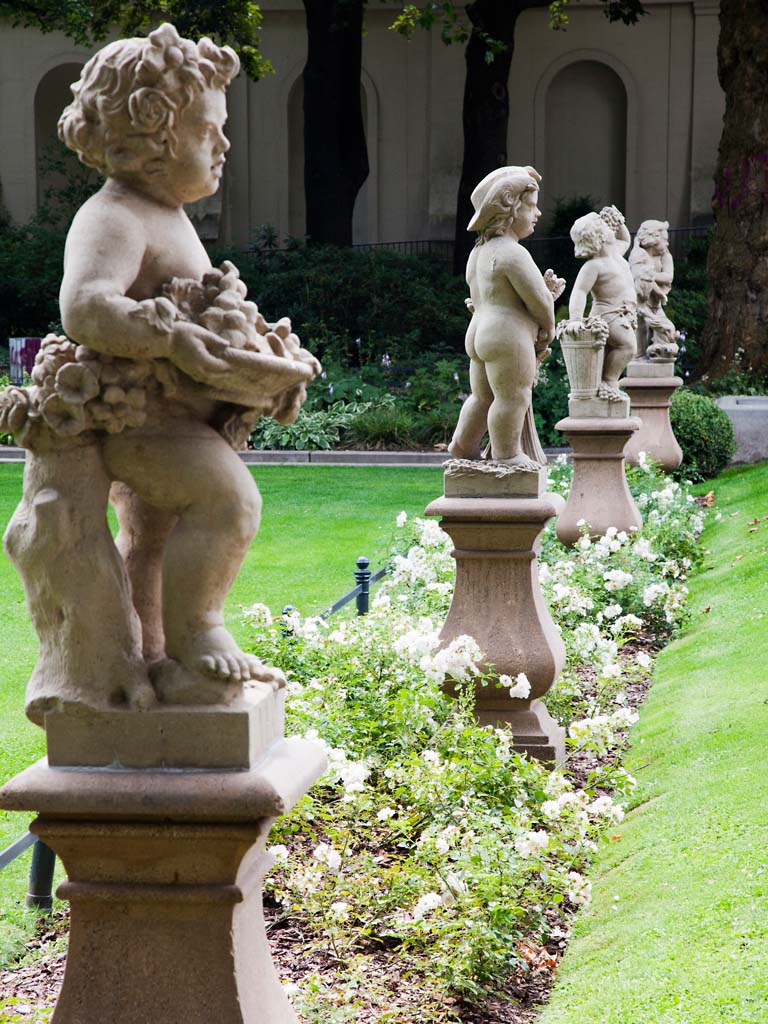
Finally! The trees are blossoming, the temperatures are rising and Berliners are turning their pale winter faces to the sun—and COOL BERLIN is getting out into the fresh air with you too. We will show you the most beautiful parks, beer gardens, flea markets, and places to visit throughout the city. Körnerpark, in the sometimes rough and ready district of Neukölln, is a neo-Baroque oasis. Discover 22,000 plant species at the botanical garden in Zehlendorf—in addition to guided tours, a multitude of events such as concerts, writing and painting courses are also held here. If you want to go further afield, make a trip to the idyllic Pfaueninsel (Peacock Island). Asian delicacies prepared by hobby chefs are available at Thaiwiese in Preußenpark, Wilmersdorf. And afterwards a beer—at Café am Neuen See or at Golgatha on the edge of Kreuzberg’s Viktoriapark, for example. Is it warm enough to dip more than your big toe in the water? Then off to the Treptow bathing ship. Incidentally, yoga sessions are held here on Wednesdays and Fridays from nine o'clock. Anyone who wants a little more action can go to Beach Mitte, where you can climb and play beach volleyball. A stroll through the flea markets on the weekend is always a good idea too: The flea markets at Mauerpark and on Straße des 17. Juni are classics. And then back to Neukölln just as dusk is falling—to watch the sunset from above, at the Klunkerkranich parking garage roof garden.
READ MORE →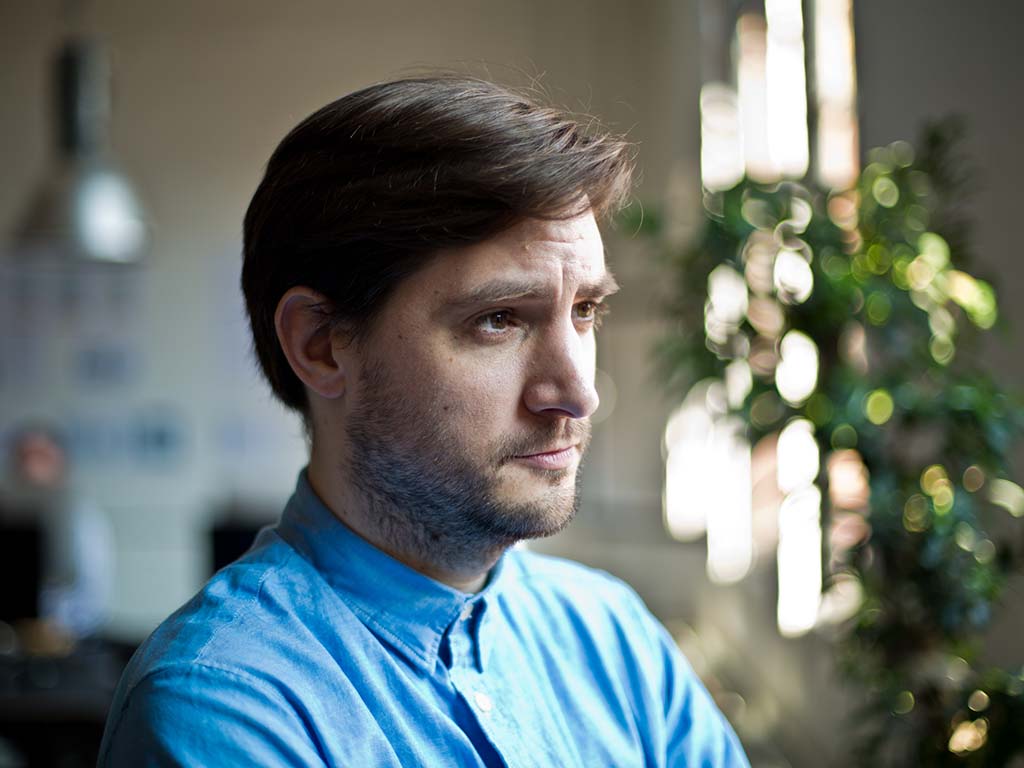
Jeans, button-down shirt and casual, carelessly combed hair: Nalden comes off as inconspicuous. A dozen young people are sitting silently at their computers in his loft-like office space in Amsterdam. “I think the idea to launch WeTransfer has a lot to do with my father,” explains the 28 year old. “He’s a music director and travels a lot. He always showed me pictures from his sailboat, but my mailbox couldn’t handle the amount of data and was always crashing. I sent him instructions for how we should do it but he just couldn’t get it. Too complicated.” Nalden talked with a colleague who had already had experiences in the field of data transfer to simplify the process. They join forces and brainstorm, choosing a name that they found one cheerful, wine-inspired evening. WeTransfer was founded in 2009—as a data transfer service in which users can share images, music, movies, texts, etc. with just the click of a button. Over 20 million downloads each month keep the small start-up afloat. Nalden started blogging at the young age of 16 years. “I initially wanted to keep my friends in the loop, let them know what’s happening and which parties to go to,” he reminisces. “Then I started to add my thoughts.” It didn’t take long before sponsors contacted him, wanting to collaborate. They send him on trips, he gets private cars, meets interesting people and all that is asked in return is that he writes about his experiences. He left school at 18, feeling as if life itself is much more interesting and that he can learn about anything he wants to on the web. Nalden works constantly with diverse artists and designers who construct and reconstruct the WeTransfer website. When he’s not online, he likes to go out, spend time with his friends, or drive his boat through Amsterdam. “I want to find the balance between online and offline,” he says. “Maybe start a family.” And there it is again: this mischievous, quiet smile. On behalf of FALKE footprints Follow Nalden’s footprints...
READ MORE →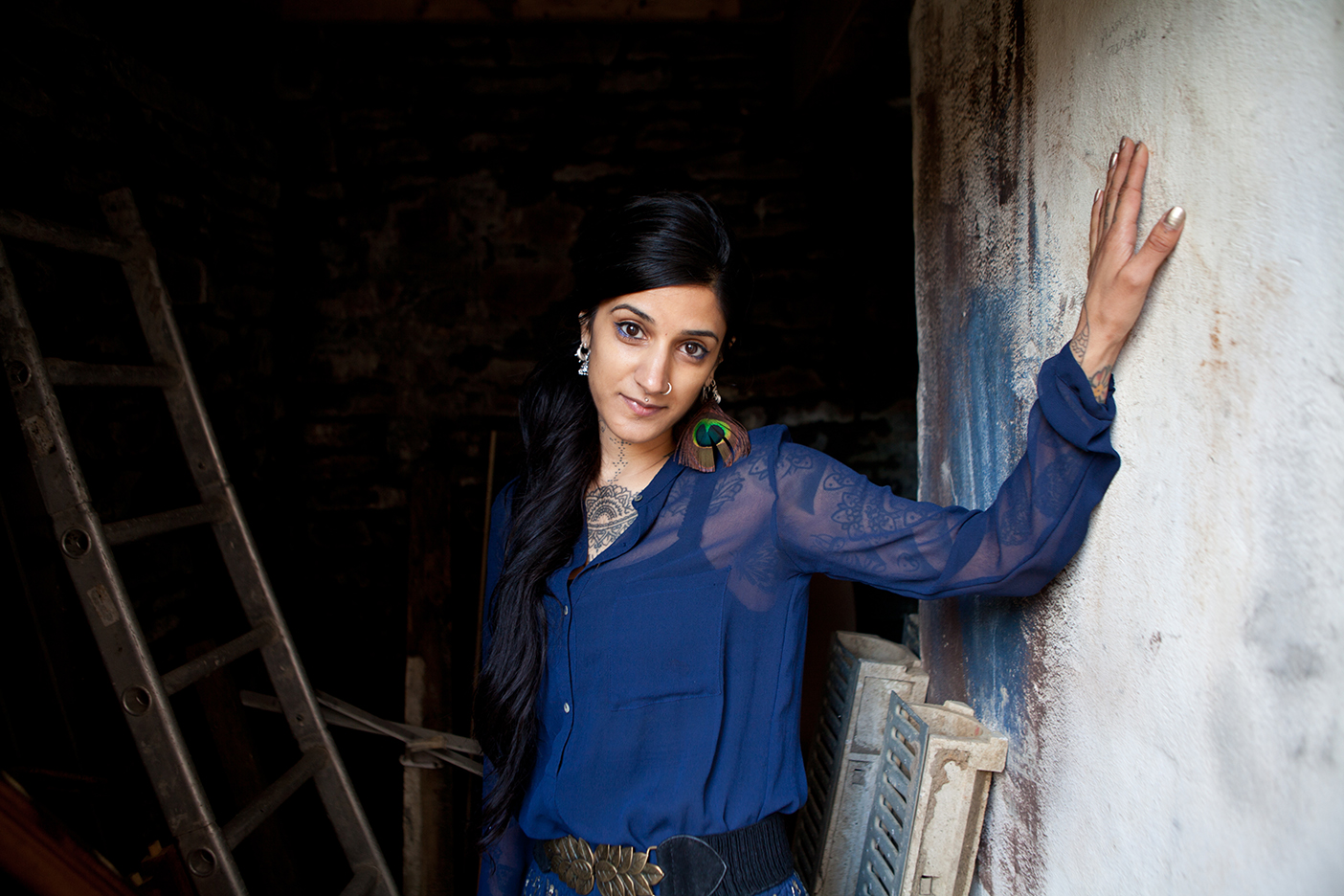
Saira Hunjan is revelling in her current work; pencil on paper. ‘Pencil has given me a chance to draw with the kind detail that I want to produce.’ She has a particular passion for the decorative. ‘Anything that’s handmade I can’t walk past. I have to say, “I’m going to have you in my home!”’ That sense of in-the-moment wonder and attachment is what she wants to create with her work. She’s strongly influenced by India, a country she visits regularly. She’s just returned from Kolkata, where she spent time in Kumartuli, in northern Kolkata, visiting artisans who make clay deities. ‘I specifically went over there to watch them work, talk with them, sit with them and try to learn.’Her current work examines the themes of goddesses, death and beauty. ‘When I was still quite young there was a lot of death in my family. In Indian culture bodies come home and you’re face to face with it.’ Saira explored the rituals of Dia de los Muertos, the Mexican Day of the Dead festival. She was moved by the way that culture celebrates its ancestors. ‘They give offerings, sing and dance. The graveyards are lit up with candles.’ She wanted to bring this sense into the work she was doing. ‘I wanted to try to make death look beautiful.’ A strongly feminine energy became part of the work, which lead her to depict female deities in her drawings. Jo Weissgerber Read more on FALKE footprints Explore Saira's favorite spots in London:
READ MORE →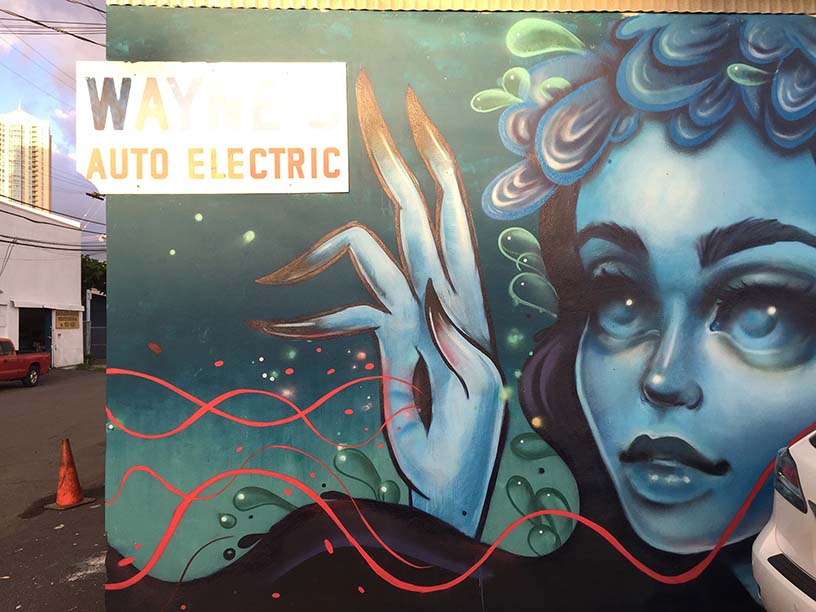
Hawaii’s largest city is perhaps best known for the long white-sand beach at Waikiki and honeymooners. Dwarfed by American metropolises such as New York, Los Angeles, and San Francisco, Honolulu’s creative scene is thriving with designers, artists, aspiring filmmakers, and gallerists. Art enthusiasts should be sure to take a stroll in the areas around Coole Street, Ward Avenue, Kawaiahoo Street, and Pohukaina Street—the perfect trade off for the urban sprawl and commerce. With creative street art and graffiti, it's a completely different side of the city.
READ MORE →
Compared to 20 years ago, the culinary scene has been revolutionised in Zurich. One reason for this is Stefan Tamò. The star chef shows us what makes his city so special. Compared to 20 years ago, the culinary scene has been revolutionised in Zurich. One reason for this is Stefan Tamò. When he took over his first restaurant Josef 20 years ago, he didn’t have a clue how his aesthetics and style would transform one of the most dilapidated areas in Zurich. “This place here was once known as Needlepark,” Tamò tells us. Right here in the district Kreis 5, in the early 1990s, the city government experimented with legalising drugs. The experiment failed miserably. In 1995, everything was shut down and the place was evacuated. For years, nobody came back. Tamò knew this place, just like all the locals, but he alone recognised its potential. In the autumn of 1997, he submitted a proposal to the city for a small restaurant down by the river. “The city approved the proposal in the spring, and we had only two months to get it done. We bought mobile phones and went to work. We had to deal with a total of 49 city officials. In the end, we got them all – that’s how it all started.” Tamò is interested in places nobody else wants to look at – the city’s red-light district, for instance, or old and forgotten industrial buildings. Lily’s sits right on the Langstrasse, the former red-light district in Kreis 4. Lately, the neighbourhood has become a centre for the hip, carefree and youthful. He does what he does because he loves Zurich and its people. He is a quiet pioneer and trendsetter. He reveals his favourite highlights in COOL ZURICH. Get the COOL ZURICH app in stores for apple and android.
READ MORE →
Standing in front of the big screen at Kino 12, a massive multiplex in Zürich-Dietlikon, Yangzom Brauen talks to the audience about her first feature-length movie “Who killed Johnny?”. The movie is set in Hollywood, in Yangzom’s own house in the Hollywood Hills, to be precise. It’s an all Swiss cast with actors playing themselves, in a story is about two screenwriters trying to come up with a story for a movie set in the Hills, in a beautiful house with a pool and a view of the city’s illustrious skyline. Like every good Hollywood flick, it is supposed to be a story of mystery, love and violence. At first the script seems to write itself. But when a body gets tossed from a car in front of the house, the line between imagination and reality blurs. There aren’t many people in the audience – only two, actually. A couple in their forties. “That doesn’t matter”, says Yangzom. She knows that from the theatre. She’d be here even if only one person had come. The “Züri Fäscht”, the country’s largest festival, just started yesterday. It attracts over two million people (almost a quarter of the inhabitants of Switzerland) to downtown Zurich – afterall, it only takes place once every three years. In a short speech in her native Swiss German dialect, Yangzom introduces her lead actress, as well as her production partner, and explains how she produced the film: using her own resources, far from home, yet meant for a Swiss audience. “My goal was to get my film in the cinema, and I’ve done it”. The lights dim, powerful music swells up and the camera flies over the vast expanse of houses in Los Angeles. This is where Yangzom’s story begins. The opening credits roll, and the two people in the audience suddenly burst into laughter after the first dialogue exchange. All of the actors speak Swiss German, and there are no subtitles. Pretty couragious for a film made in Hollywood. Without taking themselves too seriously, the actors portray themselves. “This is the only thing about my movie that isn’t Swiss”, explains Yangzom with a wide grin on her face. The director, her producer and the actors quietly leave the cinema to go on to the next opening on the other side of town, which starts at 22:45, exactly the same time as the huge firework display scheduled for the evening, the highlight of the Züri Fäscht. ..... Read more on FALKE footprints Watch the trailer to "Who killed Johnny" Also watch Yangzom Brauen's brand new short movie "Born in Battle", which beside many others it received the audience award of "Max Ophüls Preis 2016" Discover Yangzom's Zurich recommendations
READ MORE →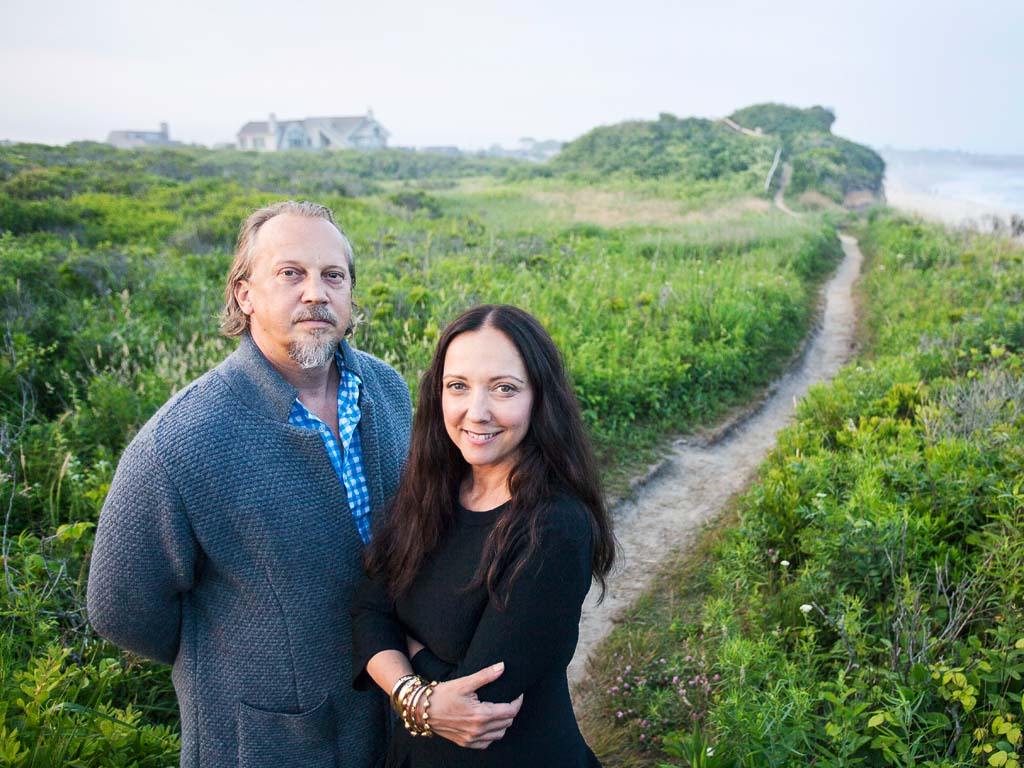
Robin and Stephen work well together. You notice it when the husband-and-wife team talk about modern design. Their answers complement each other without them even being in the same room. “Modern design is at a point that it’s old fashioned,” says Stephan. “I really feel that way. It’s a hundred years old; it’s tired.” Robin elaborates, “Modern design right now is about every day erasing the past. And we cannot continue to erase the past. We cannot take all the objects that are from yesterday and remove them.” “We don’t want to live in white boxes anymore,” explains Stephen. “We always say: the future is dirty! The future has to be dirty!” adds Robin with a smile. „Modern design right now is about every day reason the past. And we cannot continue to erase the past. We cannot take all the objects that are from yesterday and remove them.“ Born in New York, Robin worked many years in film as a visual consultant for Martin Scorsese. Stephan, a Malibu native, is a designer, photographer, painter and illustrator – a creative multi-talent. Their paths crossed in the ’90s in Hollywood – and their journey continued from there. They were in charge of the production design for over 20 films before founding their own company (named for their maternal grandfathers): Roman and Williams Buildings and Interiors. Hollywood picked up on the pair’s talents quickly. Ben Stiller, Kate Hudson and Gwyneth Paltrow have all had interiors designed by Robin and Stephen, and they’ve designed many different locations in New York, such as The Standard and it’s iconic nightclub The Boom Boom Room. Their house in Montauk, surrounded by lush greenery, exemplifies their design philosophy. Artwork meets furnishings and living accessories from global travels, radiating an air of timeless elegance. Paintings from various artists adorn the walls, there are shells on the antique wooden table and the flower arrangements look like they have just been picked from the garden – everything is meant to feel comfortable. Artwork meets furnishings and living accessories from global travels, radiating an air of timeless elegance. “Learning to be as brave with the clients as you are in your private life” is what they learned from this house, says Stephen. Robin, sitting next to him, can only agree: “Yeah.” Read more on FALKE footprints Explore Robin's and Stephen's hidden gems in New York:
READ MORE →
Laëtitia Dana enchants the hearts of Paris with her soulful voice. She’s a young musician who turns the city’s pulse into the beat of her songs. “A young singer needs to be strong and persistent. It’s no straightforward path. It’s complicated. People aren’t going to be jumping to get at you. Never sell out to the commercial stuff, whatever you do! Even if people don’t believe in what you’re doing, as long as you believe in it, you can convince anyone”. Laëtitia is a strong woman. I think she could do anything with her confidence. Thank God she chose music. Who told you you can sing first? “It was my mirror. Then one day my mom heard me and said, ‘Pas mal…not so bad’.” Laëtitia’s mother takes her to a talent show where the five-year-old sings a Creole song with lots of whooping and rhythmic sing-song: “AIihhhhiiiiaaaaiiihhhhh”. Laëtitia takes a deep breath, and suddenly transforms herself. As she lets out her wonderfully silky, soulful voice, her entire body starts to sway. “I always compose in French first. It’s very intimate. I can put my darkest thoughts on paper – they’re between me and my white page. Then I try to formulate the same thoughts in English and I show it to some people, ask them how they like it, do some corrections, et voilà!” Laëtitia comes from a humble background and, like other girls, needs to find work after finishing school. She takes a job as an office worker and keeps singing. “I used to sing on all of my friends’ voicemail. One day an agent heard my voice”. Laëtita gets her chance – she’s booked as the “opening act” for Michael McDonald at the Casino de Paris – a giant concert hall. But Laëtitia doesn’t find anybody who will release her music, so she takes it into her own hands. She founds her own label, FRESH RECORDS. She finances her own studio time, creates her own CDs and sells them herself, earning the money she needs with live performances. After just a few months she’s able to release her new album. Facebook and her growing network do the rest. “Pharcyde’s agent heard of me and asked if I would perform as an opening act for them at the LITTLE CASINO – which was huge. The crowd went nuts. After that we went tour as the opening act for Chestnut in all kinds of French cities, and the audience loved my music. After that, we were offered a contract”. Then Laëtitia starts rapping. Her syncopated singing voice breaks in, as she floats along with the throbbing beat. She’s beat boxing – her entire body vibrating to a deep rhythm, free, without any instrumental accompaniment. Rhythmic breaks push the beat forward, a strong pulse in her ribcage that thumps like a heartbeat. And suddenly it’s there, that big feeling, the excitement that entrances thousands. “When I’m singing, even if I’m singing about dark subjects, like in the song MEANNESS & PROFITS, there is always a touch of optimism. It’s important for me that, at the end of each of my songs, people in the audience have a smile on their faces. I’m an angel that smiles”. Watch the complete video portrait ! Laëtitia Dana showed us her favorite place in Paris ....
READ MORE →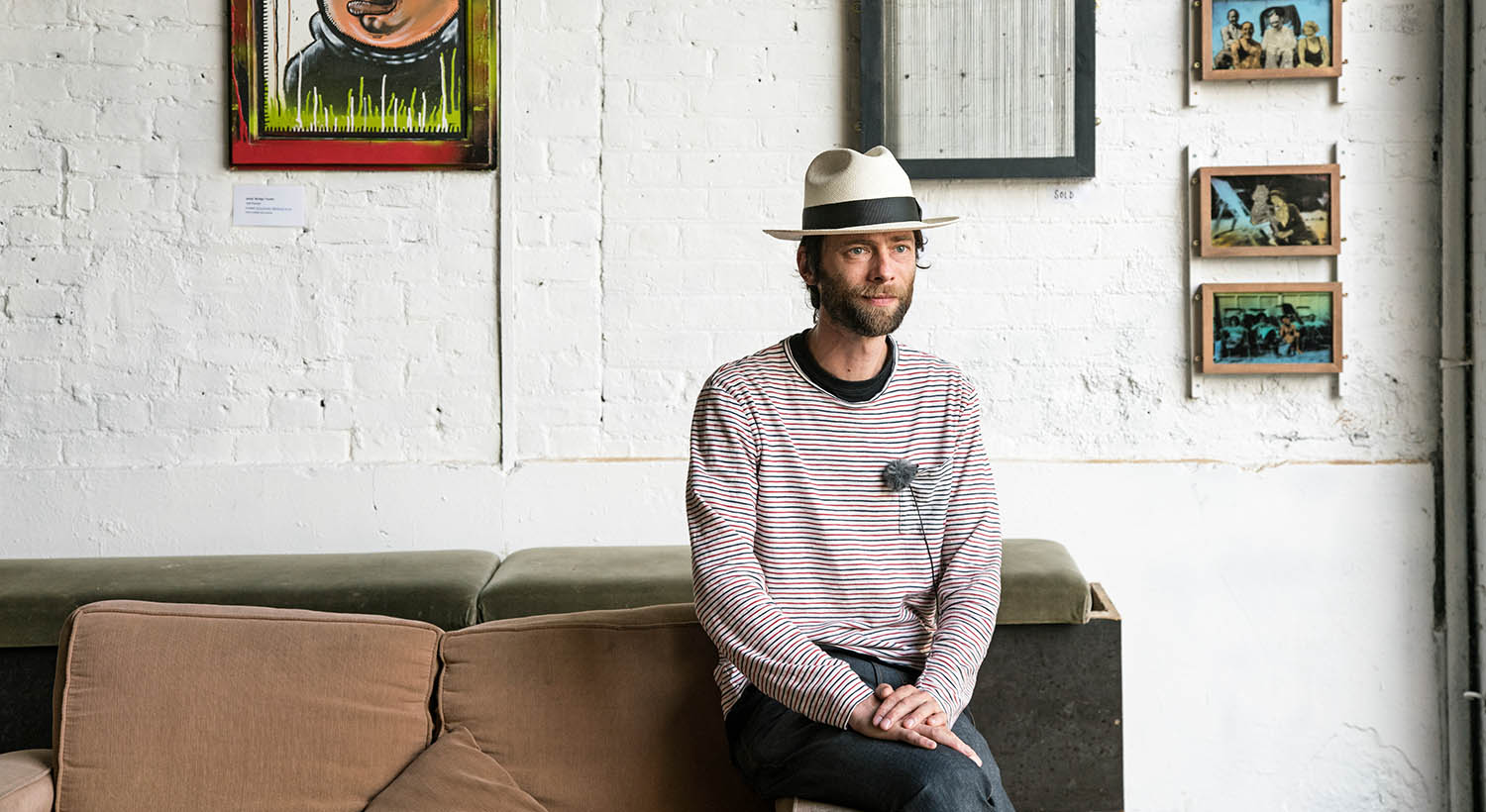
Moritz Waldemeyer is a humble man. So much so that we almost needed to remind him of just how influential his work has been around the world. We waited quite some time – in vain – for him to drop some names, which is why I’m doing it on his behalf: Mercedes-Benz, Audi, Swarovski, Bombay Sapphire, U2, Kylie Minogue and Rihanna. All these are just a few of his clients. He creates bespoke visual installations and costumes using a common element: light. Born in 1974 in Halle, Germany, Moritz left for London to study engineering at the renowned King’s College. Upon graduating, he went to work for Philips in the Netherlands for about three years before heading back to London. It was here that he found his passion for experimenting with light. "Suddenly, I was considered a pioneer." Moritz’s technical background gave him a slight advantage after he got started. Anyone looking to work with flexible lighting – art directors, musicians, architects, designers – began to go to him. Tiny battery-powered LEDs were suddenly put on clothing or the stages of rock concerts, made into giant installations for architecture or advertising or were put on display themselves as artwork. read the full story on the FALKE footprints website
READ MORE →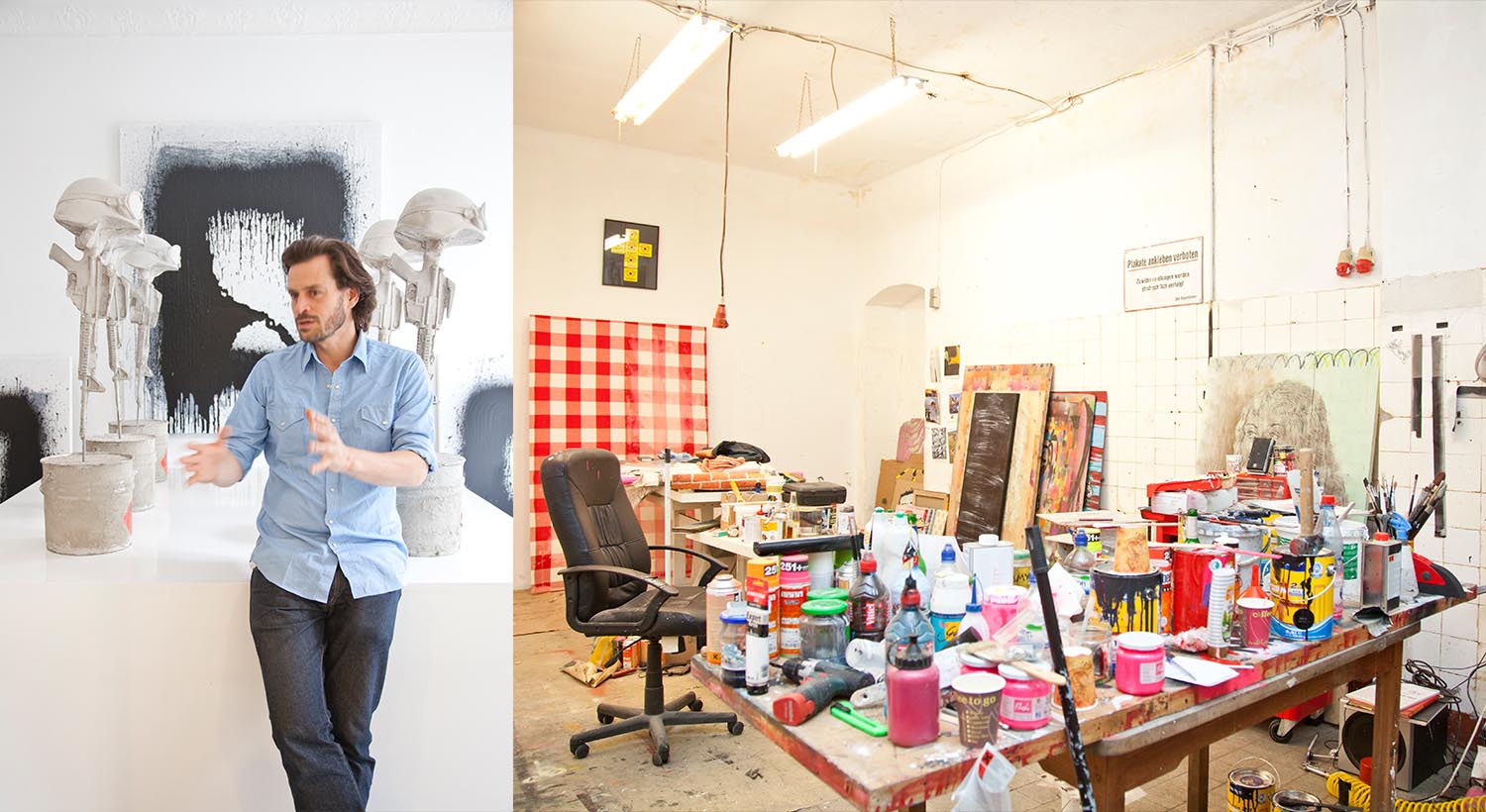
Outside to Inside
Street art in a gallery - isn't that something of a paradox? Marc Scherer doesn't think so. In his ATM Gallery in Kreuzberg he provides a platform for art from the street - and also gets his own hands dirty...
READ MORE →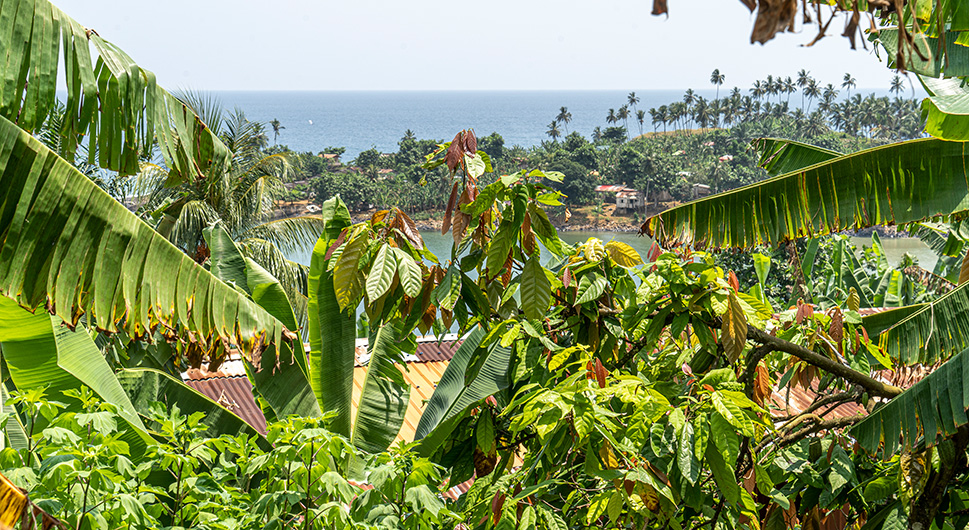
Greener Act is the first mobile app that allows travellers to participate in local projects and support local causes when travelling the world. By using Greener Act participants and travellers will be able to engage with local organisations and start measuring their own positive impact and simultaneously improve their sustainable profile. By creating Greener Events and Greener Causes, organisations can raise local awareness and accomplish the following 2 objectives: 1) Give travellers the opportunity to discover, explore and engage with the local community; supporting sustainable and socially responsible actions and activities that benefit the local culture, environment and development. 2) Provide organisations a platform to promote and showcase their good practices; create events and causes and allow the traveller to plan from a reliable source of information, their transformative travel experience. Greener Act allows travellers and organisations to participate, promote and share activities through social media, increasing the global awareness for the need to improve the livelihood of local communities, protect the natural environment, whilst contributing to the sustainable development goals of the United Nations. More information and participation on www.greeneract.com Download app for IOS or for Android
READ MORE →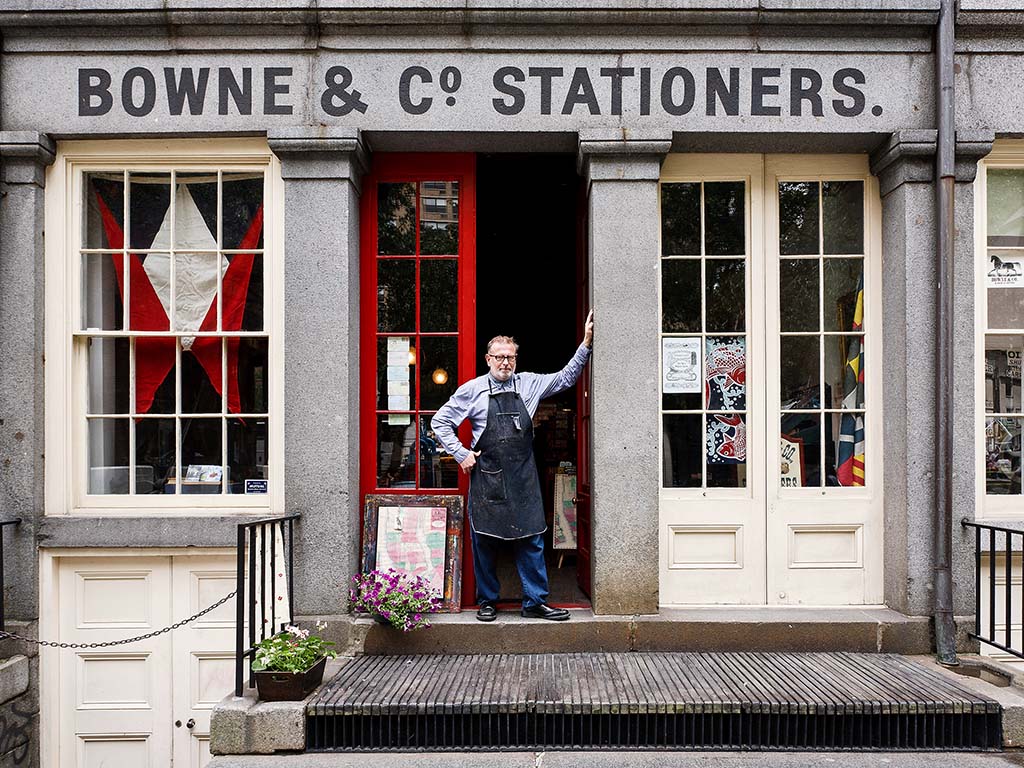
Located in the historic port district of downtown Manhattan, the South Street Seaport Museum preserves the history of the site and tells the intimate story of the port and its symbiotic relationship with New York. The museum resides in the Schermerhorn Row Block, a stretch of 12 houses built by Peter Schermerhorn, a Dutch merchant who ran a ship supply company in the post-Revolutionary War period. The four-story houses, built in a utilitarian Federal style, were heavily frequented as commercial spaces during the various heydays of the port. Completed in 1812, the Schermerhorn Row Block has survived until present day in near perfect condition, despite economic highs and lows and numerous natural disasters. Within the walls of this living artifact, the museum exhibits a collection of paintings by well-known maritime artists, scrimshaw, trade cards, 19th-century figureheads, and other works related to overseas and mercantile pursuits from the 18th to 20th centuries. Walking tours conducted by museum volunteers take the visitor onto cobblestone streets and under the shade of buildings that have stood firm for the last 200 years. Representative of mercantile architecture, in Federal, Georgian, and Greek Revival styles, the interiors of these stately buildings witnessed major formative commercial and social activity. If not for the South Street Seaport Museum, and particularly its founder, Peter Stanford, a Brooklyn native and naval veteran of World War II, the area would not be the center of cultural exchange that it is today. Having returned to its former glory, the port is a testament to the evolution of a city and a country. Established in 1967, the South Street Seaport Museum has brought tourists, retailers, New Yorkers, musicians, and artists to experience a taste of old New York. Even after Hurricane Sandy, when the Schermerhorn Row Block flooded, the museum continued its duties of educational initiatives at Bowne & Co. Stationers, a printing press established in 1775, and aboard two of its ships, the Ambrose and Peking. Around the corner from Bowne, the Maritime Craft Center, run by woodcarver Sal Polisi, gives visitors a taste of old-world building. Weathering the storm like an armada, the museum’s fleet of seven ships—some of which are over a century old—sits harbored in the port. Visitors can board these multi-purpose vessels and schooners, which have been kept in pristine condition. One of them, the Pioneer, built in 1885, still sails around Lower Manhattan and is open to visitors. All proceeds from sales, donations, and special events hosted in any of the museum spaces benefit the programs of the South Street Seaport Museum and contribute to keeping this national institution riding high across the waves of time.
READ MORE →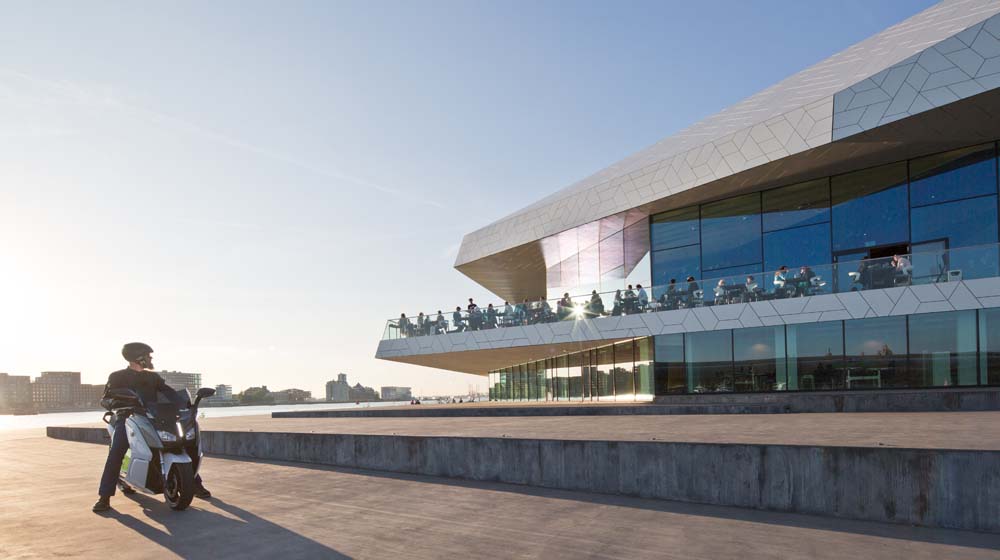
“Maybe I should set up my bed here”, says Martijn van Ooststroom, beaming from ear to ear. By ‘here’, the art historian means his place of work, the Stedelijk Museum 's-Hertogenbosch. It is clear to see that the 46-year-old has turned his passion into his profession. Even as teenager, he enjoyed going to the museum. At 16, he made the decision to study art history. As a marketing and communications manager for the Stedelijk Museum, he is now also infecting others with his enthusiasm for contemporary art.Martijn is just as enthusiastic about the cultural variety of Amsterdam. He showed us his favorite galleries, café, fashion stores and museums.
READ MORE →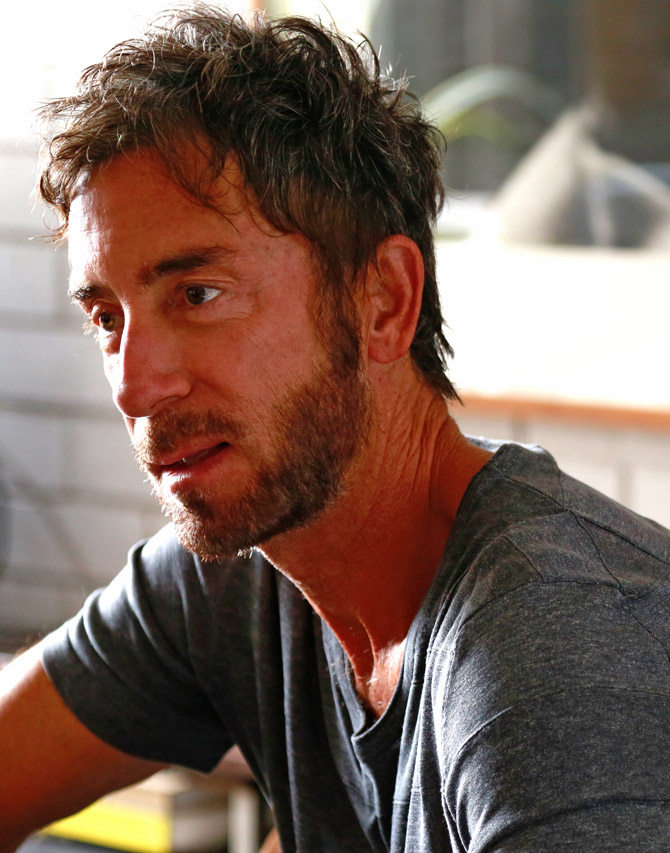
“For me, freedom is mostly being by myself and not having to talk,” says Jean-Marc Houmard. His honesty is disarmingly nonchalant. The 55-year-old is friendly if not a bit reserved. He shows up in jeans, a T-shirt and trainers – this guy is anything but pretentious, it would seem. You can see a twinkle in his eyes when he goes onto his flat’s balcony – which should come as little surprise, considering the superlative views of New York it affords him. There is no question that Jean-Marc loves this city. The Swiss native came here in the mid-’80s as an intern at a law firm. It seemed as if a career as a lawyer was written in stone, until he paid Indochine a visit that is. With a cult-like following, the stars were already flocking here then. This opened a door to a completely new and utterly fascinating world for the then 25-year-old Jean-Marc. He decided to apply as a waiter – and got the job. “Although I had almost no experience,” he adds. But talent, apparently. Gastronomy became his passion. In 1992, he took over Indochine with two partners. In the city that never sleeps, the restaurant serves as a place of consistency for its guests. “The come here and they know what they are getting,” explains Jean-Marc. In 2012, he opened Acme, whose kitchen is helmed by acclaimed Danish chef Mads Refslund, who experiments with the latest trends – drawing in a younger crowd. Tijuana Picnic is his latest project – a Mexican-Asian fusion restaurant. “But to be able to escape [the city] is important as well,” concedes Jean-Marc. He recently opened a luxury boutique hotel in Nicaragua – Tribal. He thinks there is a pretty good possibility he may continue in this direction. “That’s kind of everybody’s dream – to end up on the beach in an exotic place eventually. So I did the first step into that directions and we’ll see where it leads me.” Read more on eMagazine Falke footprints Some of Jean-Marc's recommendations in New York city
READ MORE →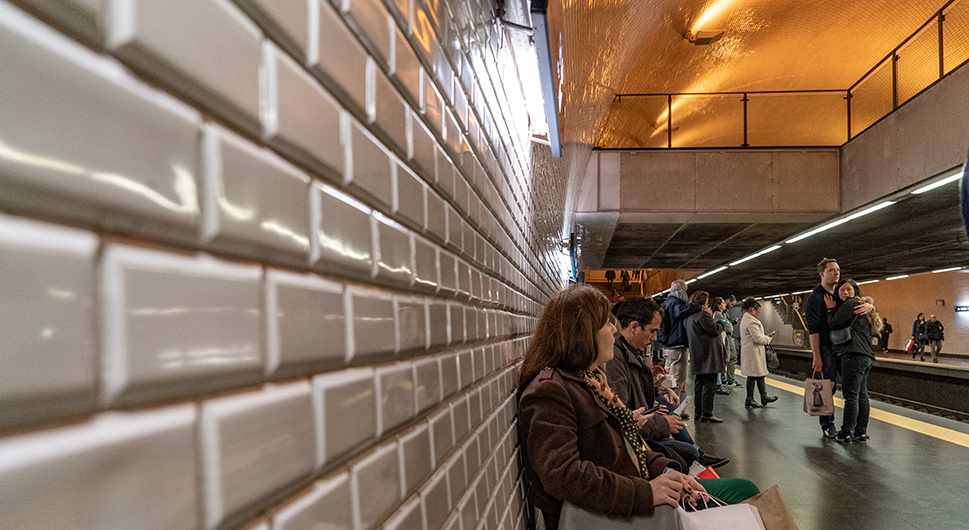
Melody Gardot Lisboa ai Lisboa The sorrow of your days gone byNow the hinterland of lovers should lay Beneath all your vacant skies Lisboa, LisboaFrom Alama's arms to Lisbendade Paper lanterns, falling embers Quiet cantors sing of sandade The ever twilight amber of your alleyways Paint the air of evening oh so well And strolls about the river bank Suggests there's history left to tell Ai Lisboa A paradise beside the sea There's a beauty To the absence of tainting all your scenery Oh oh Lisboa é luz boa Lisboa é Pessoa (também é) Lisboa tem chiado (também tem) Alfama e tem fado Da era severa De um tempo que já era Nas ruas de Lisboa eu vou (eu vou também) Das tuas colinas Milagres e simas Nas praças, rainhas Flores e rimas, eu vou (eu vou) Eu vou L-I-S-B-O-A L-I-S-B-O-A Lisboa L-I-S-B-O-A L-I-S-B-O-A (Lisboa) From her Album "Absence" Listening
READ MORE →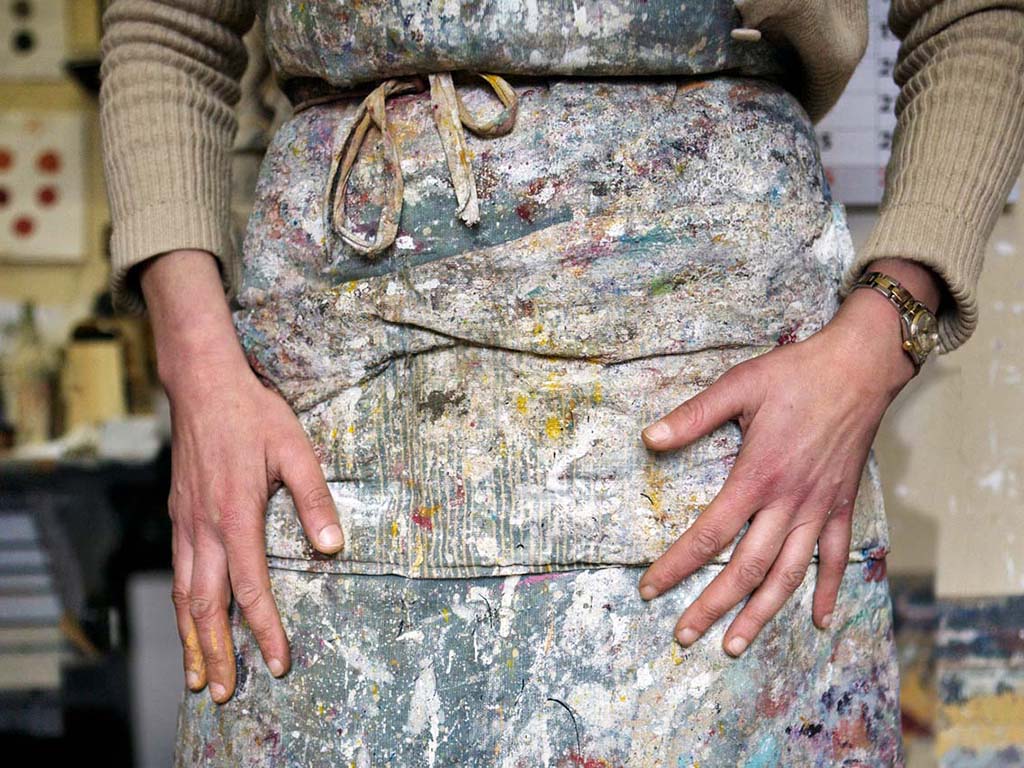
FRANCESCA WEZEL COLOURIST, OWNER OF FRANCESCA’S PAINTS LTD Read the complete article: www.falke-footprints.com Watch the video portrait: www.youtube.com/FalkeFootprints/FrancescaWezel Francesca Wezel is a colour artisan and founder and creative director of Francesca’s Paints. She’s made shades for everyone from Birkenstock to Prince Charles. When creating her colour collections, Francesca is inspired by landscapes and architecture of foreign countries. It’s all about the psychological effect and cultural significance of colours. She is wearing a randomly paint-splashed apron. ‘People have wanted to buy it!’ she says. It’s testament to the hands-on nature of her craft. There’s a little paint in her hair and nails, and she’s justifiably suspicious of the clean artisan. ‘You need to have a little bit of a paint spattering somewhere – it means you’re using the product.’ Francesca is a colourist that makes bespoke paint. She and her business partner Camillo – with her much-loved Tibetan Terrier, Bubu, underfoot – have their office and workshop at the Battersea Business Centre. I AM A COLOURIST – I NEED MY CREATIVE FREEDOM. Francesca has always had a powerful relationship with colour, and she learnt to express this talent and awareness through making paint when she was living and working in Sydney in the mid-1990s. She was trained in her craft at Porter’s Paints, a Sydney-based company that, since the early 1980s, has made premium paints based on the formulas of the founder’s grandfather (Fred Porter). When she left Australia in 1996 and decided to live in England, she interviewed with Farrow & Ball, one of England’s oldest paint companies. But the company wanted her to work with what they already had, rather than creating anew. ‘I am a colourist – I need my creative freedom.’ COLOURS IN DIFFERENT COUNTRIES MEAN DIFFERENT THINGS... MY DREAM IS TO WRITE A BOOK ABOUT THE ANTHROPOLOGY OF COLOUR. The key to using colour, she says, is to use tonal colours that flow. ‘I always say to my clients, “if somebody comes to your house and they go, ‘wow’, you have done too much.”’ Her own home is painted with earthy colours. ‘Brown, orange, terracotta – my bathroom is shocking pink.’ It’s not just the appearance and psychology of colour with which she is concerned. ‘Colours in different countries mean different things.... My dream is to write a book about the anthropology of colour.’ She reveals her favourite spots in London to Cool Cities...
READ MORE →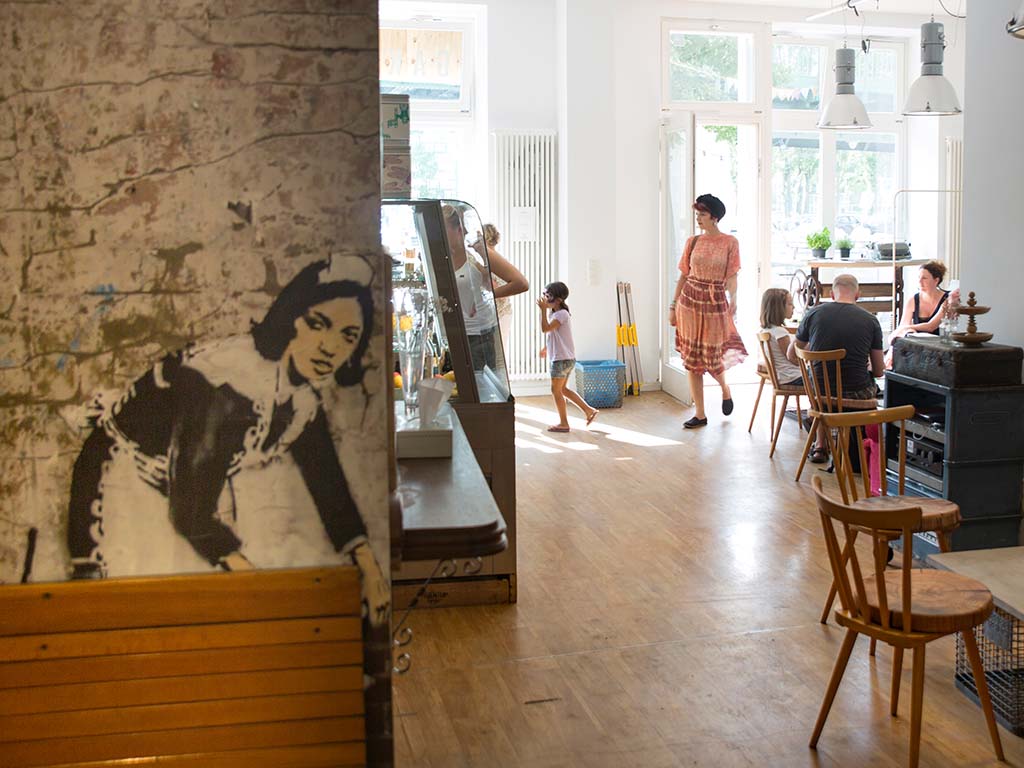
“It is a life-changing decision to have a family. We wanted to have more time for our daughter while realising a life-long dream.” Stanislaw and Kinga seem to be living the modern urban fairytale. “As a carpenter and interior designer, I had worked on various projects, bars, and clubs in Berlin. I was fortunate to get a lot of positive feedback, so I decided to channel my skills into my own project. The timing was perfect. My wife wanted to get away from the startup scene and we decided to take the leap together when she was on maternity leave.” As self-proclaimed foodies, they started gathering ideas an eventually came to the conclusion that their own project was going to place food and indulgence center stage. By chance, they met an artisanal ice cream maker through family, and the rest is history. A perfect addition to the burgeoning scene in Berlin, they developed a concept that focused on handmade ice cream, superfoods, and good coffee. Only the finest ingredients are employed in making their products. The milk comes from local farms that produce in small quantities. Due to high demand, they’ve branched out to no less than ten farms which meet the high quality standards. All of the products, from dairy to the sugar-free chocolate sorbet (perfect for vegans and diabetics), from the barista-made coffee to baked goods are held to their high standards. “I don’t like walking and eating at the same time. I need to sit down, relax, and relish in the moment.” Kinga wanted a place in which people would like to hang out, so Stanislaw furnished the café to be welcoming. He took vintage S-Bahn benches and made them into seats, brought in reclaimed relics from industrial workshops, and unique decorations made from old windows, which were donated by their lawyer. Each piece has its own story—upcycling was paramount in the design. And no ice cream parlor would be complete without an area for the children, an ode to the couple’s daughter. Why Oak & Ice? The couple thinks for a moment. “Oak is a natural and sustainable material that people relate to coziness and tradition. Ice is the base for our main product. We’re just glad to have something that brings a little bit of joy into peoples’ lives. Sustainable joy...that’s it!”
READ MORE →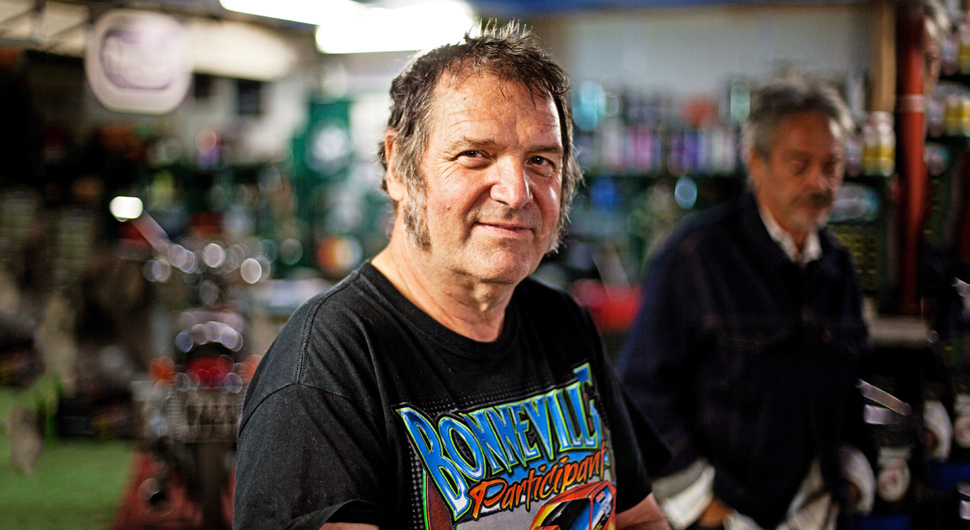
In the ’70s, Marco Raymondin became the first person in France to restore British motorcycles. Today he is a legend. In his grandfather’s workshop, he learned to love the smell of gasoline, the grime and the engine’s vibrations. It is his secret for endless youth. It’s hard to guess Marco’s age. He is wearing a coarse sweater, spotted chinos and he could be a fisherman from Normandy – the kind who doesn’t care about wind and rain as long as he can still go drink a glass of red wine in the evening with his friends. But Marco is no fisherman; he’s a motorcycle rider who turned his great passion into a career 50 years ago. He is cheerful, restless, with thoughts that overtake his English skills. “My father had a friend with a small motorcycle, a 125 cc. He wanted 50 francs for it”. Barely 16, Marco works several weeks at a butcher’s shop so he can afford the machine. He embarks on his first trips in the area, visits England, which is in the middle of a genuine cultural revolution. Marco is fascinated by the energy of the new BEAT GENERATION, its music, its lifestyle and its boisterous yearning for freedom Only a few of them can afford a car, but all have enough for a scooter or a motorcycle. Thus a new status symbol is born. The owners are called MODS or ROCKERS. Some wear ties and military jackets, polishing their two-wheeler like a mother does her silverware. The others follow their rough-and-ready role models, wearing leather outfits – sweaty and oil-smeared – like a second skin. Amongst these hundred motorcycles, which one is the most reliable? “I wouldn’t use ‘reliable’ to describe these machines”. I follow him to a motorcycle that consists only of steel tubing, a motor and the most important mechanical parts. “This is a racing machine. A Triumph T110 from 1955. Special tuning, special transmission, everything special. Doesn’t run on gas, but on methanol. We went to Bonneville, Utah with it, to break the world record. We almost did it”. Marco continues, “196 kilometres per hour was the record. We made it to 194. Then the motorcycle caught fire”. The three men grin, beaming with happiness. That seems to be it, the secret to endless youth. Valentin yells to me loudly, as the rattling becomes more deafening and the room begins to fill with thick wads of smoke, “If you step into this world, you stay 18, forever”. Read the full story at FALKE footprints Raymon and Valentins favourite spots in Paris are:
READ MORE →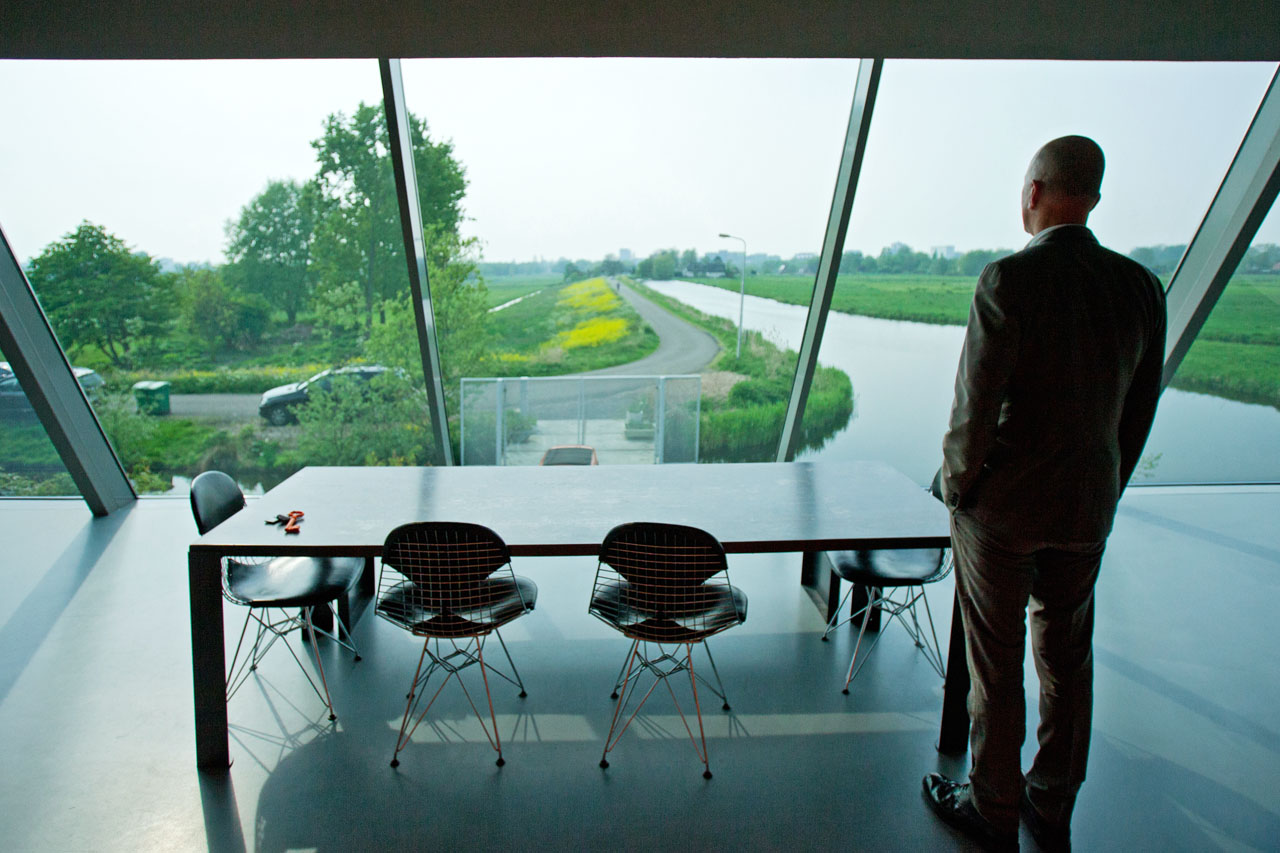
Don Murphy knows what he’s talking about. He came to Amsterdam 20 years ago and stayed. Here he encountered a society in upheaval. A lust for life everywhere and an unbridled desire to dare to try new things, not out of boredom but rather necessity. Space in the Netherlands is a precious resource, whether developed or not. Land is valuable and protected at all costs from drowning in seawater with all the technology available. More than 25 per cent of the Netherlands is below sea level. Development and city planning are a part of the survival of the entire society. The future has already begun here. Don Murphy feels comfortable in these changing times, and has been a prominent figure in theorising new concepts for years. He teaches worldwide as a professor, lecturer or simply works as a commissioned architect. Don Murphy quickly learned that what he wants as an architect could only be executed when he successfully influenced his clients and their opinions strongly from the beginning. He does this effortlessly, it seems – his intensity and expertise are outstanding. He is a passionate debater but never loses himself in unimportant technical jargon, rather always presents his arguments understandably. He even wrote a book about it: self-presentation and the importance of salesmanship for architects. A book that made him very unpopular with his colleagues, due to the fact that it calls the classical understanding of an architect in question. More on FALKE footprints Don Murphy’s recommended locations for Amsterdam:
READ MORE →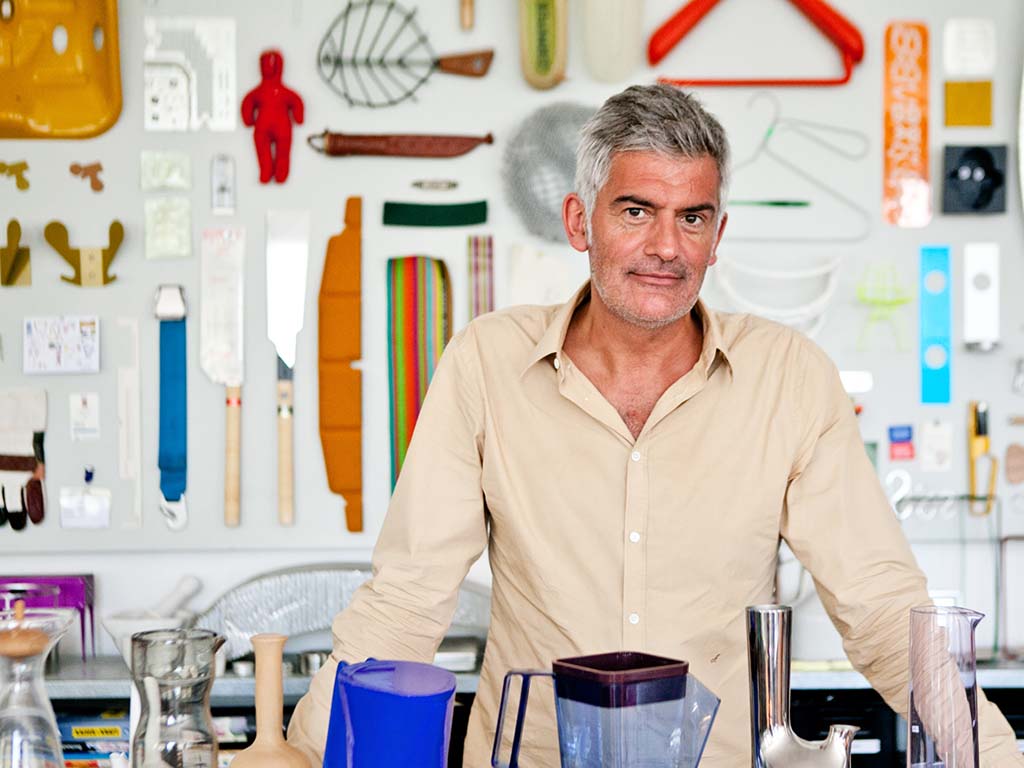
Watch the complete video portrait ! Alfredo Häberli is a professional dreamer. His clients, hailing from all over the world, appreciate that about him. His designs, big or small, are all done with heart and soul. All he needs is a pencil and some peace. I AM INTERESTED IN THE INTUITIVE WAY CHILDREN APPROACH THINGS. THESE DAYS, PEOPLE USE THEIR HEADS TOO MUCH WHEN THEY WORK. I RARELY DO THAT. Häberli’s workshop overlooks Lake Zurich. It’s housed in a sober 1970s building: concrete, glass and little spurts of green peeking out between the cracks in the brittle asphalt. We follow him into his studio, where a breathtaking scene awaits. Steel shelves are cluttered with memorabilia and objects collected over the past twenty years: plastic spoons, comic figures, plenty of junk, and childrens’ toys everywhere. There’s an old scooter and tricycles, some of them over fifty years old. There’s fabric and plastic contorted into different shapes hung on the walls, none of which serves any discernable purpose. Lamps in all shapes and sizes, as well as an eclectic assortment of dishes, glasses, cutlery, eyeglasses, divers’ masks. A prop collection? What for? Who is this man? OBSERVATION IS THE PUREST FORM OF THOUGHT. Alfredo Häberli was born in Argentina and came to Switzerland as a young man. For the past 22 years, he has been living and working in Zurich. Amongst his clients is an array of European furniture stores with illustrious names such as Moroso, Kyadrat, Iittala, Alias. He designs furniture, lamps, cutlery, big things and small things–anything that needs designing. He doesn’t invent things, he says. He discovers. He is inspired by observation, which to him is the purest form of thought. He spends much of his time on the street, on his bike or in his beloved 1993 Saab convertible. I’M AT HOME, AWAY FROM HOME. A few years ago, Häberli was asked to design the interior of a Zurich hotel, 25hours. The monumental steel building with large windows with its 126 rooms spread across six floors is in the heart of what has been crowned as the city’s most important area of urban development. Without a doubt, this was Häberli’s biggest challenge thus far. The money they gave him for preparing his pitch he spent on travelling to other cities trying to get an idea of what kind of competition he is facing, as well as familiarising himself with the design of other boutique-hotels popping up all over Europe. He filled his sketchbook with ideas and outlines, and finally discovered a rather simple but memorable concept: “I’m at home away from home.” Häberli’s design was captivating. He showed his initial drawings and designs to the builders. He wanted to do things differently. The hotel was supposed to be homey and comfortable. What else would a guest expect? Häberli won the commission, and suddenly he had the chance to single-handedly shape a concrete block into something inspiring and to “breathe some life into it”. He went to work immediately, creating lamps, building furniture and designing carpets, curtains, fabric and room dividers. Nobody interfered with him: everything drawn from his imagination was realisable and only limited by the restraints of budget. Häberli stayed on course, true to his concept – liveable, homey, comfortable and quaint – and it certainly worked. The design is playful yet practical. Every object serves its purpose. Strong, rich colours set the tone, the décor plays with contrast. Nothing is dark or sinister. A ping-pong table sits in the large lobby, whil st comfortable lounge areas with well-tended flowerpots, add to the ambiance. Now, the hotel also offers state of the art electro-bikes and a small fleet of Mini cars, available to every hotel guest at no extra charge. Häberli enjoys being among people. He’s edgy, but nevertheless a likeable guy. His charisma has opened many doors for him–it certainly doesn’t do any harm that meeting people and exchanging thoughts comes naturally to him. He’s likable, someone who likes to laugh and most importantly someone who knows how to listen. Häberli is well known in the coffee shops around town and a welcome guest in the city’s upscale restaurants. A bohemian? A bon vivant? Only at first glance. Häberli showed us his favorite places in Zurich …
READ MORE →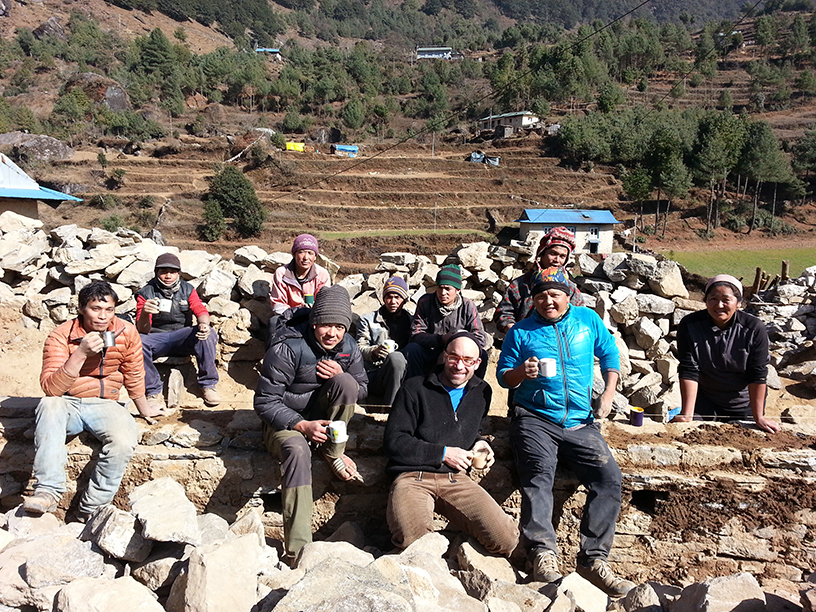
Heiko Braun usually runs a shop in the Prenzlauer Berg neighborhood of Berlin, as well as an online shop for bags that have interchangeable cases in every motif one could imagine. Heiko developed a special affinity to the mountains and the people living there through a hiking tour in Nepal and the friendship he developed with his tour guide. He was shaken by the massive earthquake that struck the alpine country in April of 2015, resolving to go there himself to help those in need. He is now helping a family in Chaurikhara rebuild their home, which was leveled in the quake. He reports in his blog www.nepal.tausche.de (in German) about his experiences and also launched a charity drive to build a clean water system for the mountain village. He encourages people to inform themselves about the campaign via his blog before donating. Whoever would like to contribute to the project can transfer money to the following account: Account holder: Heiko Braun Bank: GLS BankIBAN: DE86 4306 0967 4036 7341 01BIC: GENODEM1GLSSubject: A Gift for Nepal Photos: Heiko Braun, Berlin
READ MORE →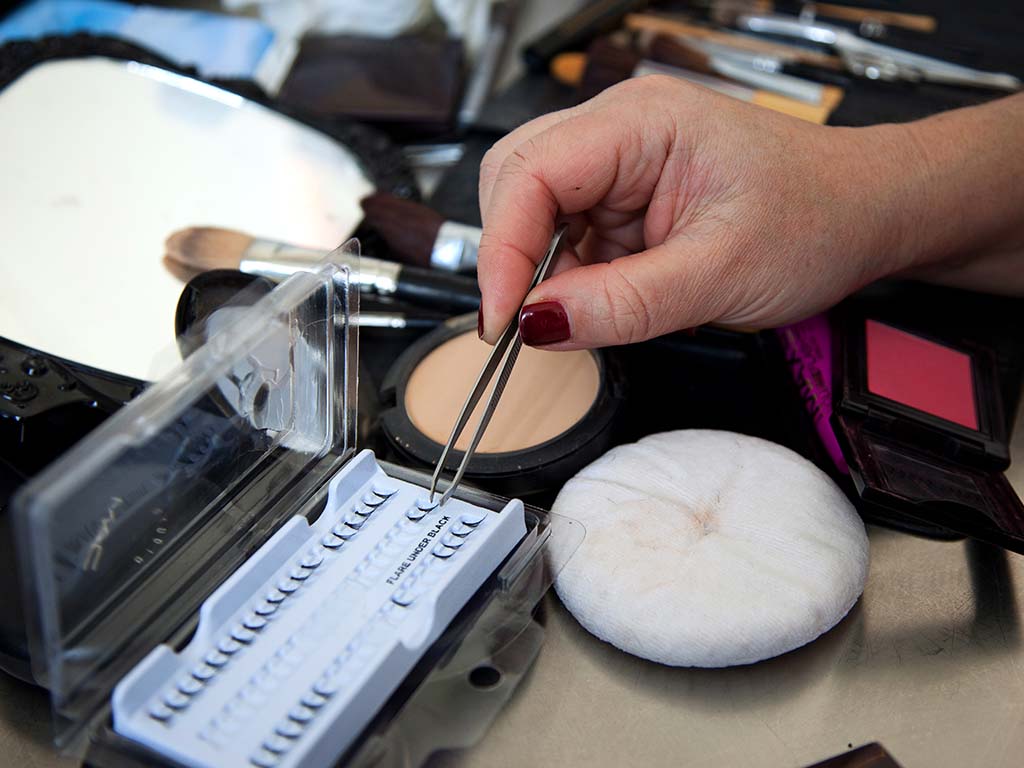
Makeup artist Anna Paolozzi has an eye for colour and a genuine interest in showing women of all ages how to look sexy and fabulous. And looking fantastic doesn't start and end with a bag of cosmetics. Anna Paolozzi's work has a painterly sense and encompasses her talent and disposition: 'I don't want to sit on my own painting, I like connecting with people.' After learning the trade, her first job was Head of Makeup at MTV. 'I assisted a VOGUE make-up artist and thought, I'd better learn it, because suddenly I was doing famous people and had no experience!' For Anna, looking fantastic doesn't start and end with a bag of cosmetics - the kind of life you're leading matters. 'I think it's really important to eat good food and sleep properly and have a great life - as much as possible - because that shows.' 'Feeling great is the first step to looking great. ' Anna has specialised in makeup for 40+ women because there simply wasn't anyone else doing it. 'What I noticed was that women's self-esteem, as they get older, can go down, and I wanted to help them still look sexy and fabulous.' Makeup completes the picture begun with a great haircut and the nicest clothes on which you can get your hands. Anna focuses on helping women to feel good about themselves and sees herself as a guide. She also works with women who have been ill. 'I can make them look well - and people treat them differently.' She works in hospitals and also at people's homes. 'I show them all the little things, how to put colour back in their faces - they go very grey when they're ill. I haven't met one woman who doesn't want to look better: it's so powerful psychologically.' Surgeons have commented to Anna on her remarkable approach with patients. Not knowing what illness the people she works with have had grants her a certain distance, but it's obviously more than that; it's a combination of gift and will. Anna wants to put people at ease, to make them laugh and bring out their best side. Read the full story at Falke footprints Anna Paolozzis favorite spots are:
READ MORE →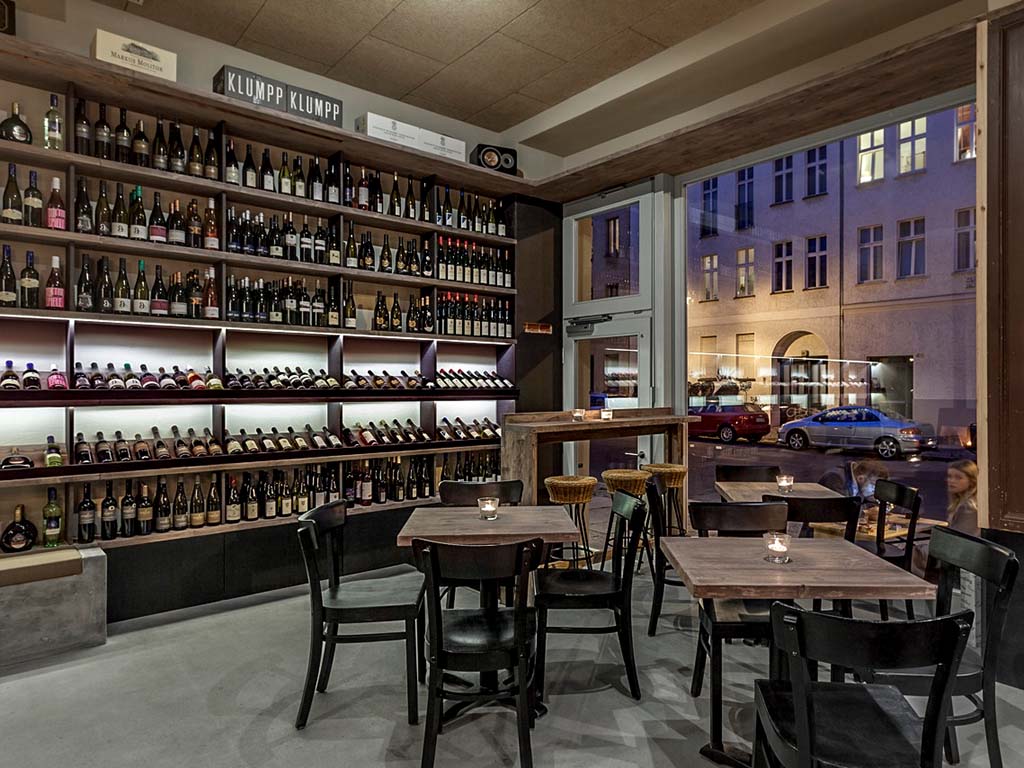
Cool Cities sits down with the journalist and wine bistro owner Peter Brock: How is it that a journalist ended up opening a wine bistro? There’s this joke: Two journalists walk by a bar… (End) Actually, it had little to do with my affinity to alcoholic beverages, as expected from those in my profession. It has a lot more to do with my personal biography. My cousins own a winery in the Palatinate, which means I pretty much grew up drinking wine. When I moved to Berlin in 1994, you were asked in restaurants if you preferred red or white. There was no good selection of German wine. As a connoisseur with the sort of background I have, a nice glass of wine with a meal is very important to me. It only seemed natural that I would someday join the industry myself. Since when has Mauerwinzer been around? After a lot of brainstorming, my partner Roland Wolff and I opened the shop in August 2015. How do guests respond to your unique offering? The crowd is quite eclectic. Many of our guests are from the neighborhood, using our bistro as an extension to their own living room, swinging by after work for a glass of wine or a beer (we serve craft beer from a Friedrichshain-based brewery). The rest is tourists that pass by after paying a visit to the former border strip looking for a spot to kick back or to buy a bottle of German wine as a souvenir. Tell us a bit about your kitchen. As many others like us do, we offer the sacred pair of wine and cheese, but with a regional focus. Our organic cheese comes from German cheesemongers, and our cold cuts are from select butchers from wine regions. We also offer fresh tarte flambée from our stone oven. Any plans for the future? (Laughs) The idea behind Mauerwinzer might work alongside the Great Wall of China. But I think we’ll hold off on any further plans until the BER airport finally opens. Peter's tips for Berlin:
READ MORE →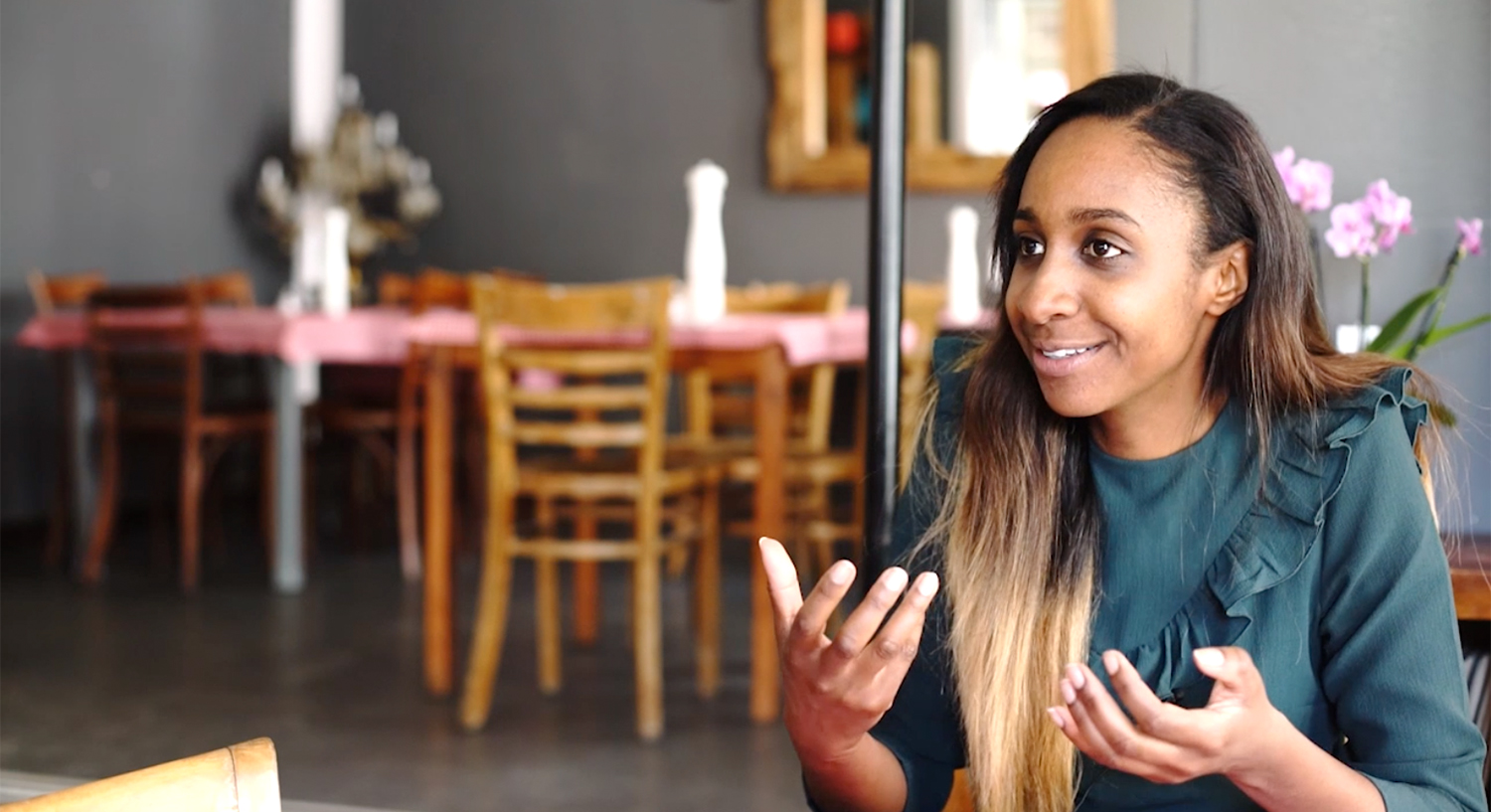
There is a nice story behind the name of this restaurant. Born in Mombasa, Kenya to a Ugandan mother and raised between the Bernese Oberland and in Zurich, founder Jennifer Mulinde-Schmid is a multitalented, kindred soul. Wherever she goes, cheerfulness is bound to follow. After her training in dance and in acting, she worked in television and cinema before dedicating herself to being the comedienne of her restaurant. With a grin, she implies that she herself is Schwarze Heidi, or the “black Heidi”, and she often personifies the role in various skits. “I can’t live off of just that,” she laughs and shows off her dancing skills. “I’m far from the perfect dancer.” But she is grounded and takes chances as they come. In Berlin, the chance came with the Helvetia Röschti Bar, an authentic Swiss restaurant in the middle of Kreuzberg. “If I have to work the go-to job for actors, then I am going to do it with humor and charm,” she says, adding in a typical Swiss flair to her pronunciation. It didn’t take long before guests started asking “will Jenni be there?” when making their reservations. It didn’t take long before she got the chance to become co-owner of the restaurant, eventually leading to its status as a Kreuzberg institution. Those looking for a proper Swiss meal in a cozy ambiance will feel right at home here. But the name is new. Jenni has become the mascot for the restaurant as her alter ego “Schwarze Heidi.” But certainly not without the help of her team. “The dishes coming out of our kitchen are so good. Everything is not just prepared with the skill and finesse of a trained chef, but is creative and made with a curious palate,” she boasts. “We love dancing between traditional and innovative Swiss cooking.” Diners can expect classics like röschti and fondue of all sorts alongside a daily-changing menu and desserts like Toblerone mousse and apple tartlettes with lavender cream. An authentic piece of Swiss hospitality served to Berlin-based Swiss, guests from the neighborhood, the city, and around the world. “I want my guests to leave here happier than they were coming in,” says Jenni with a wink. Discover Jenni's recommendations for Berlin:
READ MORE →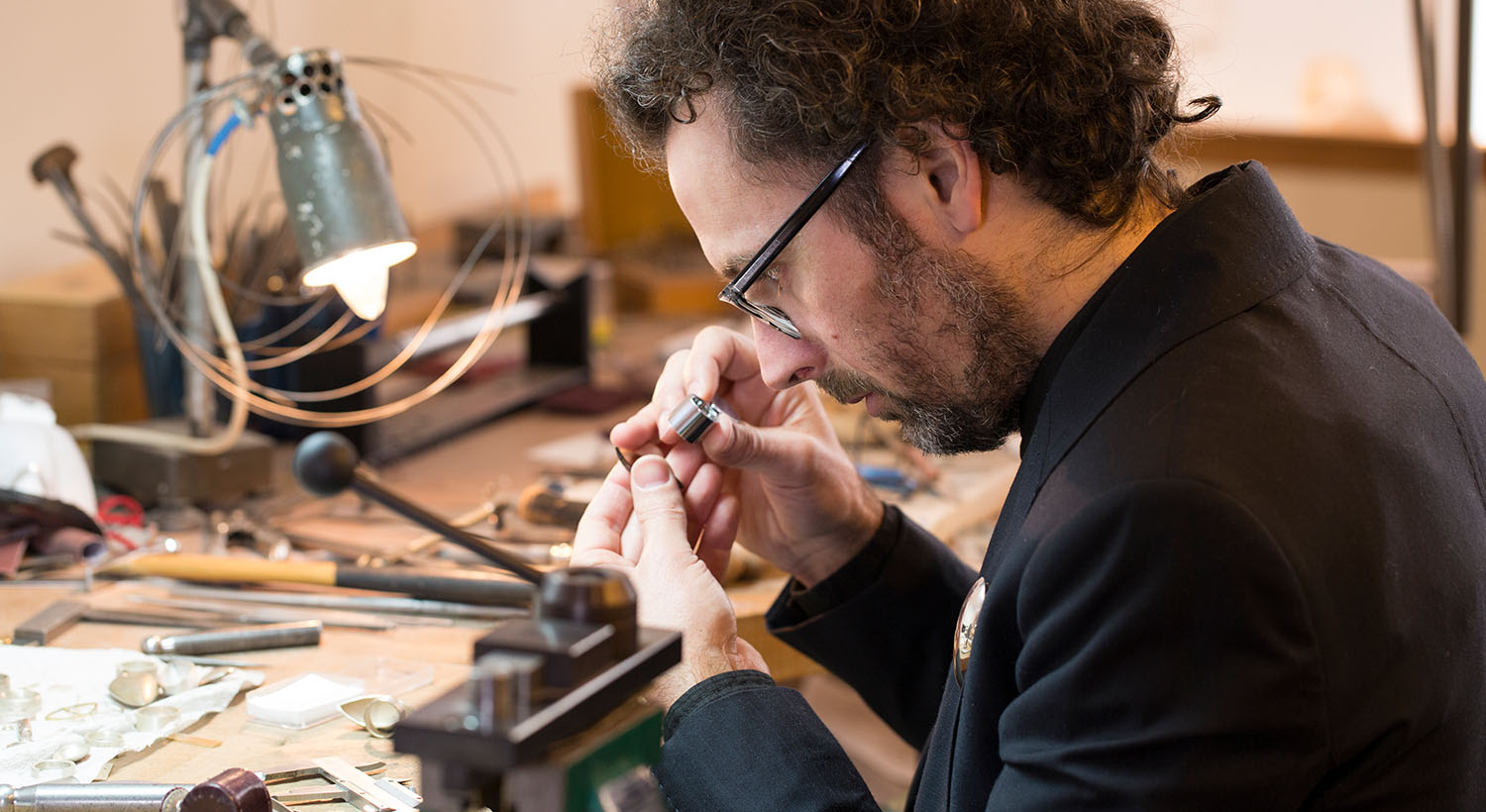
Rembrandt Jordan’s favourite word seems to be “accident.” It was “by accident” that he changed his profession as a landscape architect to a silversmith. It was “by accident” that he developed a unique, perhaps even wilful jewellery-design aesthetic. When this 39-year-old jeweller with his mop of curly dark hair talks about his background, he seems almost surprised to have landed here in his atelier “by accident” in Antwerp’s historic centre. The entire space is thought through, much of its details made by him. All just by accident? Unlikely. His success is the result of years of hard work at the Academy of Fine Arts in both Antwerp and London. But this attitude, this “I take nothing for granted” is the source of his inspiration. His pieces are clear and minimal. They are like sculptures for the body – the object and its wearer should communicate with each other. Like his 16-piece broach that can either be worn to display the concave from either side. The jewellery piece changes according to the wearer’s mood. And it mirrors the creator’s mood as well – a meditative tranquillity that integrates itself into the object after weeks of work. Read the full story on FALKE footprints Rembrandts favorite spots are:
READ MORE →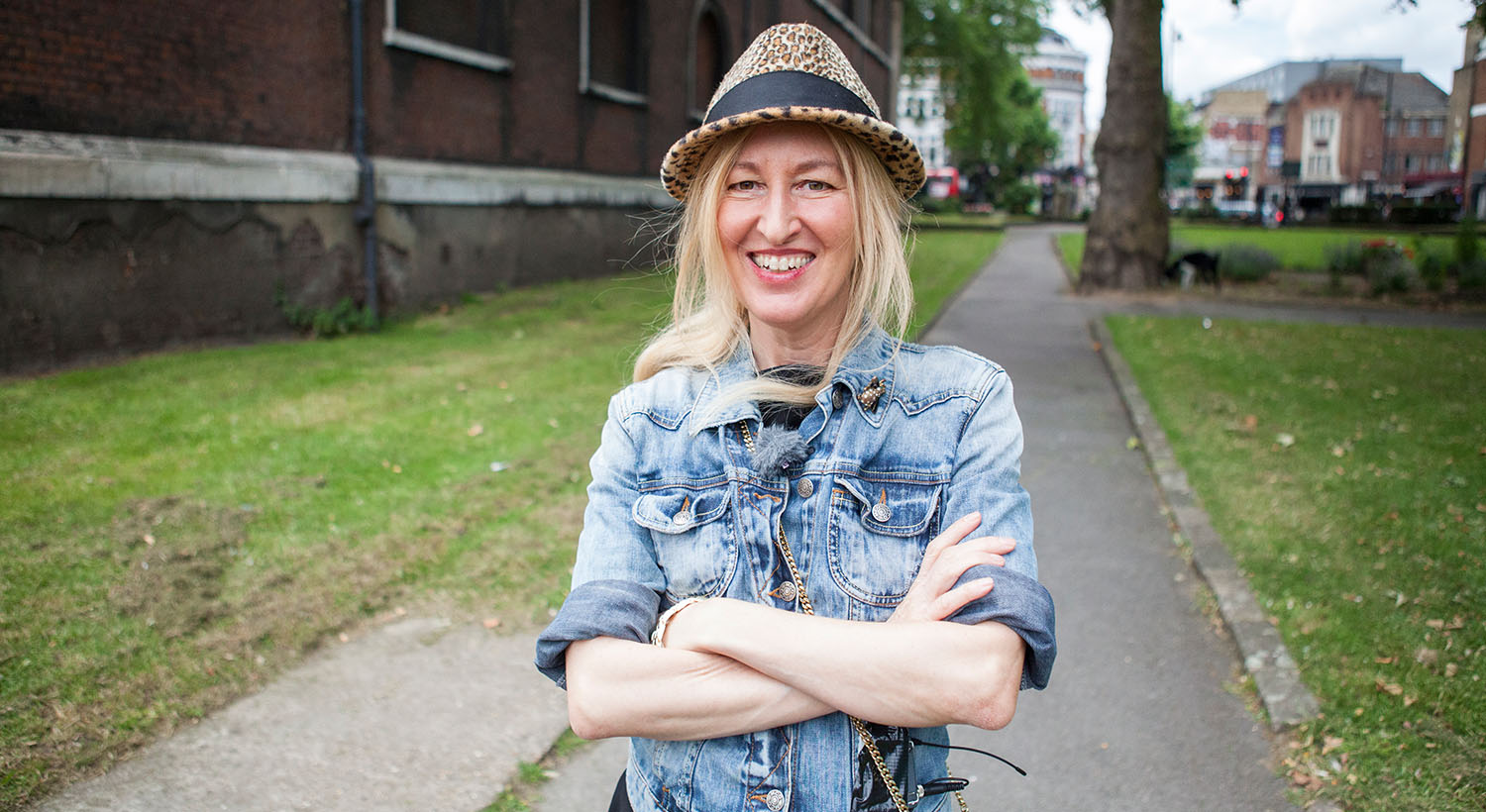
You can tell that photographer Esther Haase was once a figure skater. She emits a unique energy and a creative restlessness that feed off of her immeasurable amount of curiosity. “I shot my first photo when I was eight. My parents were graphic designers and my sister and I shot with a pocket camera. Then I stopped and focused on figure skating.” We paid her a visit in her loft in Shoreditch, East London’s former working-class neighbourhood with a brash accent, where no one cares if you understand it or not. Today, Shoreditch is filled with young professionals desperately searching for anything that is considered authentic and halfway affordable. The tempo here is just what Esther needs. Change in big and small ways. Always looking forward. She doesn’t believe in following trends. “London is inspiring. I love that I commute between Hamburg and London because I love both the classic and the unconventional.” There’s plenty of the latter here. People like to put their unconventionality on display, they don’t hide it. Even the smallest detail can make the difference. It’s that special something – the noise, the individuality, the rejection of norms – that makes it a great place to live. You get a better feel for yourself. Esther wants to show us her neighbourhood. The new – the old. She wants to share her enthusiasm with us. We ask her about her first commissioned work. “It was for a jewellery catalogue in Venice,” she says. She took care of everything herself. She had to learn how to do make-up. Her father, who then owned an advertising agency, sent her there with no real training. And everyone turned out happy. She was just 20 years old. “It’s about getting shots of the people whilst they’re in motion,” she explains, calling it reportage style. But that sounds too much like chance, it’s too casual. That’s certainly not the case with Esther Haase’s work. She curates, arranges, prepares for every possibility for her shoots. Once everything is ready, she gives everything space to breathe, stimulates it, moves it and takes what she needs from her camera. But she lets chance take its course every now and again, and sometimes it’s just what culminates her work – that makes it special. Her inspiration comes from some of the greats – Lilienthal, Newman…but her admiration is more like a thankful retrospect. That’s all past now. Today is tomorrow – new job, new task: “Where are we headed today?” Time to go outside. “Just a quick walk,” she says. “Why don’t you join? I’ll show you around my neighbourhood.” Of course we join. And that quick walk becomes more. Why wouldn’t it? Two hours later and we’ve arrived at a massive common – a park in the new heart of the city. The East is the new West – green and plush grass with dozens of dogs chasing the kites the children are flying. Her dog likes it here. “Do you have some more time?” she asks. When I ask if there is something she could imagine doing other than photography? “Of course!” Her answer fires out like it were coming from a loaded gun. “Figure skating!” she exclaims with a smile. She’s probably had it since her eighth birthday… read the full story on www.falke.com Esthers tips for London are:
READ MORE →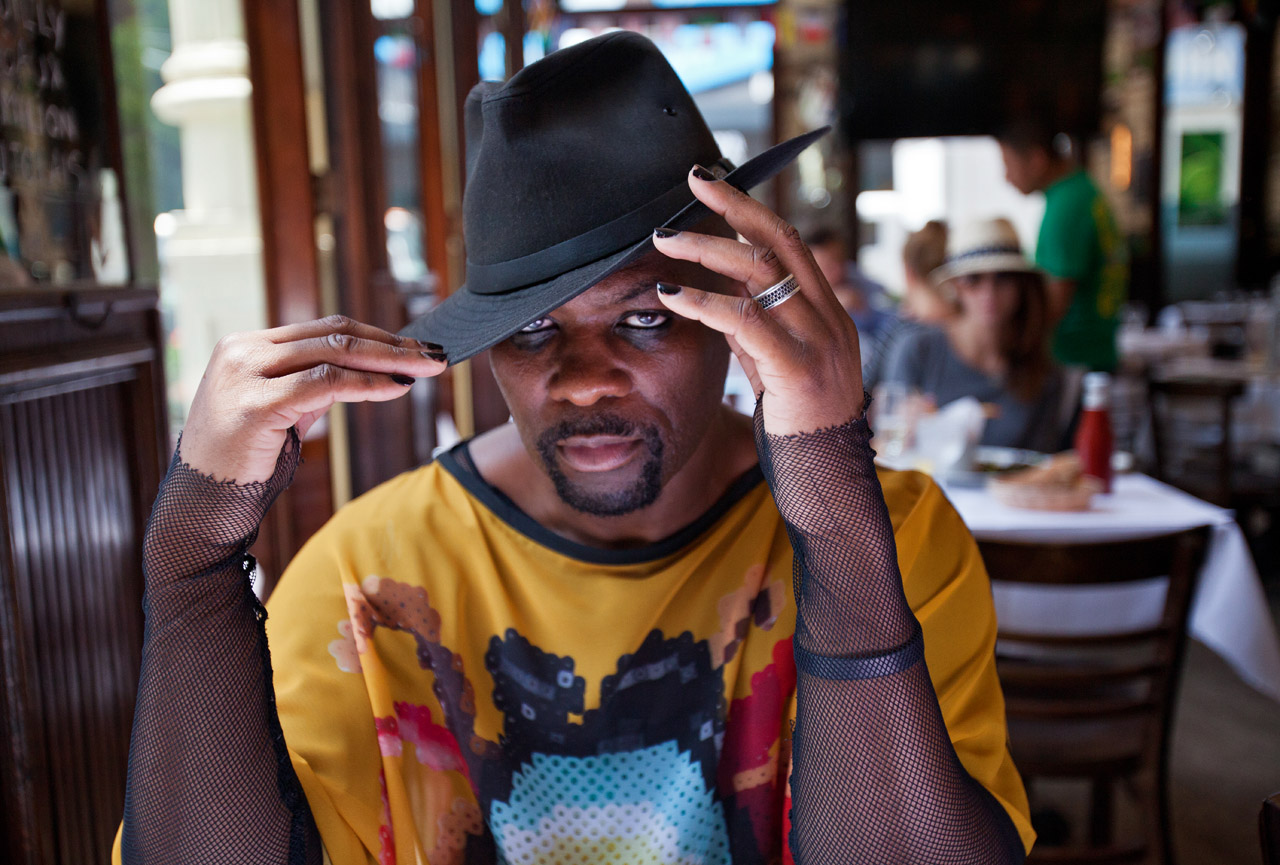
“I make a living as a professional muse,” says Malcolm, his glitter-covered face lit up with a beaming smile. One thing is for certain: This guy doesn’t have a very high opinion of traditional job titles and doesn’t like to be categorised either. Born in Jamaica and raised in Florida, Malcolm has been in New York since 1985. “I immediately was embraced by this community of artists,” he reminisces. “My best friend at the time was Keith Haring. Everyone just kind of, you know, danced, partied together, created art, created fashion, created whatever together.” The city is a hotbed for jacks-of-all-trades like Malcolm. Today, he writes a column for the Huffington Post as the “Curator-of-Cool.” He’s the founder of the Rue de Fleurus Gallery and eponymous foundation, dedicated to equality measures for female artists and curators. He’s also the CEO and creative director of the One Dress Project, which supports women’s organisations around the world. He’s considered a visionary fashion designer, with supporters like George Clooney, Angelina Jolie, and Madonna. As a creative consultant for many companies, both luxury brands and everyday citizens to combine purpose, passion and philanthropy into their businesses. Malcolm is fully aware that his flamboyant appearance is the first thing people notice about him. “But it is through these feathers, through bright colours and all those little things that I am expressing exactly how I feel.” He is incredibly passionate about his philanthropy, his belief in goodness. “New York is changing in a magical and wonderful way,” he says. “We are moving towards enlightenment – not to be corny, but hopefully that is where we are heading,” he adds with a laugh. Read more in Falke footprints Malcolm Harris' location recommendations:
READ MORE →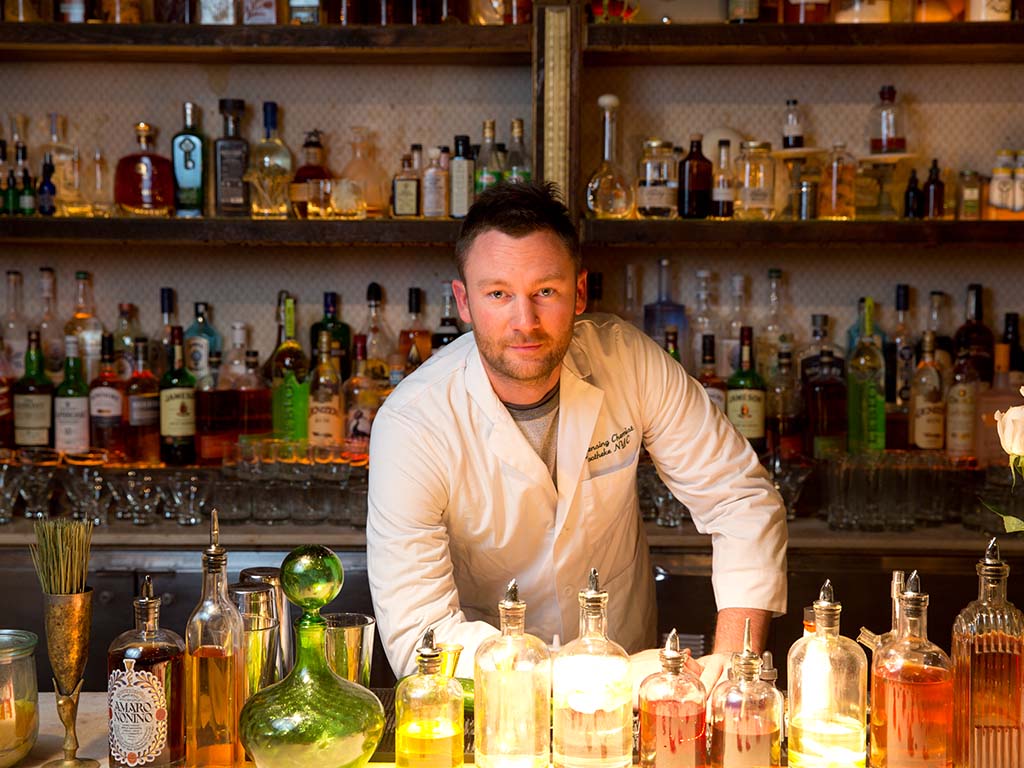
Co-owner of the bar Apothéke and the restaurant Pulqueria, Chris Tierney believes that New York, even while amassing more generic businesses over the years, retains a deep sense of mystery. “The city is constantly reinventing itself,” he says. “Before you know it, you’ve been here for ten years, and you haven’t even scratched the surface.” He and his sister Heather’s venues, known for their individuality and unusual placement, contribute to the unpredictable flavor he describes. Becoming entrepreneurs of a highly successful cocktail bar was a mix of equal parts vision and serendipity. Creative in their childhoods, they left Indiana for New York because, as Heather explains, there are two kinds of people where they’re from: those that stay and those that leave. This expeditionary impulse is also apparent in their business acumen. While walking through the labyrinthine back alleys of Chinatown, they stumbled onto a street called Doyers. Its unusual curved shape made them feel as though they discovered a gem. Indeed they had: In the early 20th century, the angle was a major vortex for illicit activity, mainly from Chinese gangs. Keeping the spirit of clandestine activity alive, they built a speakeasy-style bar resembling an Old World apothecary right down to its menu of curative drinks. Infused spirits and herbal tinctures use fresh ingredients from the Chinatown market or the bar’s own rooftop garden, which includes a fig tree. Pulqueria emerged a few years later, an ode to pulque, a liquor made from the fermented sap of a succulent whose consumption in central Mexico preceded the Aztecs. In a town where the turnover rate for restaurants can be brutally high, the Tierneys cite their spaces original, otherworldly atmospheres—which they painstakingly design down to the chemistry-flask wall sconces created by Chris—as key to their longevity.
READ MORE →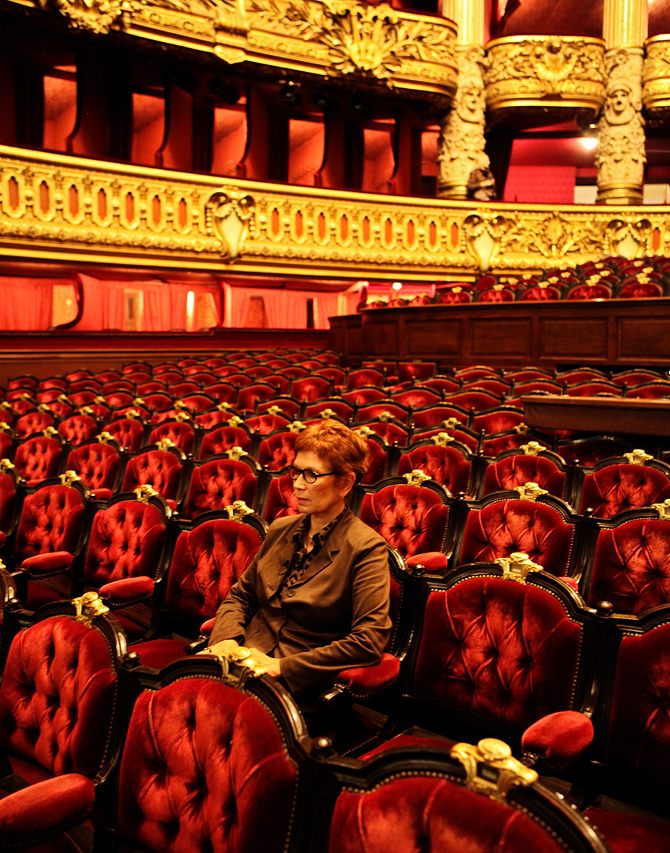
Brigitte Lefévre is one character of the “FALKE footsprints Paris People”. At just eight years old, she started dancing at the École de danse. Back then, she had no dreams for the future. She was living her dream in the present: dancing. Today, Madame is one of the most famous teachers at the L’Opéra de Paris and even after 60 years of ballet, she is fascinated by the dance and full of passion. “Ballet can tell stories, or be abstract like a poem.” Read more on FALKE footprints Explore some of Brigitte Lefévre's favorite spots:
READ MORE →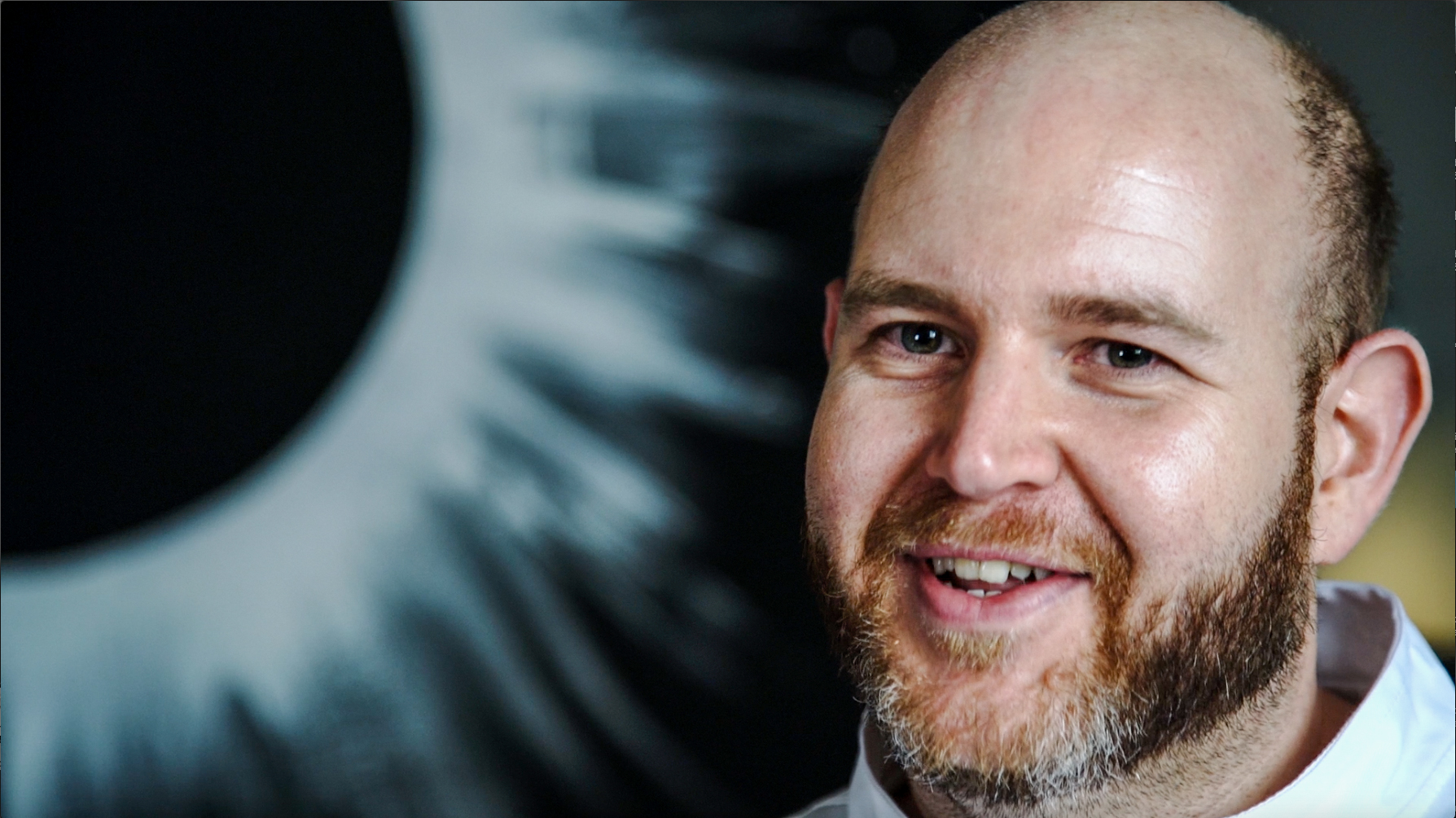
Since opening in 2013, English modernist Brasserie Hoi Polloi has established itself as a culinary and social center for the modern workers of London Shoreditch, a diverse bunch linked by a forward-thinking mindset. Now Ken Tolley, who has previously been senior sous chef at The Beaumont Hotel, is to take over as the new head chef. The kitchen will improve on its modern and deftly unfussy standard on British dishes. Ken Tolley, who has been quietly working behind the scenes at Hoi Polloi for the last couple of months, developed a new menu that takes a seasonal approach to English produce, with an inspired but understated use of ingredients that may only be in season for a few weeks. Ken Tolley brings a wealth of enthusiasm and experience to the kitchen team. Well accustomed to working in a bustling, brasserie environment, Tolley previously has been chef at Electric House (Soho House Group) and held positions at Dean Street Townhouse (Soho House Group), The Delaunay as well as Corbin & King.
READ MORE →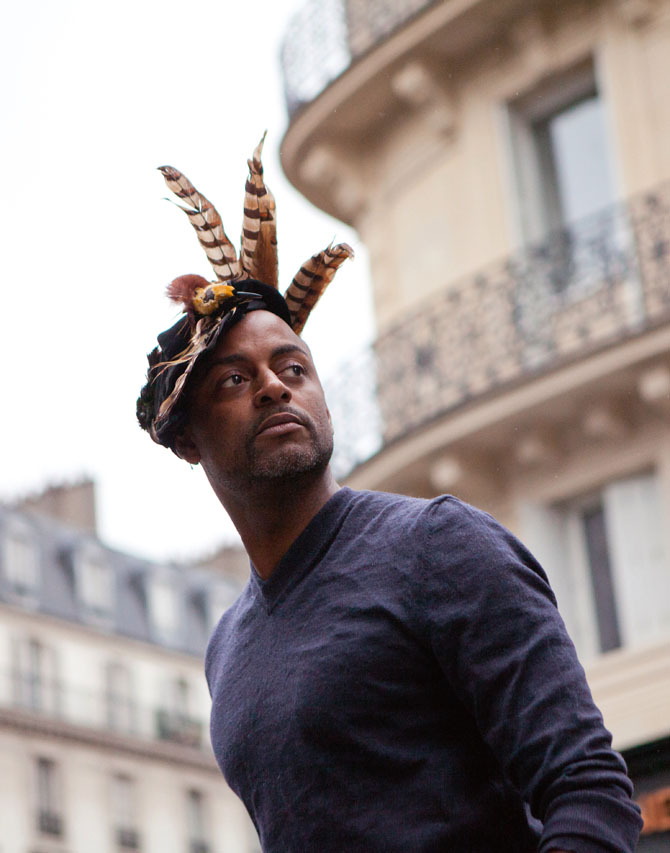
Eric Charles-Donatien is a plumassier - the last one in Paris. The colourful world of haute couture is his home. Each of his feather creations - hotly coveted in Hollywood and on the world's runways - is, above all else, an attempt to find his lost wings. What’s a plumassier? “A plumassier is a person who works with feathers. It’s a very simple job. The only thing we need to do it is a few old sewing machines, and that’s it. Everything else is handmade. Every piece is unique. You never come into contact with the same thing twice. The material – feathers – is as transitory as ideas themselves, and obeys in unexpected ways. That’s very hard to understand today with all the computers and machines”. Eric’s imagination wanders backwards in time in front of us. A true artist. One can’t pull away from him. “Feathers are among the oldest materials worn by human beings. In order to warm themselves, to impress. But look in any historical museum – feathers were mostly used in order to make oneself look nice”. „We are only interested in the experience itself. That, which our feathers make come alive, the smell, the touch, the smell…" The loft-like studio is located on the ground level in the inner courtyard of an old, weathered Art Nouveau apartment building buried deep in the quartier. It’s functionally decorated. Dozens of lamps turn the grey, rainy day into a sunny one. A workshop in the best sense. No glamour, and without any concession to potential clients. Eric’s world is colourful, and his face speaks volumes. He could work anywhere if he had to – even without windows, in some basement. He would light up the room with his own brightness. „I’m an angel, wanting to find his wings again.“ You only make fashion for women? “I look for the woman in the man, the man in the woman – a very time-consuming search…“ Would he wear this feather jewellery himself? I point to an androgynous, faceless Styrofoam head wearing a small, shaggy piece of feather jewellery. “Of course”, he says, fast as a bullet. I ask him to come outside into the rain with me. Or would that be a problem for the feathers? He smiles at me defiantly and puts on the headpiece. “I’m working on a new collection, for men. One day I will succeed. Look at the American Indians. What the men there wear on their heads, when they’re going to war…” Read the whole story in Falke footprints Eric Charles-Donatiens favorite spots in Paris are:
READ MORE →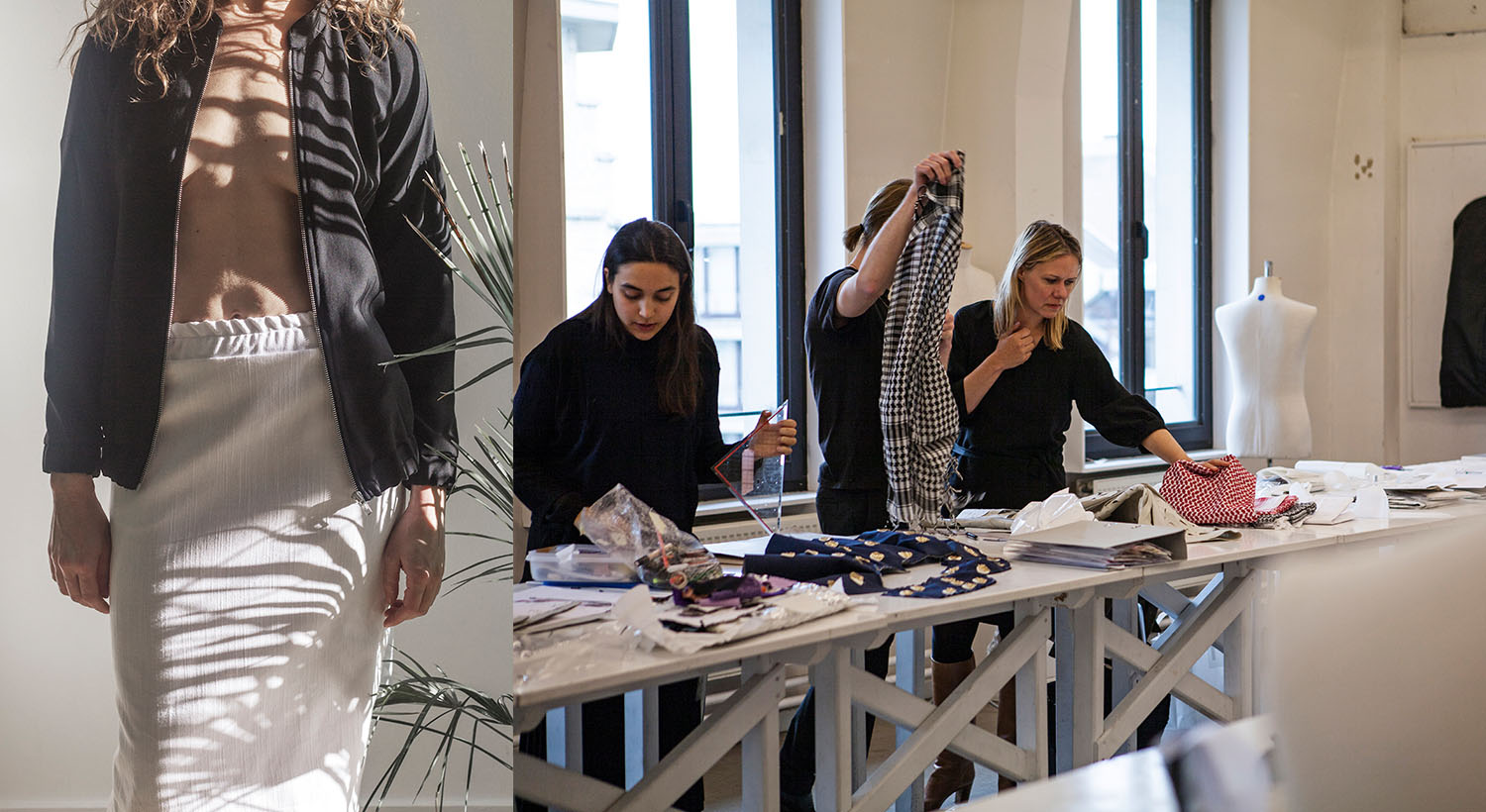
It all began in the ’80s. With six fashion students from Antwerp’s Royal Academy of Fine Arts who were brave enough to go out into the world with their own collections. Who went to Paris, London and Tokyo to present their collections. They called themselves “The Antwerp Six.” Their brash spirit and unabated optimism about conquering the world with fashion – you get a good sense of this with Maureen, who has been teaching fashion to young students from around the world at the Royal Academy of Fine Arts for seven years now. "We have over 40 nationalities here. Everyone brings their own history with them, their experiences, their inspiration." Antwerp is small. You’re always running into someone you know, and that’s a good thing. It’s easy to recognise them, the students of the fashion academy, with their extravagant garments and giant IKEA bags filled with their work that they proudly tote around the city. Read more on FALKE footprints Maureen's favorite spots are:
READ MORE →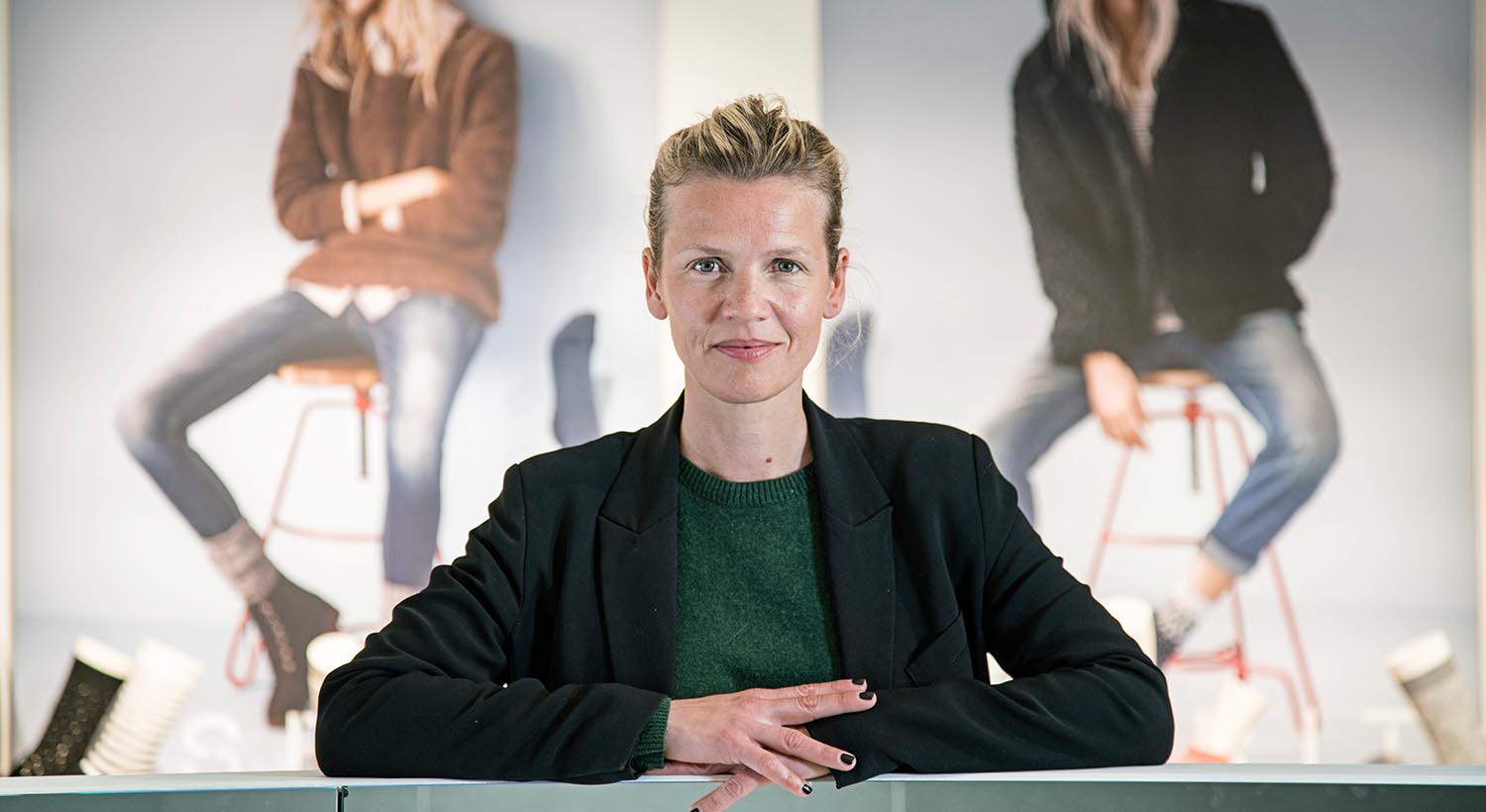
Julie Grangé knows Antwerp. She grew up here, went to school here, saw the city expand. She watched the new and the old competing neck and neck with each other before deciding to join in on the fun as an architect. Her city is like no other in Belgium; it brings both tradition and innovation together. Paul Falke entrusted her with the task of designing his private home before she was commissioned to redesign the two-storey retail space in Antwerp’s Schuttershofstraat 22. It’s a street that’s developed into one of the most exclusive shopping destinations in the historic centre over the course of many centuries. Quality – Functionality – Longevity “We looked closely at the brand before making any decisions. What does FALKE represent for me? What does it represent for others?” Julie chose to work with the best materials available: expert-crafted furniture, innovative lighting. Where the space allows it, she employed mirrors to give the illusion of more light and space, putting the merchandise centre stage..... Read more on FALKE footprints Antwerp Disvocer Julie's recommendations for Antwerp:
READ MORE →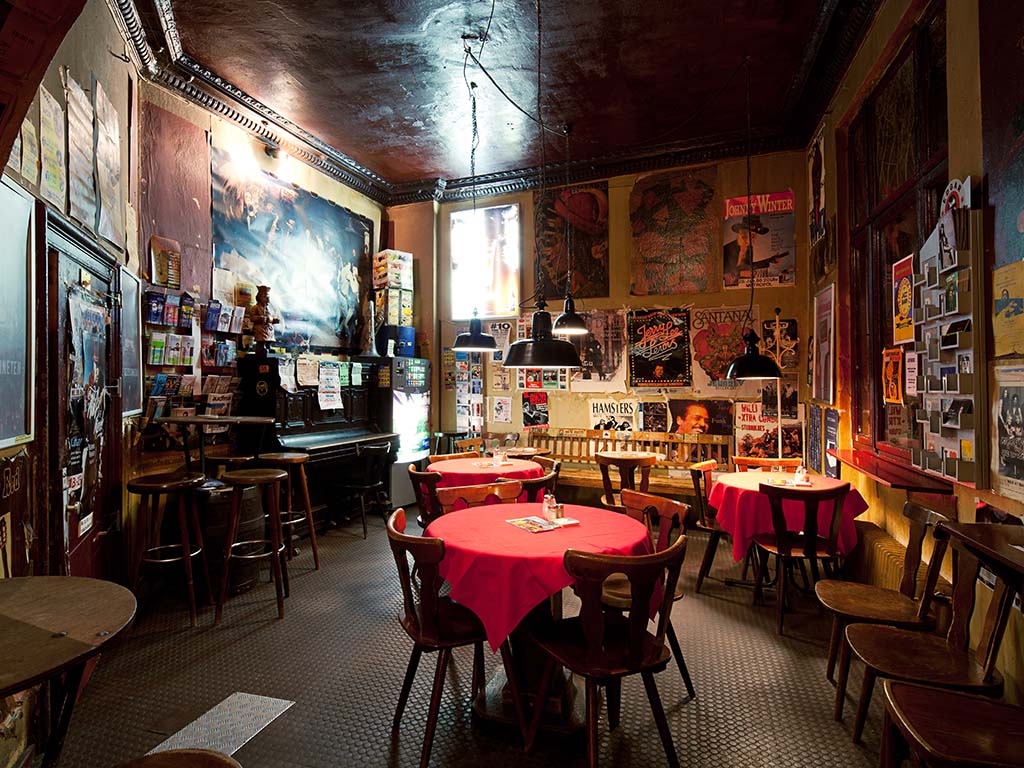
Century Pubs in Berlin is a multimedia publication containing an illustrated book, app and on feature on Cool Cities website. With wonderful texts by author Clemens Füsers, which not only reveal much about historic pubs, but also tell the story of Berlin from the perspective of a bar counter. An institution not only for friends of live music is Yorckschlösschen in Kreuzberg: From Viennese coffeehouse to Kreuzberg institution – this legendary living room in the middle of the stomping grounds of the old left and career revolutionaries is in the heart of the bourgeois part of Kreuzberg. Once a popular place for conspiracy theorists and starry-eyed idealists, some made fun and call the pub “Neuschwanstein for the poor” with its annual “Ball for the Hopeless.” Now, it’s the premier sport for enthusiasts of blues, funk, and jazz, with top-notch live music at low prices. Traditionally cozy and filled with knickknacks and trinkets, the lively beer garden is not to be missed—especially in combination with a fresh draft and some meatballs.More about the book and appOrder book Download app
READ MORE →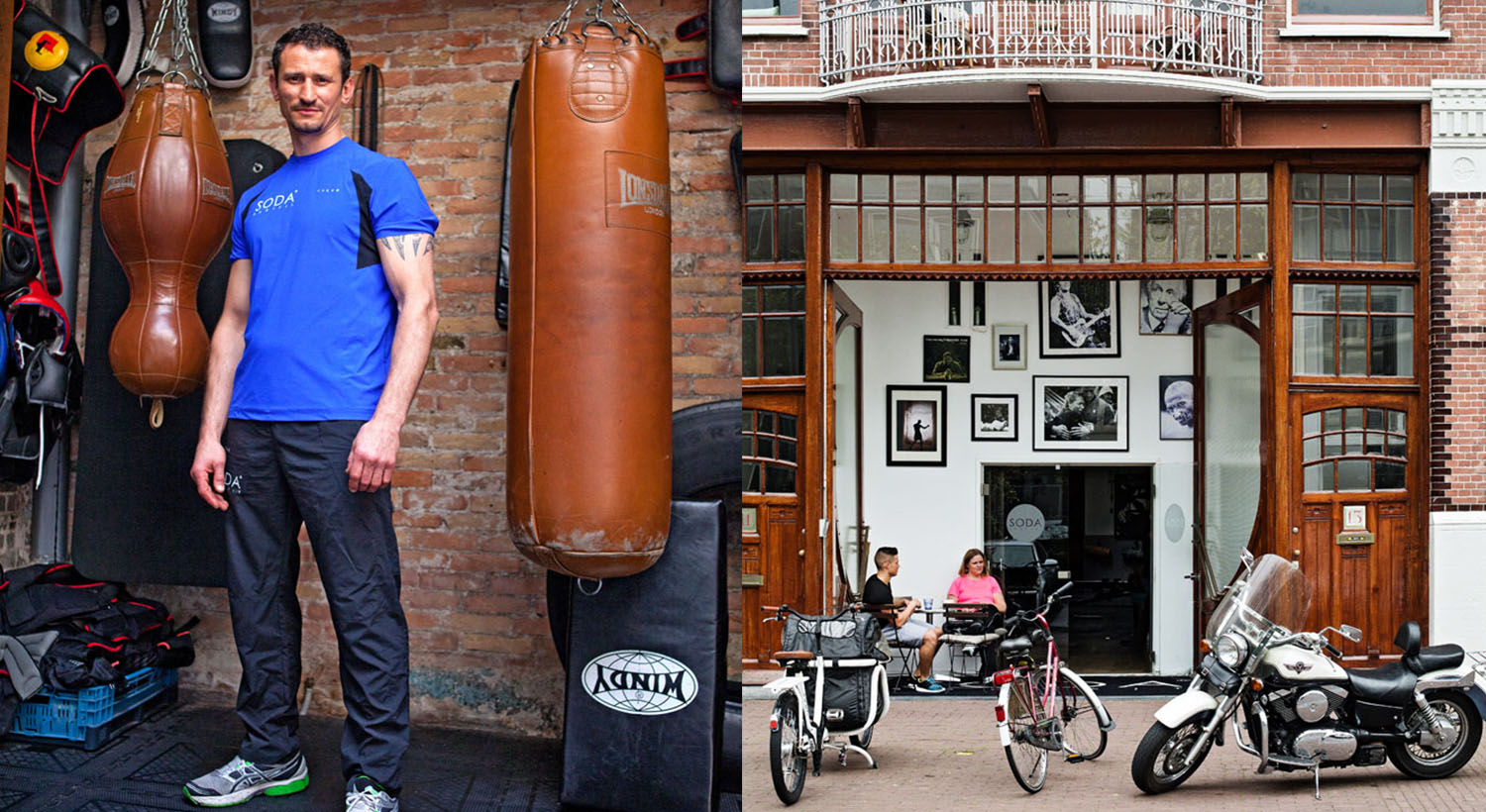
„My name is Radmilo Soda. i was once a boxer. This is my studio and here is my story“. It’s clear that he has fought a lot in his life – not only in the boxing ring. Radmilo Soda comes from Croatia, where he was born and raised in a time where war and violence were part of everyday life. When he was 16, he visited his sister in Amsterdam and decided to stay. That was 26 years ago. Today he is one of the most sought-after and successful personal trainers in the Netherlands. He first found a position as a cook, but that wasn’t enough. He didn’t know what to do with himself and his anger. He began to box, which helped. It became an outlet for many different things. Someone approaches him, asking him if he would be interested in fighting. Radmilo, barely 20 years old, says yes. He enters the ring again and again. He wins, not always, but often enough. He becomes an amateur champion and reigns for over five years. Radmilo leaves boxing but stays true to himself. He goes to school and learns everything he can about competitive sports. He knows where he wants to go, just not how to get there. "A successful boxer hardly makes a successful businessman." Radmilo stands before a new challenge, takes it on and wins. Today, he has a loft in one of the coolest areas in Amsterdam, his clientele come from all walks of life. Managers, employees, housewives and even children come to him for training. The bodily transformation is a part of the arrangement: nobody who goes through his training stays the same. Radmilo has set a new goal for himself: he wants to write a book. The topic: nutrition as a holistic experience. A book with advice, not recipes. Each person, each body is difference. People must decide for themselves what’s good for them and what works for them. Radmilo’s suggestions seem to work. He talks about clients who finally got their weight under control. Women who finally enjoy looking at themselves in the mirror again and who have gained a new sense of confidence. Radmilo helps those who are willing to help themselves. The rest happens in his personal training two to three times a week, depending on his clients’ discretion. How fit is Amsterdam actually? “It’s getting better. Amsterdam definitely has more to offer than sex, drugs and rock and roll.” Read the full story at Falke Footprints Ramilos favourite spots are:
READ MORE →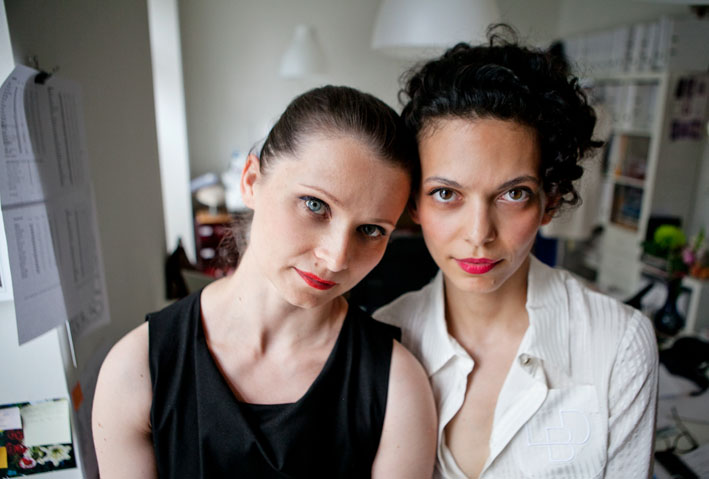
Joanna Skoczylas and Eliane Diethelm are self-confident. Very self-confident. And they have to be. After all, what they aim to accomplish is quite radical: to change the fashion sense of the women in Zurich. “When I first came to Switzerland, I was a little disappointed. It wasn’t stylish, not fashionable. Women here dress for comfort and convenience. They don’t want to draw any attention to themselves. I wanted to change that.” Johanna was born and raised in Warsaw. At first, she was surprised that the women in a rich and cosmopolitan city like Zurich seemed to have so little self-confidence. “Men don’t have as many opportunities as women to express themselves with their clothes. Men wear pants and shirts. That’s it. Women, on the other hand, wear skirts, dresses, pants – why don’t they play with these different options and enjoy it? A dress is so beautiful, because it’s enough by itself, because it’s a fast solution and looks great!” The only thing they still needed was a name–Little Black Dress. “Black” is crossed out in the logo, and naturally everyone wonders why, but nobody asks. The two of them were looking for a suitable and affordable store. They found it in a very exciting area–Kreis 5, an up-and-coming neighbourhood. The young women worked hard and within four fast-paced years, they managed to make their label famous throughout the city. “I always have something to write on next to my bed. Sometimes when I’m dozing off, I have ideas I’d like to capture,” Eliane confesses. Such ideas might even be the starting point for a new collection. The two women work together closely on the composition of their designs and they make their decisions jointly. As soon as an idea is solid, they move on. Sometimes they go back to old drafts–and that’s when the real work begins: crossing out and revising things, choosing fabrics. Where is all this going? That’s what they talk about, discussing it over and over again. What are the happy moments? The two women seem to agree, taking turns answering. There are so many moments, they say. For instance, the moment when a new delivery arrives. Unpacking the merchandise is like Christmas. “You have handed over the designs and the drafts and everything else–and then the finished product arrives: pure, beautiful, clean, sewn perfectly, well creased. And then you put it on for the first time.” Read the full story at FALKE footprints Little Black Dress’ favourite places are:
READ MORE →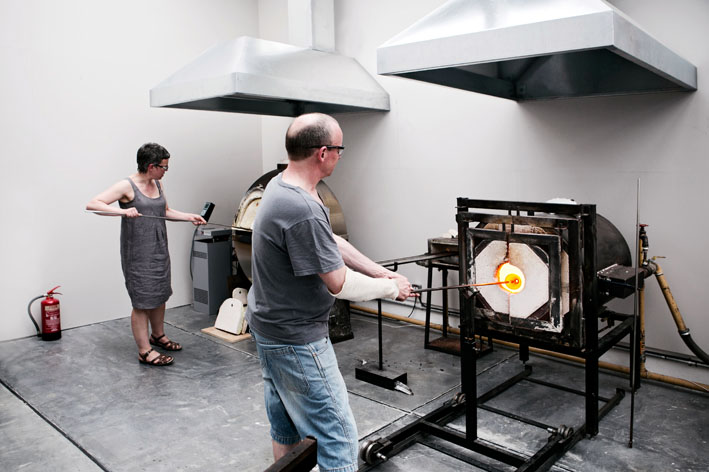
Michael Ruh & Natascha Wahl have their hearts in glass - an art that uses both the mind and body. Their mutual love of working with glass brought them together, led them first to travel the world and then finally to settle in London, where they now successfully run their own studio. Before Natascha met Michael, she met his drawings. She had arrived in the town of Mechelen, Belgium, to attend a glass art summer-school programme. Michael was working from a studio in Bonn but had done some work at the school. Natascha: 'I was looking at some drawings at the school and thought, "Oh, they look just like mine." We were drawing similar shapes in a similar way.' They met in person when Michael visited to check out the programme. After a long-distance relationship, and then a period living together in Michael's Bonn studio, they threw around a few ideas about places to live permanently - and London seemed like a good place to start life as a new couple. Natascha: 'We were both involved with glass. There were about seven glass studios in London at the time; it was a good place to start, to find a new job, to make a new life, to grow as a couple.' As a place to call home, London crept up on them. Michael: 'The first time we came back from an extended stay away from London, that's when we had this feeling of London being our home.' Buying a house also played a big part in their embracing the city. Initially they were renting, but the owner of the house told them: Either you buy or you move. After four months of nesting they were ready to fly away, for a time. As in most artists' lives, the commercial and the creative butt heads. Michael and Natascha are often asked if outsourcing would be more viable economically. Both say it would take the fun out of it - the pleasure being in the making. In fact, their commitment to the creative has led to times when they took work wherever they could find it, including a period when Michael worked onboard a cruise ship making glass in an outdoor studio. Michael: 'On board we would narrate and work. And when I narrated, very often I would ask the audience to raise their hands and show me, "Who is happy with their work?"' A good day was when half the people put up their hands. Michael: 'At least we're happy. I think that's worth a lot.' Read the full story at FALKE footprints Michael & Nataschas favourite places are:
READ MORE →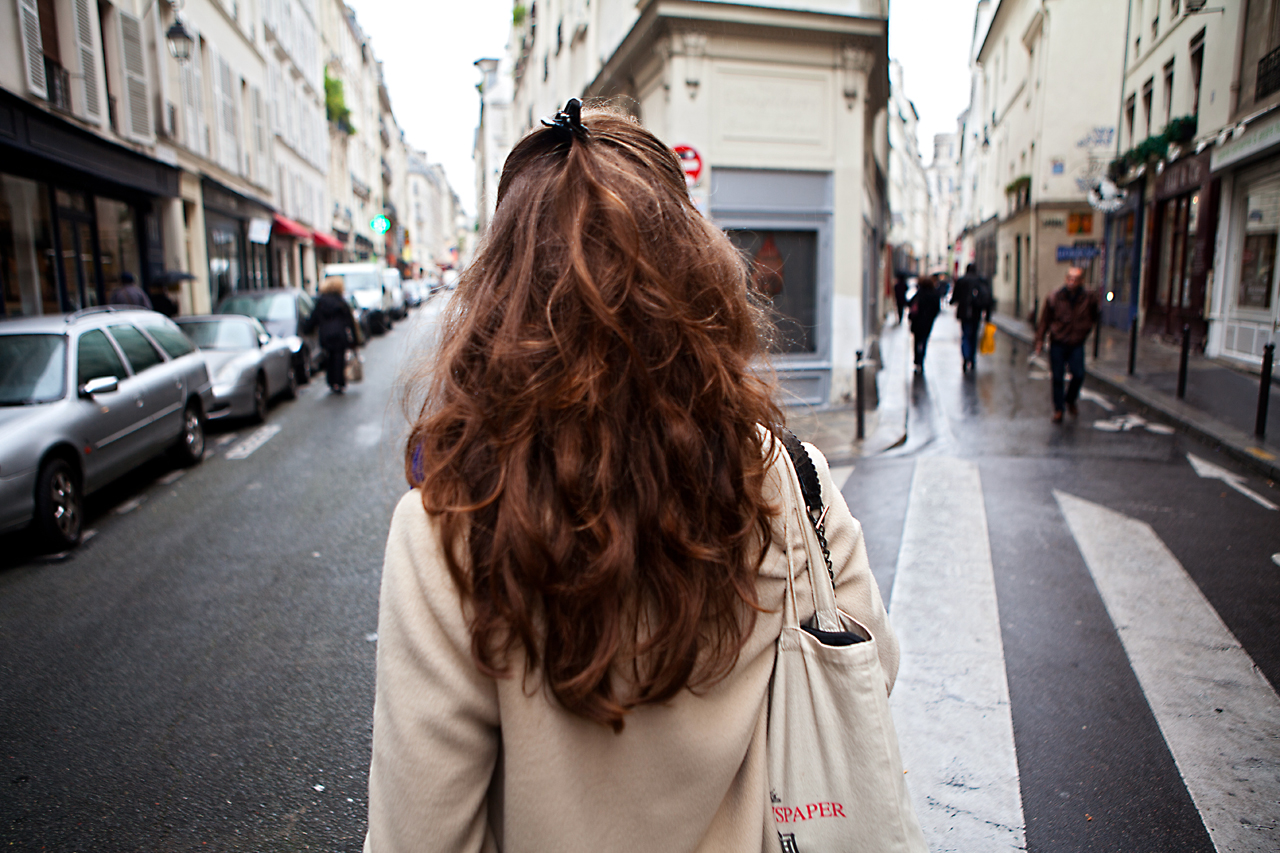
Many contemporary artists take photos and manipulate them to express their artistic vision. Others use paint and canvas to replicate the realism of photography. Isabelle, on the other hand, sees herself as an arrangeur – an art director. She decides everything: the model, the light, the detail, the camera setup, the format, the optics. She creates her own universe – an alternative world. And then, when she finally takes the photograph, having created the perfect arrangement, she’s finished. On principle, she doesn’t manipulate her photos digitally aside from a few colours here and there. “It is what it is”. I love it, to create a universe, fill it with characters and then tell their stories”. And that’s what she does. Her portraits are landscapes of the soul, full of magic. They engender equal amounts of discomfort and pleasure. They can show, in one instance, a garishly made-up, doll-like children’s face, whose gaze seems to be penetrating the viewer’s. In another instance, they can show a growth-like mound of hair enveloping the head of a beautiful, stoic woman in its powerful web – a web with more dynamism and life than the woman herself. Her motifs are reminiscent of the MAGICAL CIRCUSES of the past: the CIRQUE MAGIQUE in which the strange and the monstrous are equally powerful, beauty and ugliness confront each other, before a precipice that draws in the viewer.Jo Weissgerber More on FALKE Footprints Isabelle Chapuis' Tips for Paris:
READ MORE →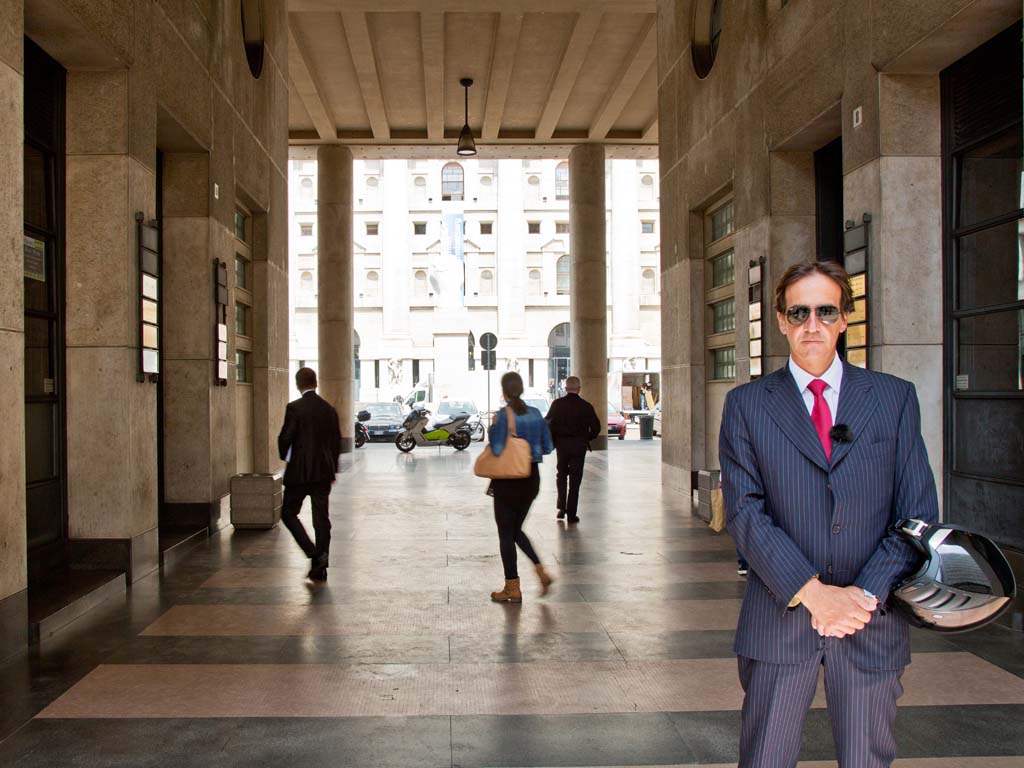
Bank manager, family man. Alessandro Mansuetti has lived in Milan since 1992 and knows the city like the back of his hand. COOL CITIES joins him on his electro-scooter through the city, passing the iconic cathedral, the stock exchange, shopping boulevards. He shows us his favorite bakery, where he likes to get a panzerotti now and again. Then it’s off to the golf course for a few rounds, followed by a drink over the rooftops of Milan. Together with BMW, COOL CITIES gives you a glimpse into the city through the eyes of a local. Alongside Milan, Amsterdam, Barcelona, Munich, and Paris are ripe for discovery—each filled with secret spots presented by people who love their cities.
READ MORE →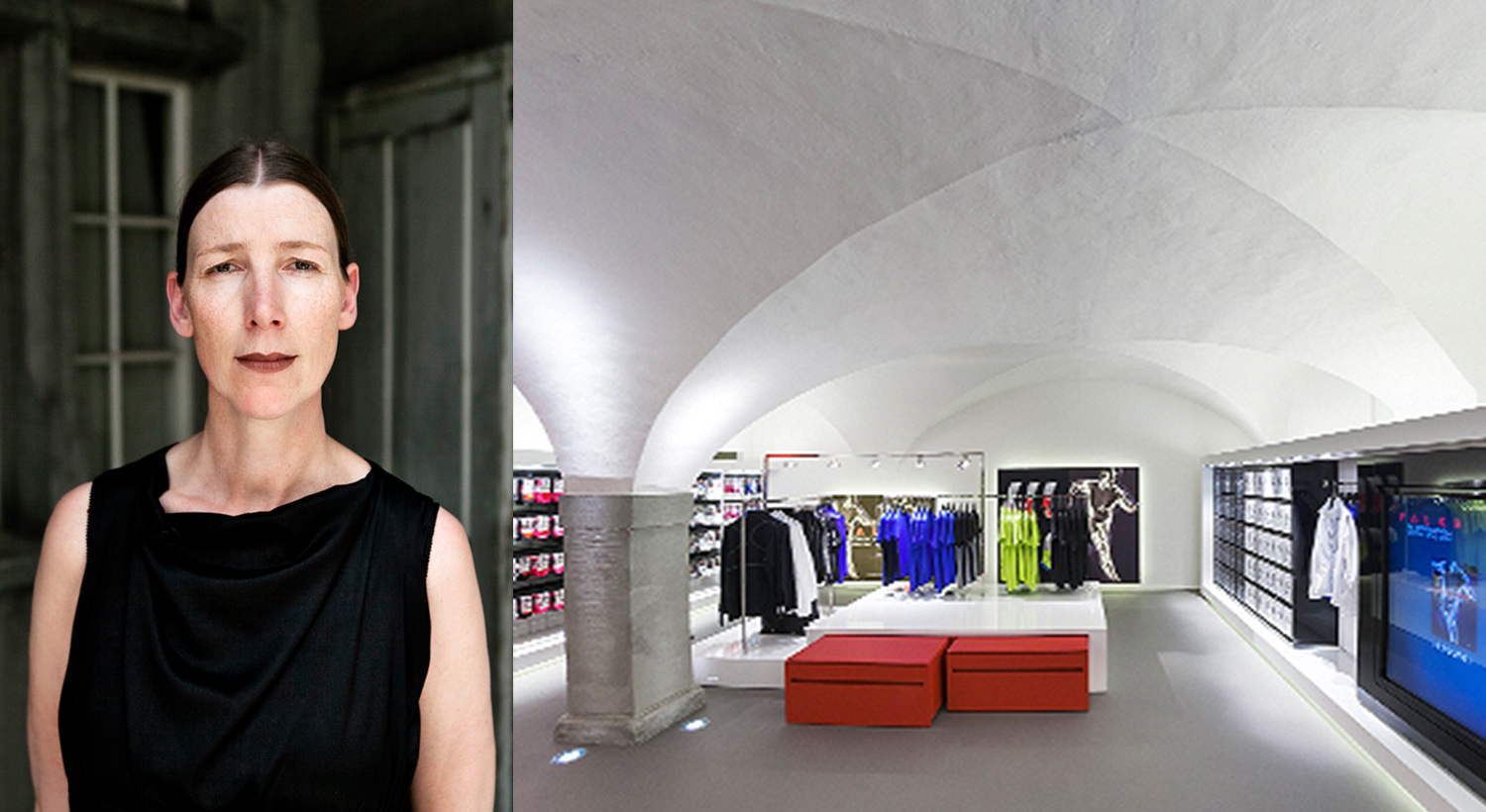
Sabine Keggenhoff attracts stares. There’s no doubting it. I follow her through the city: Her simple black dress, severe hair and slow walk – seemingly unrushed and aimless – makes her stand out from the other passerby on this hot summer day in the centre of Zurich. Squeaking streetcars rattle by, relieving one another. Tourists and locals throng across the intersection, but she stays where she is. The traffic lights change from red to green. People stream past her. She waits – behind her, the horizon, Lake Zurich and, in the distance, the snow-covered mountains. We walk into Sprüngli, in the heart of the Old Town – outside, on the cobblestones, there are two-dozen coffee house tables full of tourists and, inside the giant tinted glass windows on the ground floor, the chocolate shop. It’s big and colourful, with countless glass cabinets displaying works of confectionary art. Everything fits, because it is as it always was. Of course, there are also tourists, but according to Sabine Keggenhoff, they all stay downstairs. “Upstairs, on the first floor, it’s Zurich locals with their newspapers, their coffee, enjoying themselves as they would in a Viennese coffee house, where you can be but don't have to be. That’s how the whole city is, really. I like that a lot”. How do you, as an interior designer, see the city? Read more on FALKE footprints
READ MORE →
After thirty years in the British fashion industry Lionel Copley has made the move into interior design. With a brilliant eye for art and textiles, the designer has created two successful bed and breakfast guesthouses in Hastings Old Town - a place he originally visited while searching for a simple coastal bolthole.. 'I don't like parking something.' Fashion and interior designer Lionel Copley is talking about working with architects on the store design for British brand Reiss, for which he used to be Creative Director: he's someone who sees and participates in all aspects of each venture he works on, and likes to ensure a project's disparate threads are woven together for a holistic result. Lionel does things carefully and aims to realise the full potential of his many endeavours. He's like that with people, too, engaging with local designers on his projects in London and Hastings, and supporting the creative ideas of those people - many of whom are artists and friends - who work with him at Swan House and The Old Rectory, the two bed and breakfasts he has designed and co-owns in Hastings Old Town on the East Sussex coast. After going to art school in Scarborough, Lionel studied fashion as an undergraduate at Newcastle University. He went on to do post-graduate work at London's Central Saint Martins College of Art and Design. After graduation he began working for the great Katharine Hamnett, and continued this for about sixteen years. Next up was Reiss. These days he continues to consult for Katharine Hamnett, now owned by a Japanese company. He still loves fashion design - 'clothing design, fashion, I enjoy it, it gets easier when you've been doing it for thirty years' - but is also enjoying the challenge of interiors. 'Fashion design is how I started out... interior design is what I am trying to do more of.' Swan House and The Old Rectory have been a huge success; the latter is also a very popular wedding venue, and in both places the sense of being at 'home' is no accident. Lionel has created welcoming spaces rooted in Hasting's history, both old and modern (all rooms in The Old Rectory are named after streets in the town). Hastings itself has a thriving community of artists, designers and writers. Not surprisingly the Jerwood Gallery is a favourite spot to visit. Designed by HAT Projects and named for John Jerwood, a philanthropist and businessman, the gallery exhibits the Jerwood Collection of twentieth and twenty-first century British art. Read the full story at FALKE footprints Lionel Copleys favourite places are:
READ MORE →
Beatrice “Trixie” Cordua has been dancing for over 60 years. She herself doesn´t really know why she is so often naked at the same time. It’s hard to believe that this woman is already 71 years old. With her long, reddish-brown hair and her smooth face, Trixie Cordua could easily pass for someone twenty years younger. She stands in the doorway of her old-style Neukölln home where she has lived since 1994, and invites us in. Books and film rolls are piled right up to the ceiling in the narrow hallway. The living room is a hotchpotch of pictures by her husband, the artist and film-maker Ludwig Schönherr. A doll of the American comic figure Wonder Woman hangs between photographs of adverts from the 70s. The curator of the Venice Biennial just dropped by to see Schönherr’s pieces. “There’s not much of me on show here actually”, says Trixie Cordua with a slight Hamburg accent. “His first film in 1968 was about me. But otherwise my husband tended to photograph the other ballet girls”. For years, Trixie Cordua danced for the American ballet director and choreographer John Neumeier in Hamburg. She spent years as his prima ballerina, and later became the first female soloist on the Berlin Volksbühne. Today she produces her own works, often in collaboration with the artist Thomas Langkau and usually in Dock 11, an off-stage studio in the Prenzlauer Berg area. “They are always really controversial pieces”, Trixie Cordua explains as she pushes a DVD into the computer. Against the raw backdrop of a warehouse she can be seen dancing the folk dance “Schuhplattler”, naked. In the next piece she is performing a bust-ballet by moving her breasts in time with the music. The invitations to her performance-before-last feature her washing her feet in a bowl of water, naked. Why she desires to be naked? “I don’t really know myself why I’m always naked”, she says with almost a hint of coyness. “That’s how it’s been for a long time. I shot naked scenes for friends of my husband’s, all filmmakers. I also danced a naked solo for Neumeier. It didn’t bother me. I was brought up really liberally“, she adds. Since she’s been living in Berlin she has started to feel happy in a city for the first time in her life. “Berlin is so unusual because it reveals such a great amount about Germany. It shows our history and our strengths, but also really underlines our weaknesses. It must have something to do with the fact that it isn’t finished. Or even that history is so clearly visible here”. Even her Neukölln neighbourhood has been undergoing some upheaval: since the Tempelhof Airport was closed and replaced by an enormous park, the area around the Schillerpromenade has become popular. Before the arrival of the artists and small galleries it was something of a social flashpoint, but now there are pretty little cafés opening up one by one. Trixie Cordua feels good here, even if there are still a number of social problems. “The mix has improved, and that’s a good thing. I prefer the people of Neukölln to the superficial exteriors of Charlottenburg inhabitants”. Read the full story on FALKE footprints Trixies favourite places are:
READ MORE →
If there were such a thing as friendship at first sight, then Sabrina and Natalie would be superlative examples of such. The two met in New York in summer 2010 and started spending every evening together –until they briefly parted ways again. After all, they both had to complete their studies (Natalie at Trinity College in Connecticut, Sabrina at the Sotheby’s Institute of Art in London) until they could return to the city with the world’s most exciting music scene.They had both already stared DJing – and decided to join forces. Sabrina and Natalie stand behind the turntables weekly as SBND at all sorts of venues, e.g. the Mondrian Soho or the Hudson Hotel. They’re big fans of house music. With crowds used to male DJs, they are often subjected to silly questions: “Wow, are you actually DJs? Can you actually perform the task of DJing or are you more just faces – like pretty faces?” Now they’ve been in the scene for three years and they don’t have to prove themselves to anyone. They don’t even have to organise anything anymore – their agent takes care of their bookings. Yet they still refer to DJing as their hobby… In fact, they both are just as passionate about their day jobs. Sabrina works for Fever, an event app for New York. She works on the partnerships for the company, organising e.g. guest lists for users. “It’s a type of job where you don’t feel like you’re working all the time,” she says. Natalie incorporated her passion for music into her career as a Remix and Promotions Manager for the music label Big Beat, which belongs to Atlantic Records. She assists DJs with their productions, marketing their tracks and scouts for new talent.“We just have each other’s backs,” says Natalie. The duo shares a number a dreams. They both love travelling – and why not lay down a few tracks in Europe, in the Caribbean or on the West Coast? It doesn’t really matter when your best friend is by your side. by Hanna LemkeMore on FALKE footprints Explore Sabrina's und Natalie's hidden gems for New York:
READ MORE →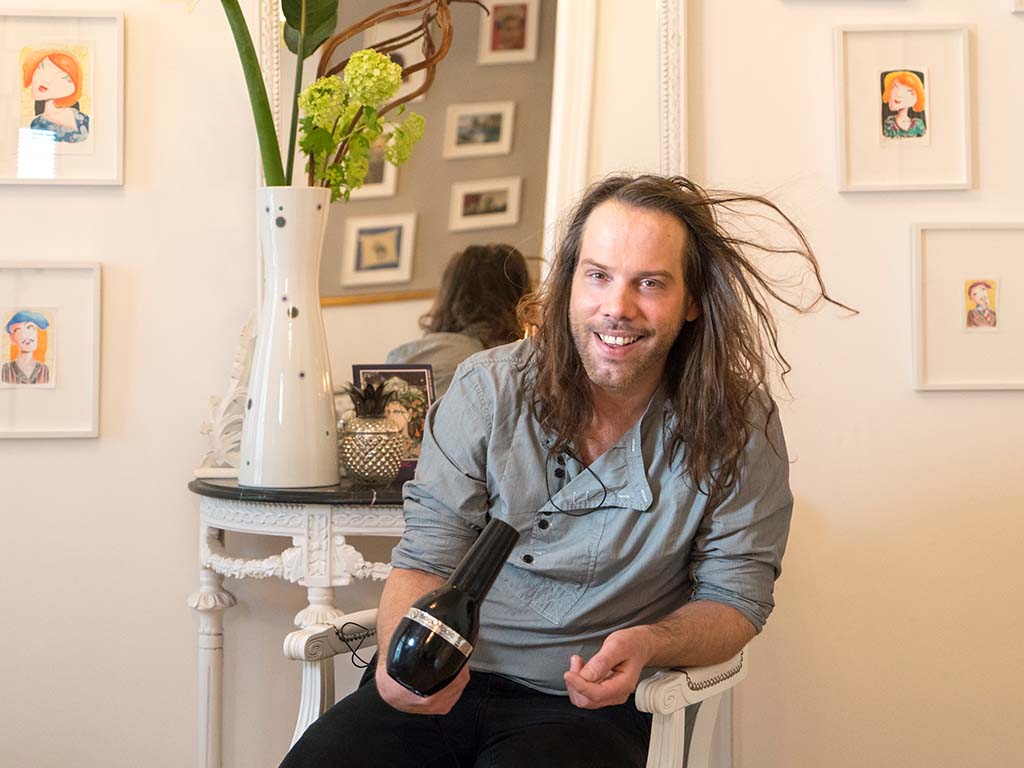
Those in need of some serious help for their scalp or hair health should look no further than stylist Dermot O’Dyna’s salon. Together with dermatologist and hair specialist Dr. Nina Otberg, he offers bespoke treatments to his discerning clients, even for those with more complex hair problems. The salon/doctor’s office is perfectly discreet in dealing with sensitive issues like hair loss. Based on individual consultations, the team decided which therapies will be most effective, be it special vitamin regimens or scalp stimulation or medical procedures like plasma therapy or hair transplants.
READ MORE →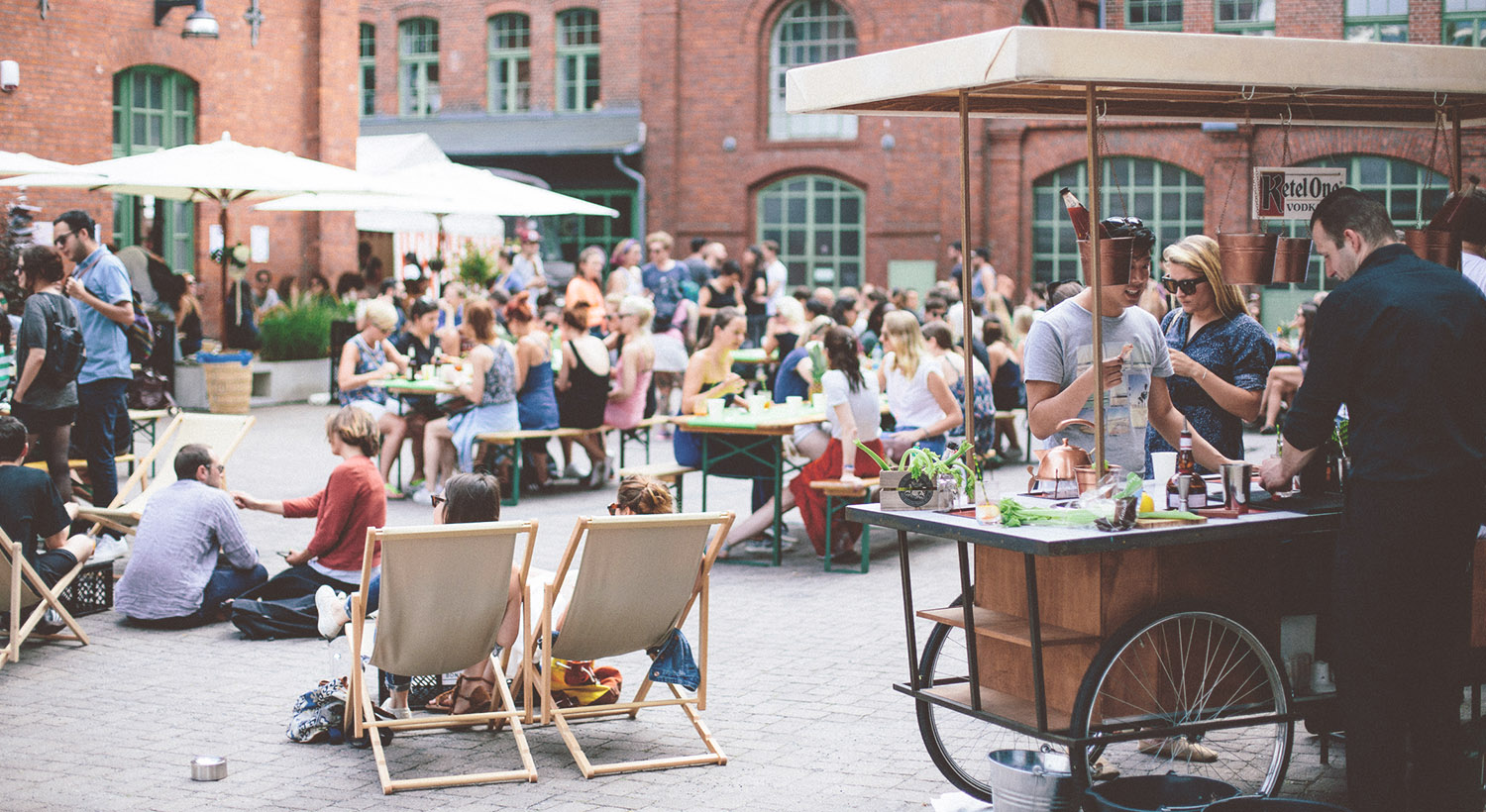
The research lab of an indoor urban farm, the stately interior of a GDR book shop, the courtyard of a landmarked industrial building – Since summer 2014, Sophie von Oswald has been realizing her vision of the perfect brunch: an all-day breakfast event series that brings people together in unassuming and unique locations across Berlin. As a concept, Das Brunch was developed by Sophie von Oswald out of a want to combine her love for Australian-style breakfasts, her personal approach to cooking, and her fascination for the many venues unique to Berlin. Born in Hamburg to an Iranian mother and a German father, von Oswald grew up in Sydney, where late weekend breakfasts – more than dinner and lunch – were all-day social events spent with friends. Dishes were generally served warm and characterized by their use of fresh, seasonal ingredients and their creative flavour combinations. Drawing from this experience, von Oswald adapts the Australian-style breakfast to Berlin by working together with local producers and street food vendors, and by scouting new locations for each event. The first Das Brunch served around 400 guests at the indoor urban garden, INFARM, in Berlin-Kreuzberg. The seventh, and most recent, Das Brunch took place this summer in the courtyard of Berlin-based coffee roaster Bonanza, with more than 700 guests attending throughout the day. Initially a collaborative effort between Sophie von Oswald and food creative Julia Ward, today’s brunches are conceptualized and executed together with her sister Xenia, who also works as a freelance food stylist and recipe writer. Each menu features three options: one vegan, one vegetarian, and one meat option. Dishes are centred around regional and seasonal ingredients, which are then combined with spices and herbs to pay homage to the sister’ connectedness to Persian cuisine. The resulting flavour combinations have become the hallmark of their modern Middle-Eastern breakfast dishes. Dishes, such as roasted pumpkin with tahini sauce, walnuts, and pomegranate alongside black beans, glazed parsnip, chermoula, and avocado; or poached egg with marinated buffalo mozzarella, potato rosti, star anise confit tomatoes, baby spinach with rhubarb vinaigrette, finely shaved asparagus, and wild garlic pesto. Sophie und Xenia von Oswald gained their experience conceptualizing and executing their own supper clubs (Krauted Haus) and catering projects (e.g. Atonal Festival, Berlin Fashion Film Festival, Markthalle Neun) working as culinary directors and managers for established recipe delivery services, as food stylists, as recipe writers, and creative directors for food markets. Cool Cities sat down with Sophie von Oswald: How did the two of you get involved in the culinary scene? Our mother is an incredible cook and always made sure the family came together for dinner. This is still really important to her. So it was more or less destiny that we were both bound to find our own passions for cooking. I actually studied journalism, but when I moved to Berlin in 2010, I started a supper club, while Xenia worked as a chef and a food stylist after her studies in hospitality. When my sister moved to Berlin three years ago, we decided to work together. Did Sydney and London influence your taste? Both cities lead the world’s culinary scene and guests are very discerning there. You see a lot more international influences on things like breakfast or brunch than here in Berlin. It’s odd, but Germans have really stuck to their cold cuts, jams, and bread rolls. We wanted to offer something different with our brunch, but we also wanted to bring people to some of Berlin’s most unique locations. What made you decide to do a brunch instead of a supper club or dinner parties? We liked the idea of bringing people together at unique locations to eat good food during the day—which is atypical for Berlin. No partying, no hard liquor, no DJs. We wanted to create something that reminded us of our family breakfasts at home, where we spend the entire day together. We still offer some libations, like Bloody Marys and Pimm’s Cup, but the informal gathering is what is paramount. Do you think this is the first step towards opening your own restaurant? We constantly create new recipes, be it for our brunches or our food blog “Rocket & Basil,” and we have certainly considered bringing everything together into one culinary concept. But we don’t have any concrete plans as of yet.A selection of their recipes and projects can be found on their blog rocket & basil Visit www.facebook.com/dasbrunch all Photos are by Rebecca Crawford: www.instagram.com/beccacrawford/ The sisters' favorite spots in Berlin are:
READ MORE →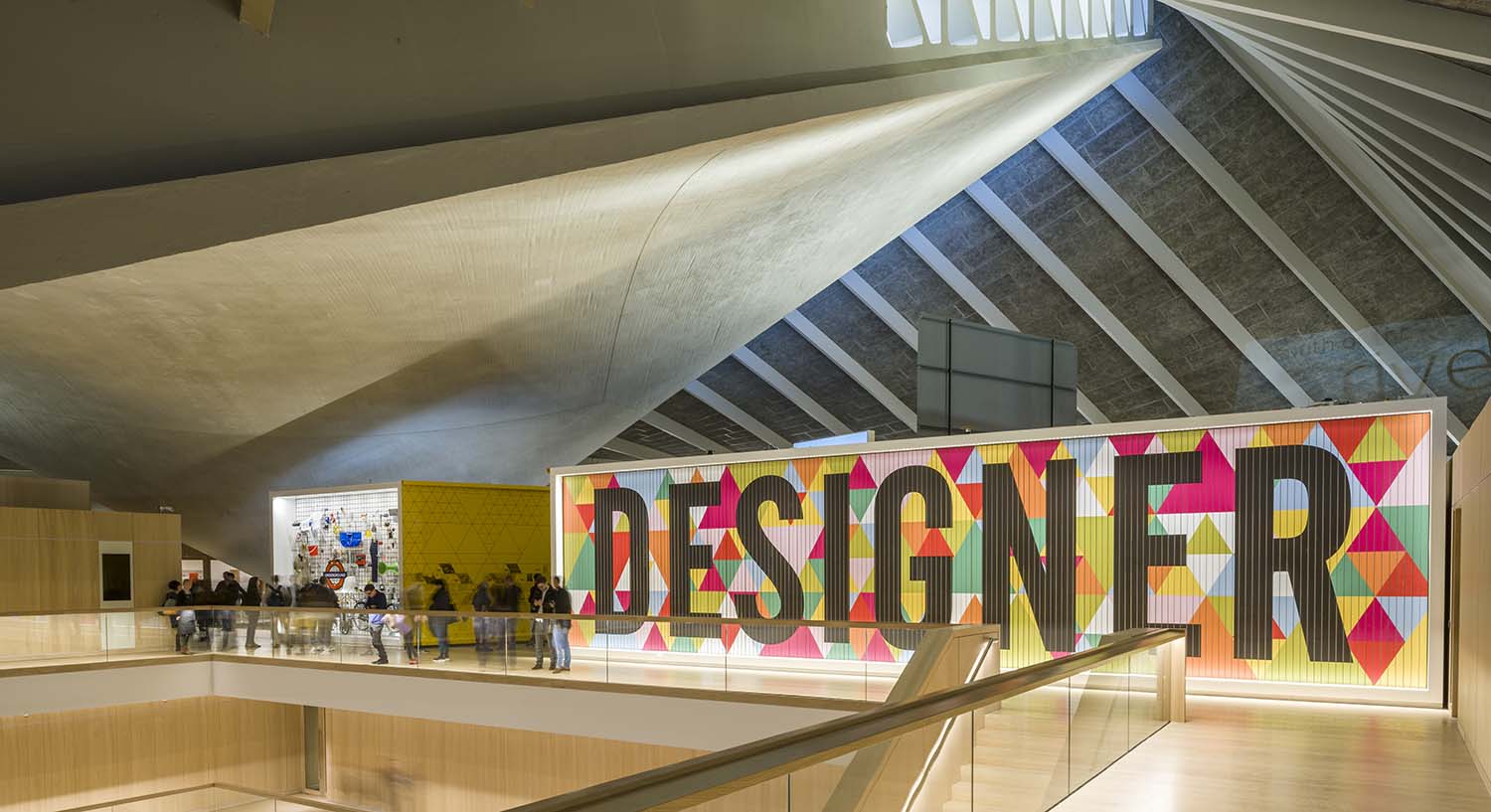
Good news for design lovers. The Design Museum London 1989 founded by Sir Terence Conran reopened its doors in a new space on Kensington High Street, designed by architect John Pawson. The former museum located in a warehouse in Shad Thames was already a premium address to experience contemporary design in its diverse facets. In its almost three decades it hosts plenty of innovative and controversial exhibitions, including shows dedicated to the work of Zaha Hadid, Hussein Chayalan, Dieter Rams, Ettore Sottsass, Sir Paul Smith, Christian Louboutin and Richard Rodgers. The museum sits on Kensington High Street next to the southern entrance to Holland Park and forms the heart of the new Holland Green residential development. It combines architecture, product design, technology, graphics and fashion to investigate the form, function and meaning of the world around us. The complex renovation of the museum saw OMA led by Reinier de Graaf, Allies and Morrison, Arup and John Pawson work together to bring this landmark of post-war British architecture back into use. Inside the museum, visitors find themselves in a central atrium with striking views up to the iconic hyperbolic paraboloid roof. The stunning concrete roof spans the length of the building, rising on the two opposing corners to create a manta ray-like structure above. Galleries, learning spaces, café, events space and a shop are arranged like an opencast mine around the main atrium, allowing visitors to navigate the space with ease and to discover everything the building has to offer by simply walking up its oak staircases.
READ MORE →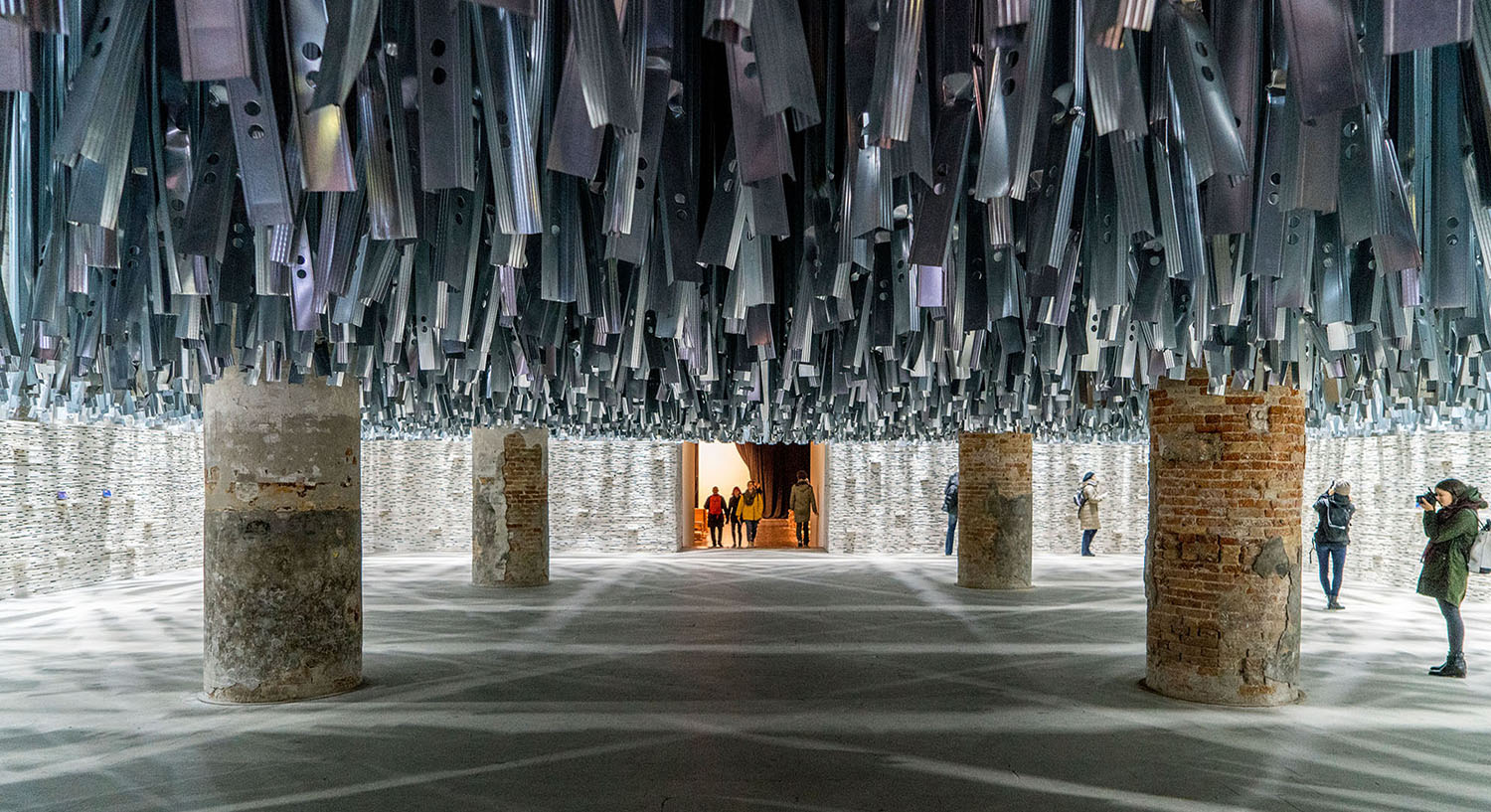
Cool Cities joined Professor Axel Müller-Schöll to the Architecture Biennale Venice 2016 this year. Teaching interior design and construction at the Burg Giebichenstein University of Art and Design Halle, Müller-Schöll particularly loves visiting Venice in autumn, when the hordes of summer tourists subside, the sun appears more flat, and the weather is sometimes gray and foggy. “This is when Venice shows off its easygoing side. The city is especially charming this time of year, and it provides the perfect context for visiting the Biennale.” The topic of this year’s event is “Reporting from the Front.” The Chilean architect and art director of the exhibition Alejandro Araneva wants people to see architecture as a solution, not as part of the problem. Consequentially, the exhibit touches on themes and challenges affecting our times, like the refugee crisis and mobility, sustainability, and humane living conditions in tight spaces in the ever-growing megatropolises of the world. “It was a challenge for visitors to relate to many of the topics discussed, as they have to engage with the problems to find solutions,” explains Müller-Schöll. The Berlin-based firm “Something Fantastic” displayed exemplary work in cooperation with the German Museum of Architecture (DAM). With the suiting title of “Making Heimat, Germany Arrival Country,” they split the German pavilion, presenting the development of a city through unexpected viewpoints and the resulting conglomerate of problems and their respective solutions. Some contributions fell short, however, developing convoluted solutions to problems that normal visitors couldn’t comprehend in such a limited amount of time. The Biennale 2016 was not just impressive, but it provided an optimistic glimpse into the future, at least in regards to solutions. Events like this show that human creativity knows no boundaries. We can solve our problems if we set our minds to it, and we can free ourselves from habits to allow for new ideas to foster. For more glimpses, have a look at the video, see buton on top:
READ MORE →
Actress Katharina Kowalewski in a short interview with cool cities: As an actress from the Ukraine via Paris to New York City – does that feel like a dream come true? NYC is definately my dream city. Back in 2004 I started to take acting classes with Jack Waltzer at Actor’s Studio and immediately fell in love with the cities independent film scene. It has always been my aim to, one day, play in english productions, but i took it slowly and started with german and french movies. Generally its not so much about where I work but about the quality of the production you’re in. Paris was a great opportunity. I had the chance to work with Laetitia Casta in the movie Arletty and with Pierre Niney in „Comme des Frères“ – both are actors I admire. In Germany I got to work with Charly Hübner which was also a great experience. So for now, NYC is certainly a good choice. I just came back from the Oscars in L.A and it seemed like a nice option to move there once we’ve finished shooting. At the moment I am part of two movie productions, one in NYC one in Boston, so I switch the cities according to where I work. After all I’m happy to be able to work in those great cities. It fuels my desire to tell stories and write own storybooks. By the way: my mothers granparents are from the Ukraine but I was born in Poland. When I was 7 years old we moved to Germany. What is the most significant difference between working in the U.S. and Europe? Being on a filmset in New York City was an experience. I loved to finally work in this iconic city, that I knew from so many movies. Since my acting coach Susan Batson, who has also worked with Nicole Kidman and Juliette Binoche, is based in New York city, I spent every minute I have in the studio there. In comparison to Europe, work here never really stops and there are Auditions and Castings almost every day. Wether it’s Netflix, high, there is no big difference between TV and Cinema anymore. Castings are also different. In the U.S. the majority are so called „self-tape-auditions“, where you tape yourself acting for a specific project. They exist in Germany too, but very often parts are given to actors due to their „showreel“. In my free time I love watching Broadway Shows, they inspire my work. Tell us about the new Film you are working on in Boston: The director Alvin Case wanted to work with me for 2 years, but I was always involved in projects in Europe. Now I finally get to work with him on the Sci-Fi movie „The Frozen Sea“ where I appear in scences that play in the Future, the Present, the 70ies and Germany during the War. I get to act in english, german, french and polish, so finally I can use all four languages I speak in one film. Right after we shoot another movie together: „The Girl who talked to Angeles“. I play a fashionista on her live journey all the way to Brasil where she follows a spiritual path. So a bit like my own adventure. for more information visit: www.katharinakowalewski.com Katharinas favorite spots in NYC are:
READ MORE →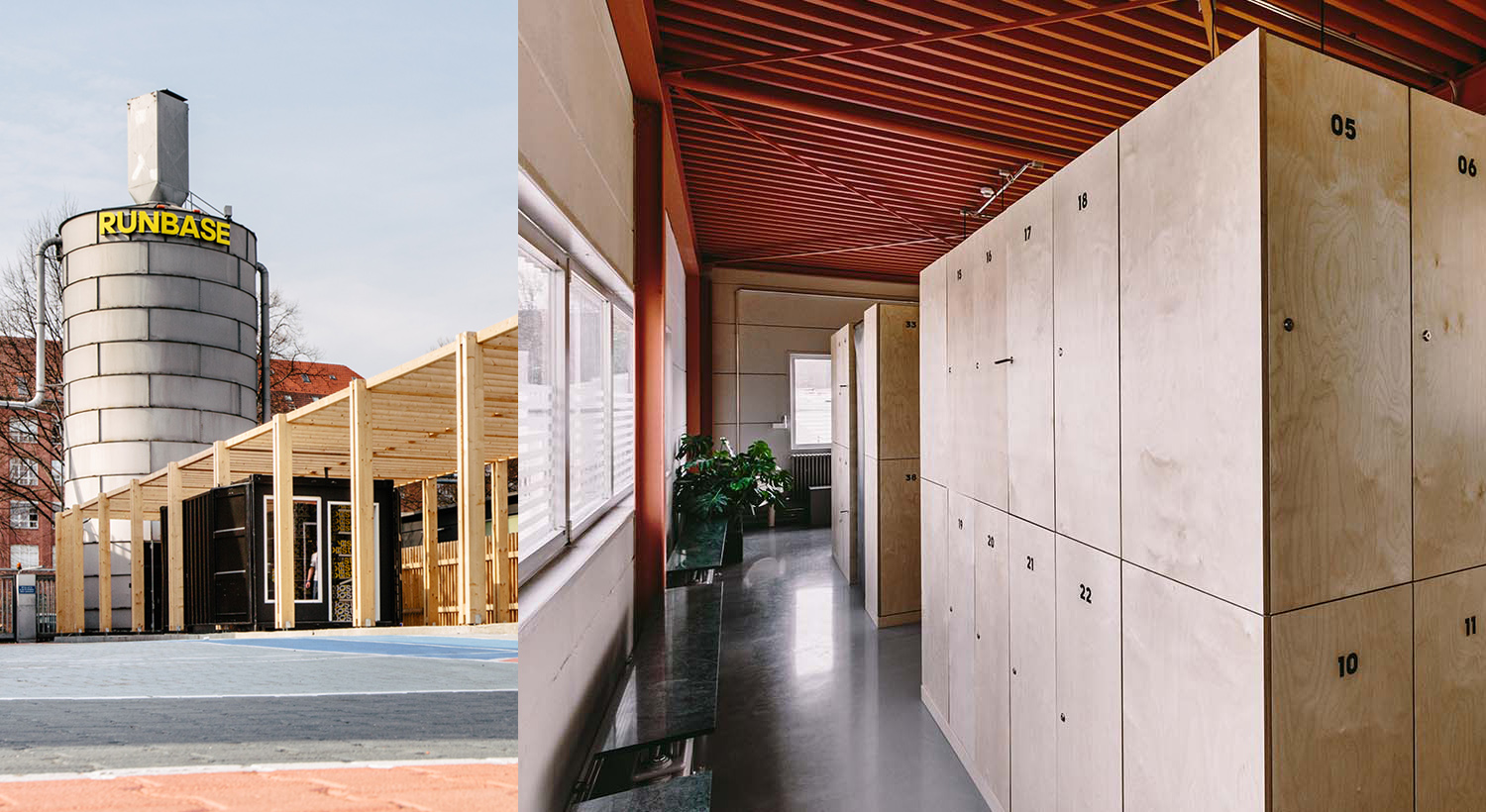
“Runtastic!” is what you’re tempted to cry out when you visit Runbase. An Adidas temple on the banks of the Spree River, this store is perfect for those who would rather go jogging along the river as opposed to just chilling by it. Nico Zeh (formerly at MADE) has created his Runbase into a Berlinesque haven. Equipped with showers and gear like the Brazilian and Japanese sister “Adidas Runbase” stores, the Berlin base also offers an array of healthy eats by a nutritionist and medical assistance related to running, from check-ups and fitness checks to running tests. The base is also the right spot to try out new kicks before buying. Of course, it wouldn’t be true to Berlin if there weren’t regular events that turn into nighttime debauchery. For those who aren’t fans of running, there are also plenty of classes on offer in the neighboring sport hall, including yoga. Wanna know more? …visit www.runbase.berlin
READ MORE →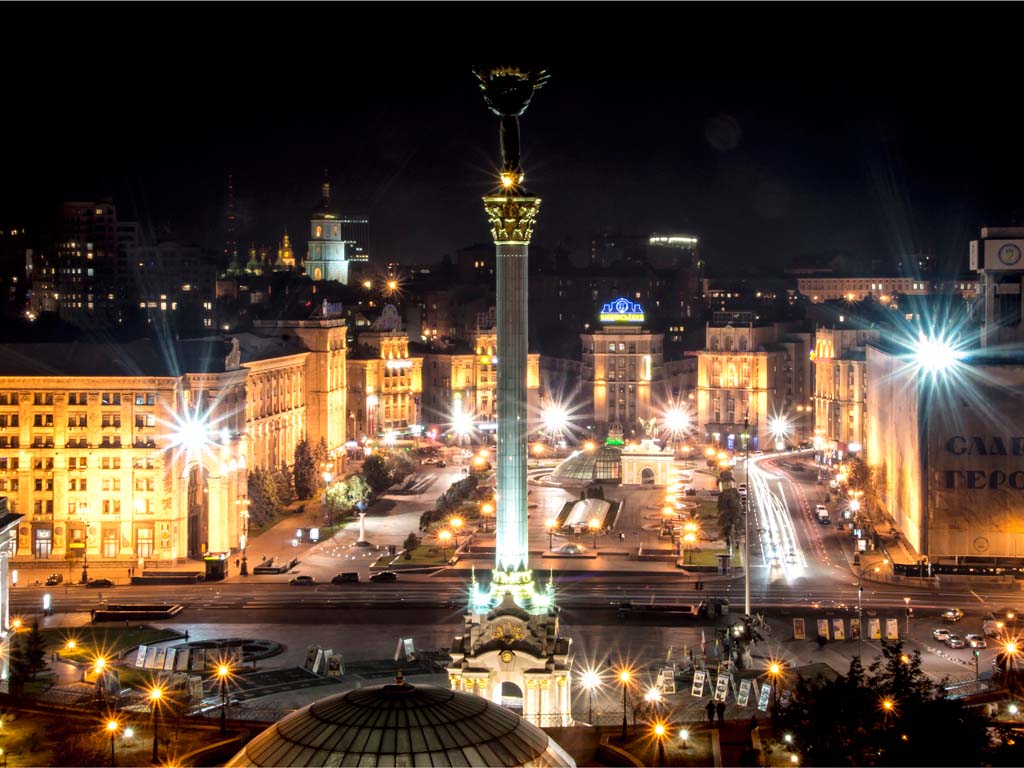
The orange revolution began at the Maidan Square in Kiev. There’s little to remind of the chaos that ensued apart from a few protesters calling for yet another revolution. It seems as if the residents of Kiev would rather not, however. Despite current tensions and the ongoing war, Kiev is a peaceful, friendly city and visitors are unlikely to see any sign of Ukraine’s military. Instead, this massive ancient metropolis that first gained notoriety under the Rus was long the pride and joy of the Soviet Union and now a functional bridge between the East and the West. A high level of crime in the ’90s has given way to brisk business ventures and it’s safe to say the city will join the ranks of other metropolises for high society in the near future.
READ MORE →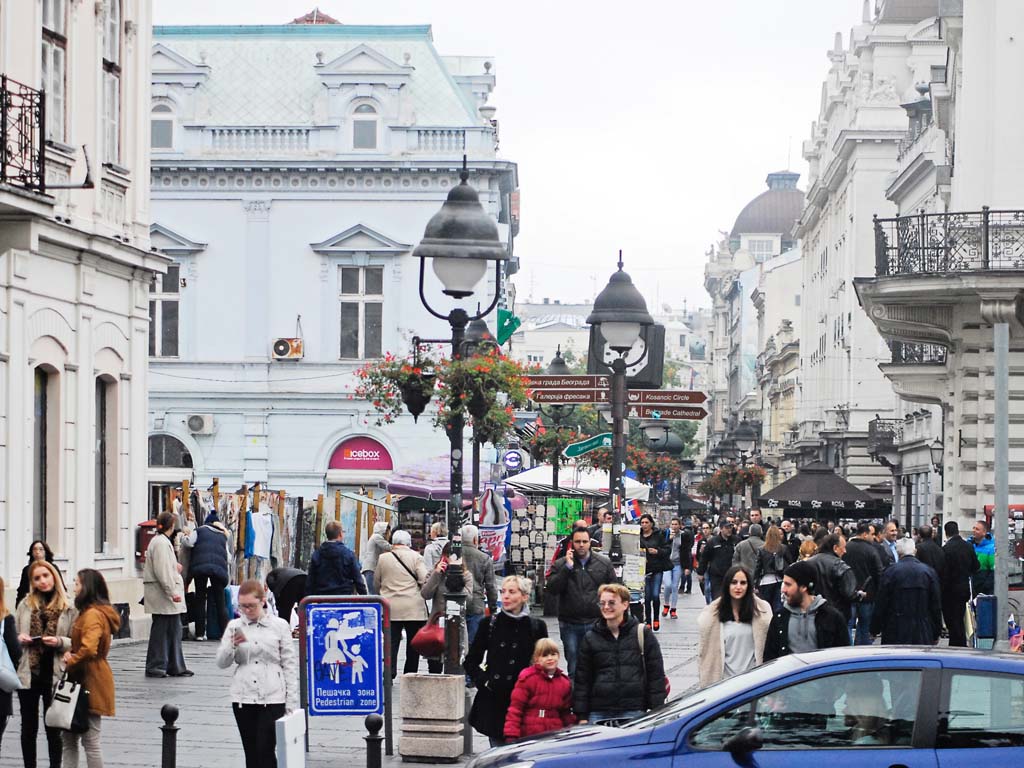
Once the realm of royalty, later bombed by NATO and then isolated from the international community, Belgrade is awakening from its long slumber. The younger generation has grown up free from binds of social restraint and power schemes, making it fully integrated into the European community, with creative start ups, organic fare, and raw food business ventures as found in Berlin, London, and Milan. Sandra Draganov, an online entrepreneur, and DJane Aleksandra Duende represent the new Belgrade. Both are well-traveled and want to improve the international community from their home city. Coffee shop Przionica D59B really does just serve coffee. Sandra is co-founder of the hip meeting point for Belgrade’s young crowd.
READ MORE →
Daniel Libeskind and Berlin are old acquaintances. The world famous architect lived in the capital city for many years and designed the Jewish Museum in Kreuzberg. Various cultural institutions have also been built according to his designs in other European cities. But the first Libeskind apartment block ever is currently being built in Berlin—in the city which the architect appreciates both for its rich history and its development potential. “Sapphire” is the title of his design. According to Libeskind, the unique, artistic building is supposed to put a smile on everyone’s face, both passers-by and residents alike. It is clear to him that not everything in Berlin sparkles like this architectural jewel. But a sapphire is also raw, tough, and resistant, emphasizes Libeskind in conversation—and these are characteristics that he also ascribes to the citizens of Berlin. The building should be completed by 2016. More than half of the 70 apartments have already been sold. So anyone who wishes to view Sapphire should make an appointment quickly.
READ MORE →
All too often, fashion trends change faster than you can rearrange your wardrobe. Watches however, (especially luxury models) have all the makings of a timeless classic. Often, the purchase of a watch is considered an acquisition for life, lasting as long as a family air loom that is passed down from generation to generation. Why not start your own tradition and choose a daily companion that not only tells the time, but is also the epitome of style and savoir-vivre? Whether a playful, diamond encrusted item for a classy lady, or a sporty chronograph-look for the modern man, the full diversity and choice of models can be explored in the elegant ambience of Kaufingerstraße 5, Munich’s most exclusive address for luxury watches. Thanks to our expert advice, you can get to know the most refined masterpieces en détail before finally choosing your favourite.
READ MORE →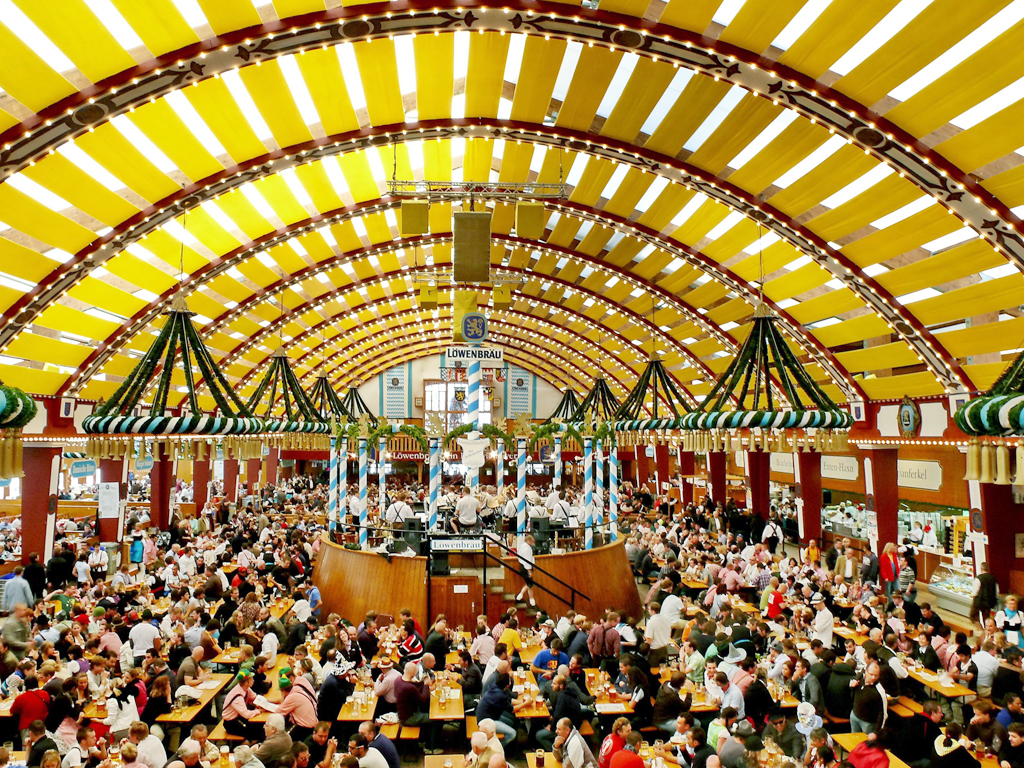
The city of Munich will be celebrating the 181st annual Oktoberfest starting September 20—the beginning of a 16-day celebration at the Theresienwiese fairground. Over six million visitors from all over the world are awaited by numerous beer tents, an array of amusement rides, and other attractions. With the COOL CITIES Munich app, users have exclusive access to the Oktoberfest special, with a myriad of tips to make your time in the Bavarian capital wunderbar: where to by the coolest lederhosen or dirndl, which tent is the most fun, where to go for the best after party, and where to relax the next day in case you overdid it on the beer. Get the app and special at iTunes or Google play store. What are you waiting for? Have fun at the world’s largest funfair!
READ MORE →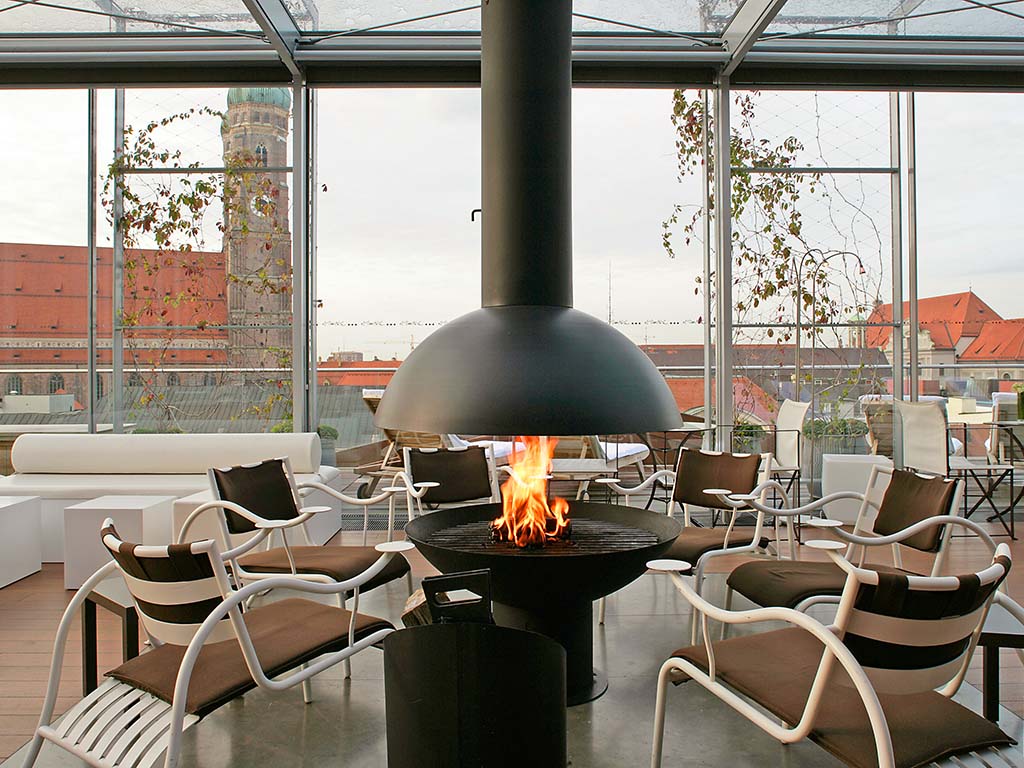
We urbanites don’t always have it easy. With all the buzz and excitement the city has to offer, places of respite are ofttimes hard to come by. That’s why we at COOL CITIES have teamed up with EyeEm to search for the best Urban Escape. EyeEm is a community and marketplace for a new generation of photographers. With over 10 million users using the app to capture, enhance, share, and discover inspiring images. Under the rubric “Missions,” app users can upload their own private getaway. Be it a jog along the river, kicking back on your balcony, dancing the night away, or reading in the park—your Urban Escape is somewhere personal. How can you take part? Download the EyeEm app and tag a photo with Urban Escape. Your photo will automatically be added to the album. The top three photographers will win a copy of either Hasselblad “Masters” or Thomas Hoepker’s “Wanderlust,” courtesy of teNeues Publishing. Each of these stunning visual books have a retail value of €80 and are the perfect addition to any aspiring photographer’s collection. The top photographs will also be featured on the COOL CITIES app and website in an exclusive feature. So what are you waiting for? Entries must be submitted by September 21, 2014. We look forward to seeing your photos!
READ MORE →
The newest to join the ranks of Munich’s swanky list of accommodations is redefining what it means to be a cool hotel. The Flushing Meadows Hotel and Bar, in the heart of Munich’s trendy Glockenbachviertel, seamlessly merges individual interior concepts and design across 16 rooms. And because those behind the hotel are three of the coolest guys in the city, you can be rest-assured that your stay will be anything but dull. The brainchild of local architects Sascha Arnold and Steffen Werner and their long-time partner, gastronomist Niels Jäger, Flushing Meadows—a member of Design Hotels—is a perfect representation of these guys’ sense for the city’s latest trends. With their extensive list of contacts as some of the biggest scene makers in town, the three have created a veritable meeting point for creative travelers and the local elite. Behind the original façade of a former post office built in the 1970s, Arnold/Werner have created a 16-room retreat named for the fields surrounding Munich and the scenic Isar River. Eleven loft studios were individually designed in collaboration with prominent creative types from around the world, all housed in the third floor of the hotel. Boasting 13-foot-high ceilings, these light-flooded rooms are modern and urban, with exposed concrete and eclectic Scandinavian furnishings. The remaining five penthouse studios and the Flushing Meadows Bar in the top floor were designed by Arnold/Werner, each offering stunning views over the rooftops of the city. Three of the studios offer a private terrace with superlative views of the Alps. Equipped with features like solid-wood paneling covered with fabrics by the Danish design firm Kvadrat, copper fixtures, and paintings by the Berlin-based artist Maximilian Rödel, the rooms are characterized by their individualism. The party gets going in the top-floor Flushing Meadows Bar, where chef Manu Pinciroli creates an eclectic mix of cocktails and small bites. The highlight: the rooftop terrace with views extending all the way to the Zugspitze. On the ground floor, guests can detox the morning after at Super Danke!, offering a selection of green smoothies and cold-pressed juices. After nursing your hangover, head over to stilrad to get a free bike rental (exclusive to hotel guests) and explore the nearby restaurants, bars, shops, and galleries that the Glockenbachviertel has to offer.
READ MORE →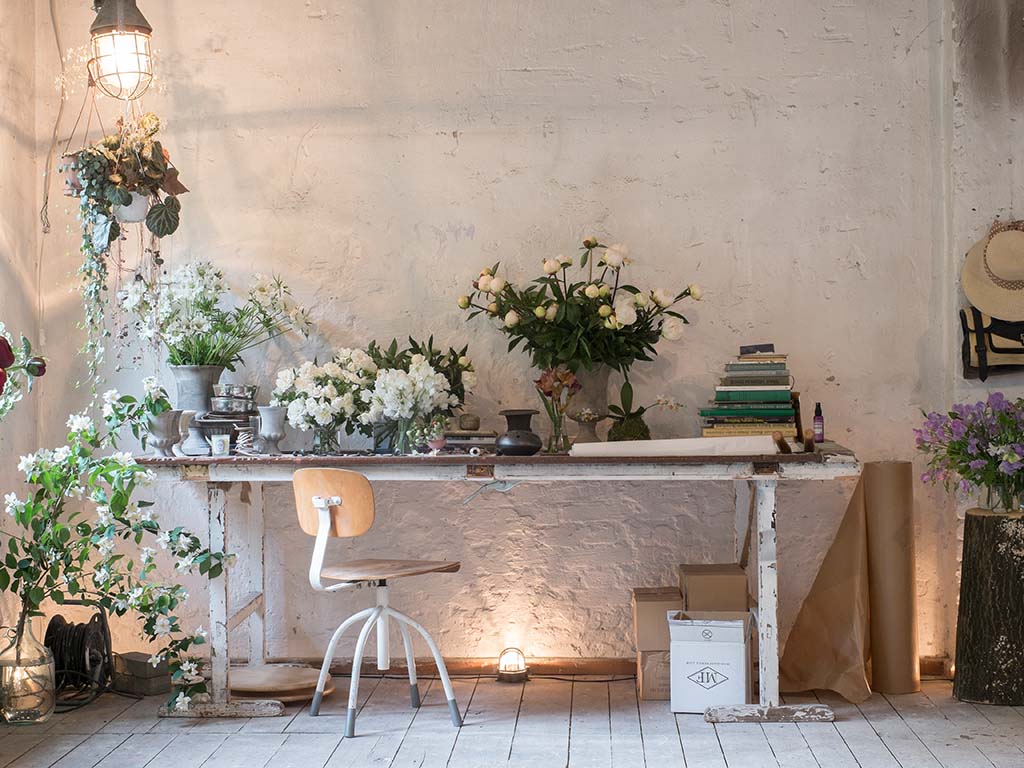
Berlin-Lichtenberg: a quiet, residential borough of Berlin, once the center of the German Democratic Republic capital’s industrial power. Today, it’s characterized by the abundance of East German “Plattenbauten” (tall, prefabricated housing), and its verdant green spaces. It’s popular amongst families, thanks to the comparatively affordable rent and housing prices, and thus spared from the hordes of tourists throughout the city center. It seems unlikely, then, that many expatriates are beginning to discover this borough for themselves, as they have others within Berlin. Australian-born Ruby Barber is one of them. In a quite street not far from the easternmost railway station serviced by long-distance trains, Barber has chosen to house her studio and atelier for her floral services in a small, unfinished summerhouse behind a larger building—a perhaps unlikely location for a bespoke, appointment-only floral service. She shares the space with Kentholz, a woodworker who often provides pieces for her work. Taking its namesake from the main character in Frances Hodgson Burnett’s novel “The Secret Garden,” Mary Lennox provides clients with custom floral arrangements made of blooms sourced from local growers and markets. As luck would have it, Barber’s first studio in Sydney, Australia was located on the corner of Mary and Lennox Street. Barber is easygoing, friendly. Her dog, Paco, welcomes you, happily wagging his tail. The space is bright and unpretentious, allowing the natural beauty of the flowers to shine. “In a similar space in some of Berlin’s more hip neighborhoods, like Kreuzberg or Neukölln, I would have had too many distractions right out the door. I thought that would be counterproductive. Here, my work is the focus, from sourcing to installation,” explains Barber. Once you enter her studio, it’s easy to tell what drew her here. Her work has taken her around the world, with clients in Australia, the United States, and in Europe. Berlin’s position as a creative hub drew her to the city, but not without any challenges. “People in Germany have a great relationship with nature and really think a lot about how they can lower their impact on the environment,” she says. “But they haven’t yet caught on to sustainability in the floral industry. In a city where a flower shop is on every corner, it has been difficult trying to convince people that the flowers they’re purchasing are often shipped across oceans, grown in conditions that have been controversial amongst human rights groups, and are anything but sustainable. I guess, in that sense, I’m trying to make a difference.” Waking up early in the mornings, Barber engages with growers on her search for seasonal, locally grown flowers for her arrangements. Next door to her studio, there’s an empty plot of land. “I’m talking to my landlords to see if I can turn the space into a sort of community garden. I would love to grow my own flowers to use as well.” To make your own appointment with her, send an e-mail to: info@marylennox.de or visit the website www.marylennox.de.
READ MORE →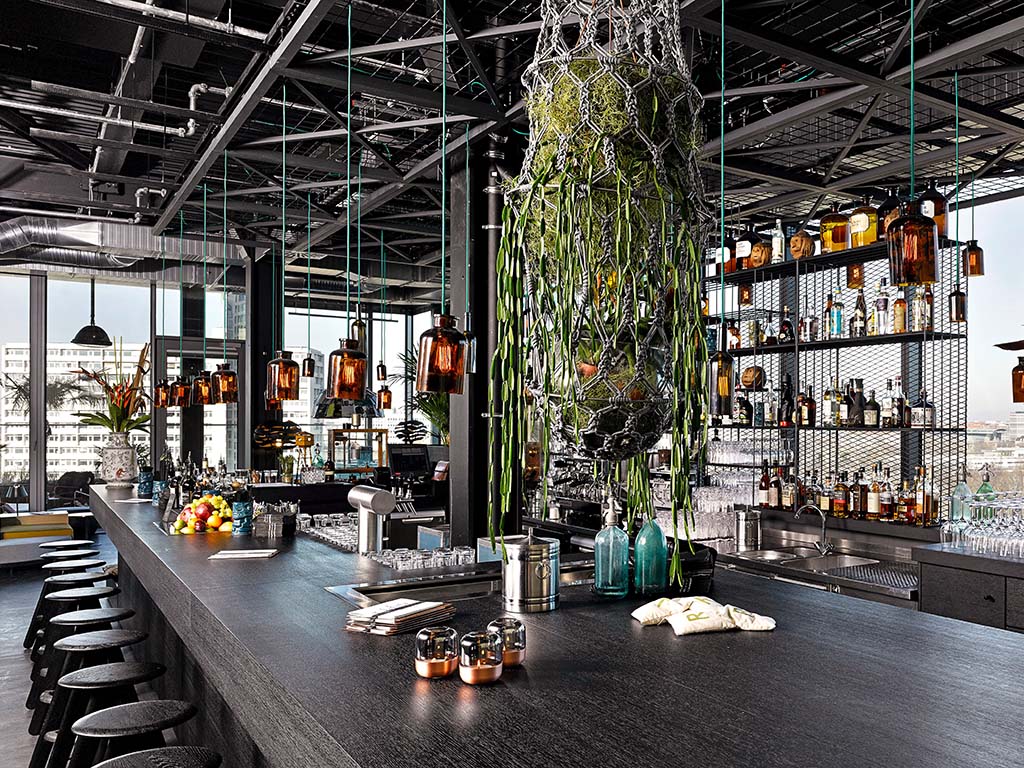
Right next to the iconic Elephant Gate of Berlin’s Zoological Garden, 25hours Hotel Bikini Berlin has opened its doors with a bang, with not one, but two opening parties last week. Its prime location between Tiergarten, the shopping boulevard Kurfürstendamm, and the ruins of the Kaiser Wilhelm Memorial Church offers guests the perfect retreat from the hustle and bustle of the city. Its location and the surrounding buildings inspired its interior design. The Werner Aisslinger design team dubbed their concept “urban jungle.” Half of the 149 rooms offer views of the apes and elephants of the zoological garden, while the other half offers views of some of West Berlin’s most iconic buildings. Respectively, the design is warm and welcoming in the zoo-view rooms, with extensive use of natural building materials and colors. In the city-view rooms, the design is urban and sparse, a nod to Berlin’s raw creativity. The 10th floor with its expansive rooftop terrace is the crowned jewel of the building—20-foot-tall floor-to-ceiling windows give unparalleled panoramic views of the city. The Monkey Bar keeps true to its name, with direct glimpses of the romping primates (as long as they’re still awake). In Neni Berlin, the hotel restaurant, offers a culinary mosaic of eastern Mediterranean specialties by Viennese cult-chef Haya Molcho, from sabich, tartar, and hummus, to caramelized eggplants and baked okra. The 3rd floor lobby is just as inviting as the rest of the hotel. Aside from the reception, guests will find a kiosk, the Woodfire Bakery, hammocks, and plenty of sitting areas, perfect for enjoying a coffee, catching up on some work, or just kicking back. From the Jungle Sauna in the 9th floor, guests can look right into the eyes of the neighboring giraffes. The hotel is an ideal basecamp for embarking on your own safari through the Berlin’s urban jungle. Some of the best shopping in the city is just a few blocks away, as well as the Zoologischer Garten train station. And let’s not forget the Brandenburg Gate, less than two miles away.
READ MORE →