Travel
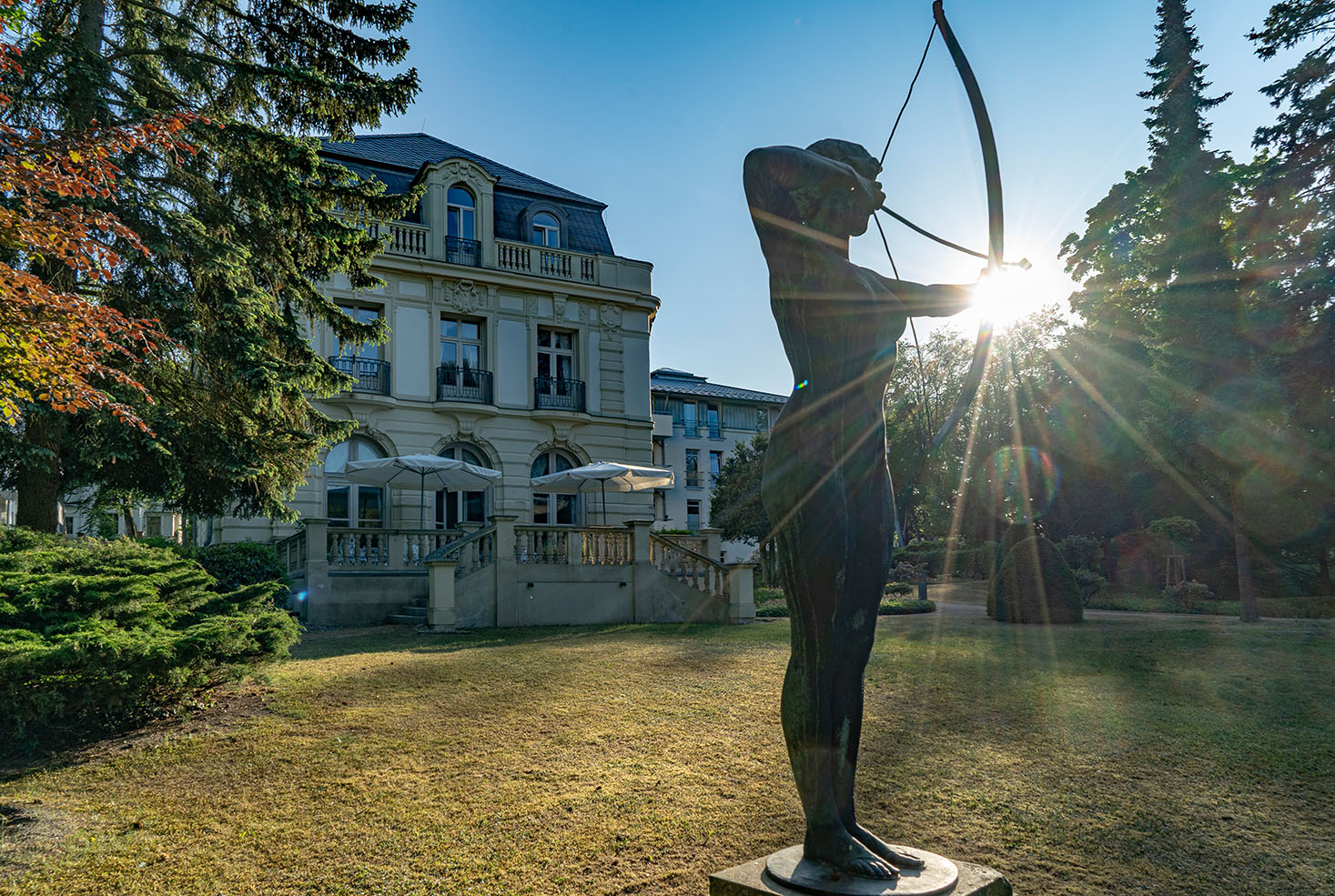
A Quiet Dialogue Between Past and Present
Just steps from the beach, Villa Bleichröder is an intimate 13-room retreat where historic elegance meets contemporary design, surrounded by lush gardens and an atmosphere of effortless tranquillity.
READ MORE →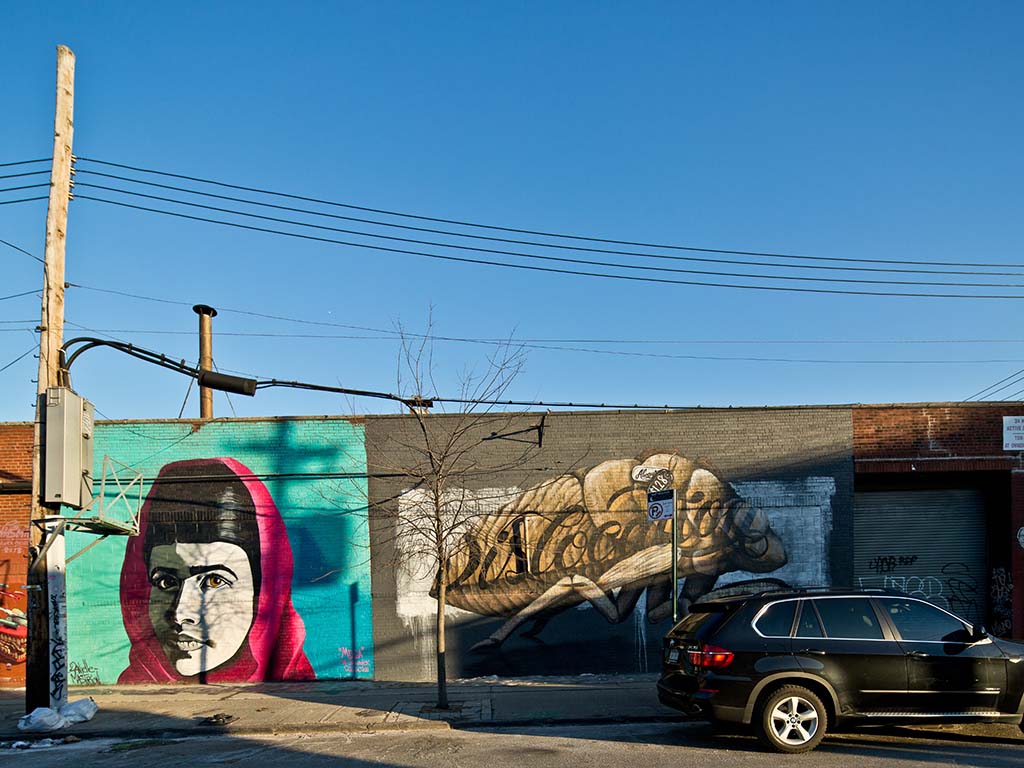
Vibrant murals abound at this open-air gallery in Brooklyn where façades of old factories replace traditional white walls. Imprinted on brick and mortar, inspired artistic visions illuminate a New York City neighborhood’s vast cultural progress. Founded by native Joseph Ficalora, The Bushwick Collective pays tribute to a daring artistic medium and bares testament to positive change. Ficarola’s family, Bushwick to the core—his father owned the steel factory that he now runs—was affected by some of the violence that once ran roughshod over the streets. In the ’70s and ’80s, Bushwick was notorious for its riots and gang warfare. Ficarola’s own father was killed in 1991 during a mugging. With support from longtime residents and gentrifiers, Ficarola mobilized a forward-thinking movement with art as its foundation. He aligned with other factory owners to carve a living, thriving canvas out of the crude cityscape. The Collective’s epic display of street art changes every few months as commissioned artists from around the world come and go. Running from Jefferson to Wyckoff Avenue, respected virtuosos such as Gaia, Hellbent, and Pixel Pancho splash, spray paint, and wheat-paste their oeuvre on manufacturing plants and warehouses once dilapidated and covered in graffiti. Political and social commentaries meet surreal images and monumental portraits. The Collective highlights Bushwick’s tenacious sense of community, signaling a bright future for the area and beyond.
READ MORE →
Cool Escapes interviewed former Parisienne chef Yves Paladeau, how created and owns Ondas Divinas (divine waves), a currently 14 house collection full-service vacation rentals resort in Santana village at São Tomé & Principe. Produced by Martin Nicholas Kunz and Heike Fademrecht in 2020 Music "Future Bass-Beat" by Frederic Storm, "Summer Stream" and "Guitar Dreams" by Bruce Zimmerman More on https://www.cool-escapes.com/news/29005/ Reservations on http://ondasdivinas.com
READ MORE →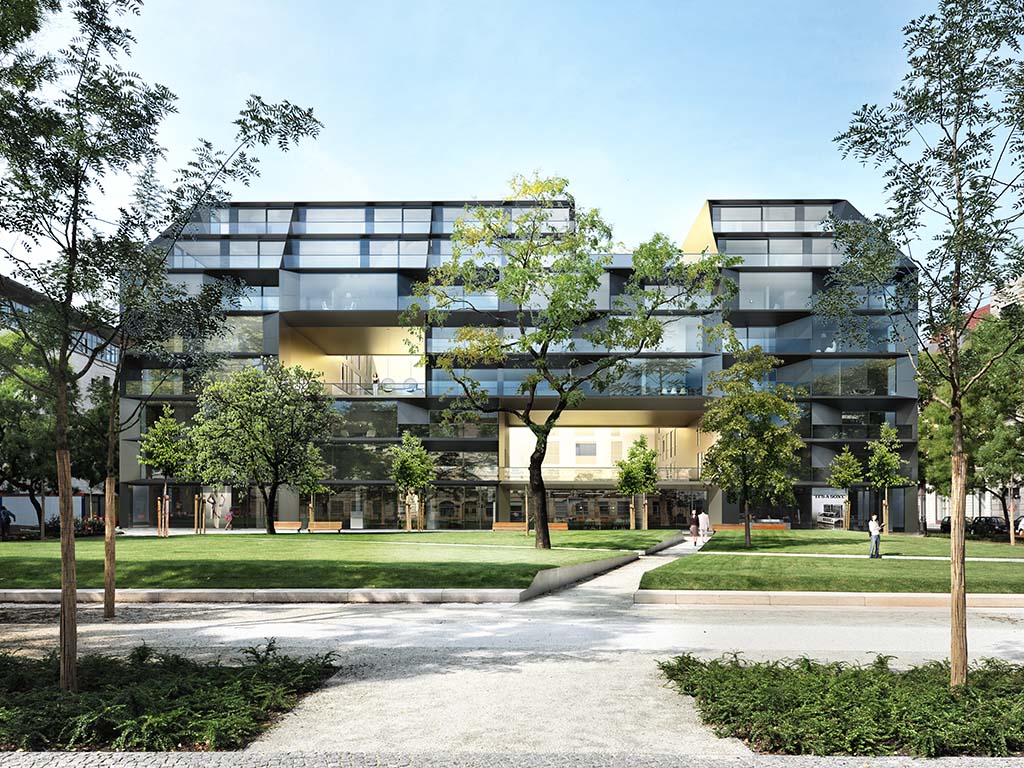
Berlin-Mitte—“there is currently nowhere in Germany that’s more prominent for building a house,” says Annette Axthelm. “The whole world wants to be here.” Although Berlin-Mitte was initially “a wasteland, which had no meaning after the fall of the wall—apart from the historical meaning,” Henner Rolvien explains. The Potsdam-based architects have designed a residential building for the real estate company Ziegert Immobilien. It is currently built at the Neustädtischer Kirchplatz, about 600 meters from the Brandenburg Gate. “It is an honor for us to be allowed to build there,” says Axthelm. When she and Rolvien saw the previously undeveloped property for the first time, one thing was clear: “Here you have the opportunity to build something different. Here, a sculpture can be created—not just a roadside structure.” The building will be called Lux, because light is the main theme of the design. “And there are few sites where you can glorify this theme like this,” says Axthelm. “It’s also about a way of life that this city radiates,” adds Rolvien—a feeling of spaciousness and freshness that this building will capture with floor-to-ceiling windows, a light-filled courtyard and a sophisticated interaction between inside and outside.
READ MORE →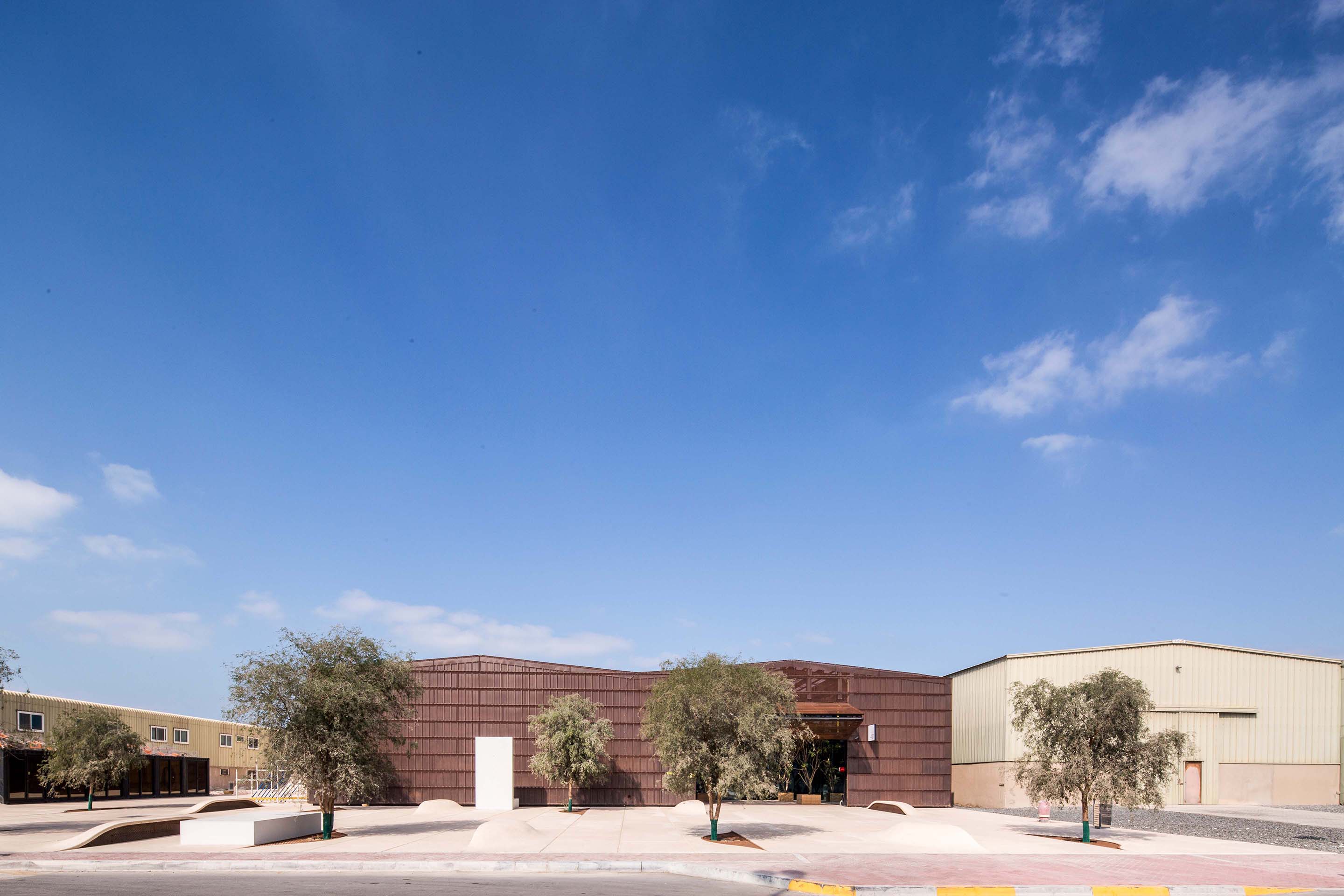
Warehouse421 is a venue for arts and culture located in the historic Mina Zayed district of Abu Dhabi that has been converted from two of the port’s former industrial warehouses. The mission is to celebrate art and culture, design and creativity, performance and music, from artists and designers based in the United Arab Emirates and from around the world, and to let people experience these disciplines in a unique and original space. The latest project is “Wednesdays at the Warehouse” which was created in response to the public’s enthusiasm and support expressed during the launch of Warehouse421. It is a curated program of creative activities and events. Held every other Wednesday evening from 20 January until 27 April 2016. It invites the public to participate in a diverse selection of arts activities including workshops, film screenings, panel discussions and exhibitions. All activities are free to attend. Online registration is required. See more on Warehouse421
READ MORE →
Jordi Canudas lives in the historic center of Barcelona. “The thing I like the most about my neighborhood is that it still belongs to the residents,” explains Jordi. “In the historic center, that’s becoming more and more rare.” He thinks that people actively participating in shaping their living spaces and curating the public spaces according to their own expectations and needs is a type of democratic movement. The designer is a member of the OKAY Studio collective and especially enjoys working with light. He sees the creation of his products—lamps, furniture, design objects—as an adventure with an unforeseeable outcome. Jordi loves Barcelona because of its remarkably multifaceted attractions, like the traditional Mercat de Santa Caterina located in the historic center, and, of course, the beautiful weather. Read the complete article
READ MORE →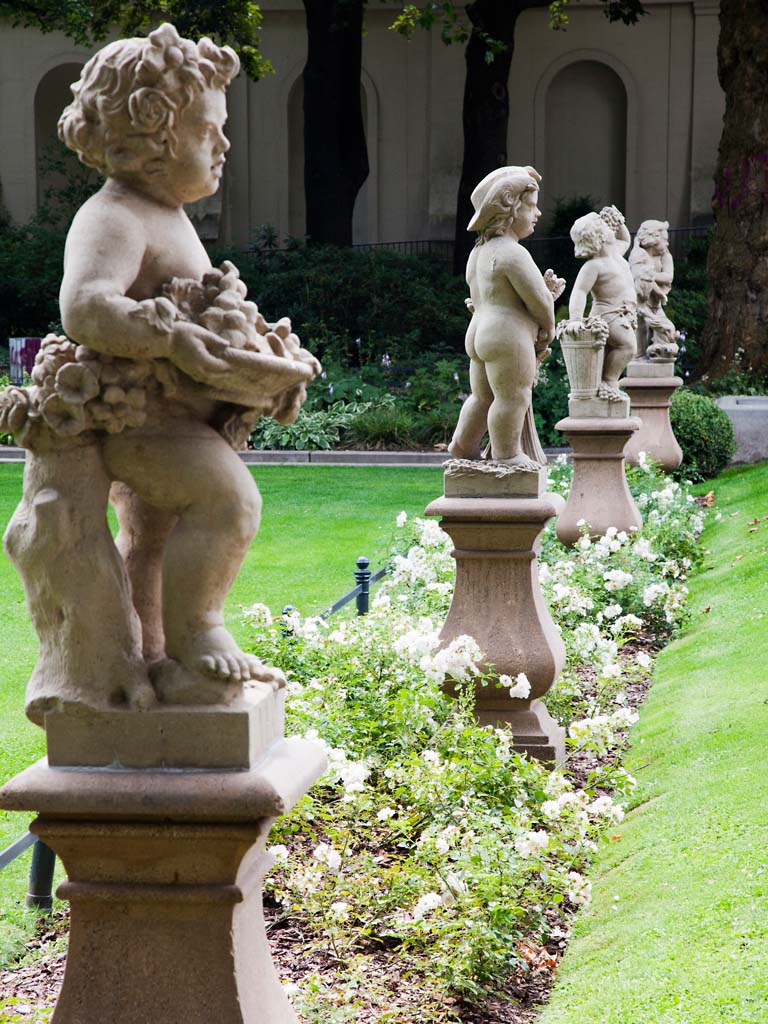
Finally! The trees are blossoming, the temperatures are rising and Berliners are turning their pale winter faces to the sun—and COOL BERLIN is getting out into the fresh air with you too. We will show you the most beautiful parks, beer gardens, flea markets, and places to visit throughout the city. Körnerpark, in the sometimes rough and ready district of Neukölln, is a neo-Baroque oasis. Discover 22,000 plant species at the botanical garden in Zehlendorf—in addition to guided tours, a multitude of events such as concerts, writing and painting courses are also held here. If you want to go further afield, make a trip to the idyllic Pfaueninsel (Peacock Island). Asian delicacies prepared by hobby chefs are available at Thaiwiese in Preußenpark, Wilmersdorf. And afterwards a beer—at Café am Neuen See or at Golgatha on the edge of Kreuzberg’s Viktoriapark, for example. Is it warm enough to dip more than your big toe in the water? Then off to the Treptow bathing ship. Incidentally, yoga sessions are held here on Wednesdays and Fridays from nine o'clock. Anyone who wants a little more action can go to Beach Mitte, where you can climb and play beach volleyball. A stroll through the flea markets on the weekend is always a good idea too: The flea markets at Mauerpark and on Straße des 17. Juni are classics. And then back to Neukölln just as dusk is falling—to watch the sunset from above, at the Klunkerkranich parking garage roof garden.
READ MORE →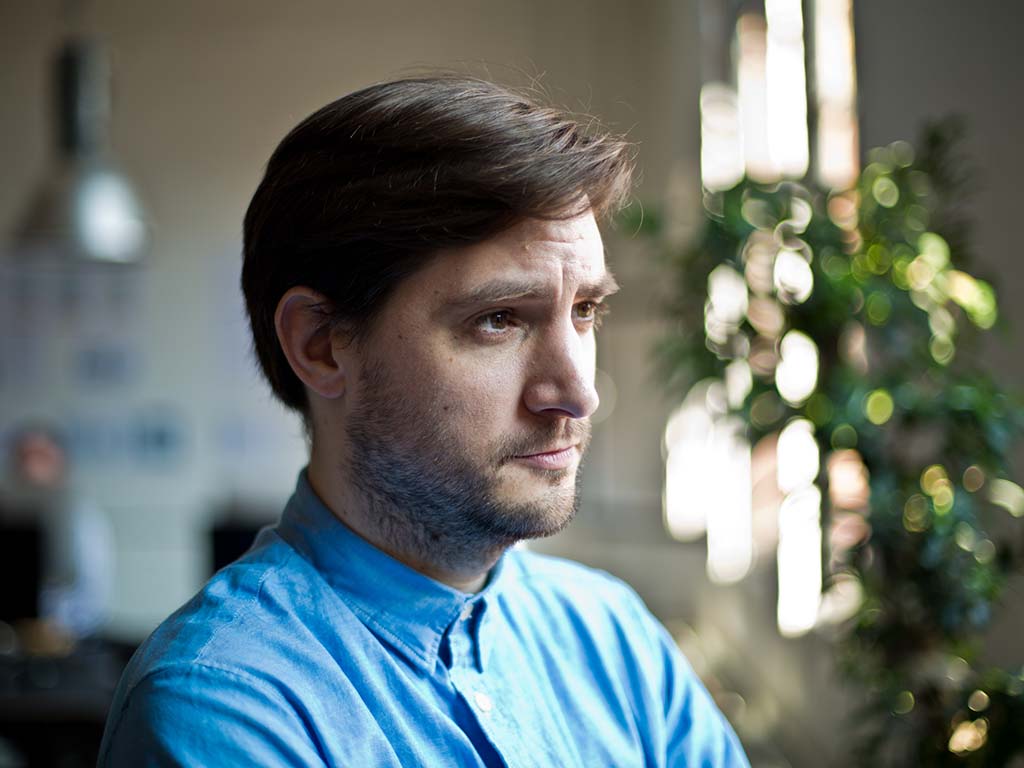
Jeans, button-down shirt and casual, carelessly combed hair: Nalden comes off as inconspicuous. A dozen young people are sitting silently at their computers in his loft-like office space in Amsterdam. “I think the idea to launch WeTransfer has a lot to do with my father,” explains the 28 year old. “He’s a music director and travels a lot. He always showed me pictures from his sailboat, but my mailbox couldn’t handle the amount of data and was always crashing. I sent him instructions for how we should do it but he just couldn’t get it. Too complicated.” Nalden talked with a colleague who had already had experiences in the field of data transfer to simplify the process. They join forces and brainstorm, choosing a name that they found one cheerful, wine-inspired evening. WeTransfer was founded in 2009—as a data transfer service in which users can share images, music, movies, texts, etc. with just the click of a button. Over 20 million downloads each month keep the small start-up afloat. Nalden started blogging at the young age of 16 years. “I initially wanted to keep my friends in the loop, let them know what’s happening and which parties to go to,” he reminisces. “Then I started to add my thoughts.” It didn’t take long before sponsors contacted him, wanting to collaborate. They send him on trips, he gets private cars, meets interesting people and all that is asked in return is that he writes about his experiences. He left school at 18, feeling as if life itself is much more interesting and that he can learn about anything he wants to on the web. Nalden works constantly with diverse artists and designers who construct and reconstruct the WeTransfer website. When he’s not online, he likes to go out, spend time with his friends, or drive his boat through Amsterdam. “I want to find the balance between online and offline,” he says. “Maybe start a family.” And there it is again: this mischievous, quiet smile. On behalf of FALKE footprints Follow Nalden’s footprints...
READ MORE →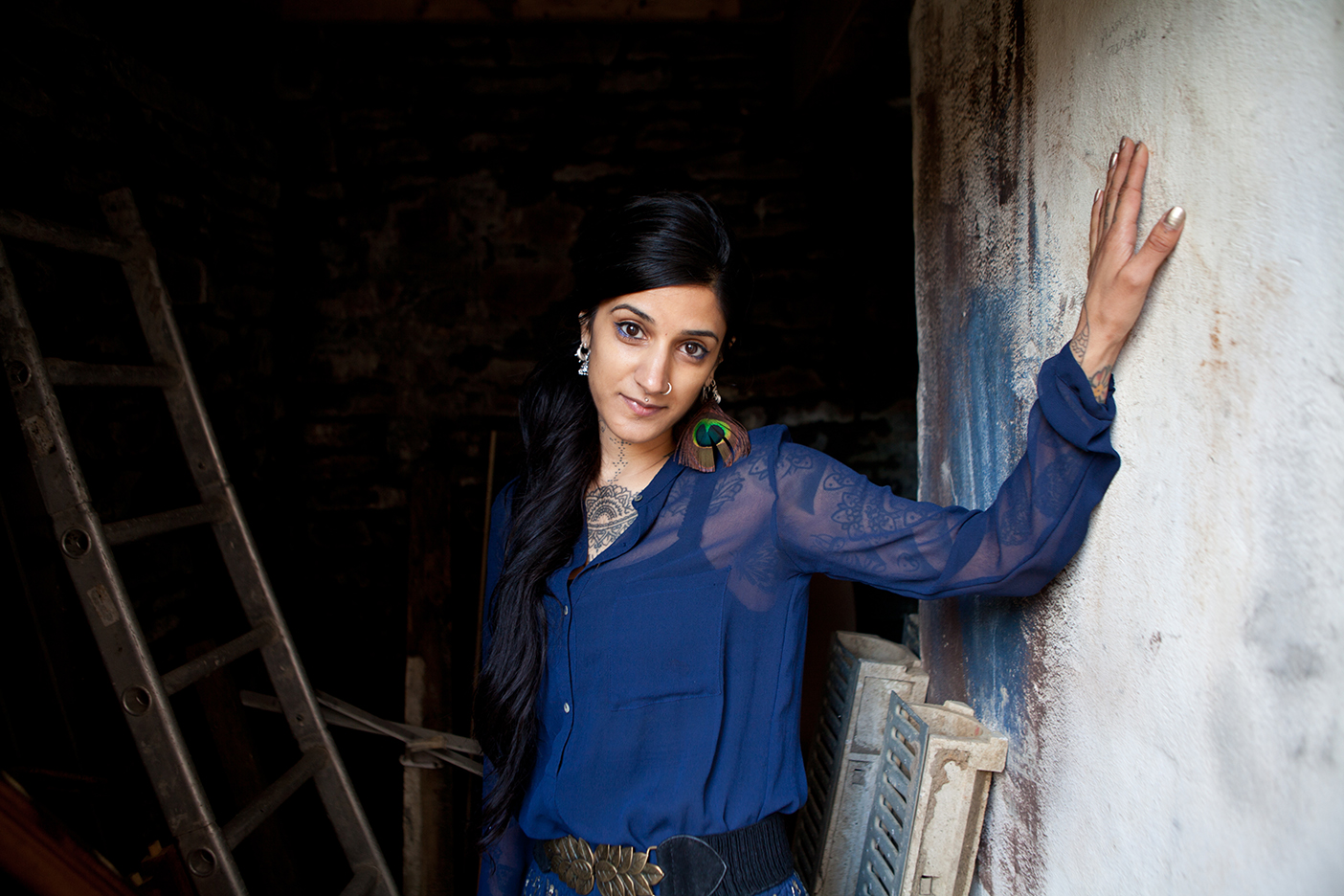
Saira Hunjan is revelling in her current work; pencil on paper. ‘Pencil has given me a chance to draw with the kind detail that I want to produce.’ She has a particular passion for the decorative. ‘Anything that’s handmade I can’t walk past. I have to say, “I’m going to have you in my home!”’ That sense of in-the-moment wonder and attachment is what she wants to create with her work. She’s strongly influenced by India, a country she visits regularly. She’s just returned from Kolkata, where she spent time in Kumartuli, in northern Kolkata, visiting artisans who make clay deities. ‘I specifically went over there to watch them work, talk with them, sit with them and try to learn.’Her current work examines the themes of goddesses, death and beauty. ‘When I was still quite young there was a lot of death in my family. In Indian culture bodies come home and you’re face to face with it.’ Saira explored the rituals of Dia de los Muertos, the Mexican Day of the Dead festival. She was moved by the way that culture celebrates its ancestors. ‘They give offerings, sing and dance. The graveyards are lit up with candles.’ She wanted to bring this sense into the work she was doing. ‘I wanted to try to make death look beautiful.’ A strongly feminine energy became part of the work, which lead her to depict female deities in her drawings. Jo Weissgerber Read more on FALKE footprints Explore Saira's favorite spots in London:
READ MORE →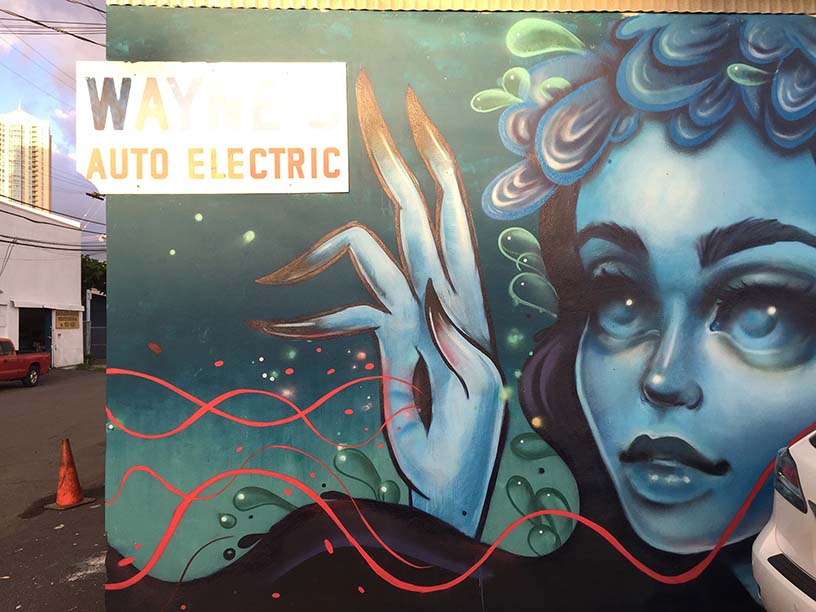
Hawaii’s largest city is perhaps best known for the long white-sand beach at Waikiki and honeymooners. Dwarfed by American metropolises such as New York, Los Angeles, and San Francisco, Honolulu’s creative scene is thriving with designers, artists, aspiring filmmakers, and gallerists. Art enthusiasts should be sure to take a stroll in the areas around Coole Street, Ward Avenue, Kawaiahoo Street, and Pohukaina Street—the perfect trade off for the urban sprawl and commerce. With creative street art and graffiti, it's a completely different side of the city.
READ MORE →
Compared to 20 years ago, the culinary scene has been revolutionised in Zurich. One reason for this is Stefan Tamò. The star chef shows us what makes his city so special. Compared to 20 years ago, the culinary scene has been revolutionised in Zurich. One reason for this is Stefan Tamò. When he took over his first restaurant Josef 20 years ago, he didn’t have a clue how his aesthetics and style would transform one of the most dilapidated areas in Zurich. “This place here was once known as Needlepark,” Tamò tells us. Right here in the district Kreis 5, in the early 1990s, the city government experimented with legalising drugs. The experiment failed miserably. In 1995, everything was shut down and the place was evacuated. For years, nobody came back. Tamò knew this place, just like all the locals, but he alone recognised its potential. In the autumn of 1997, he submitted a proposal to the city for a small restaurant down by the river. “The city approved the proposal in the spring, and we had only two months to get it done. We bought mobile phones and went to work. We had to deal with a total of 49 city officials. In the end, we got them all – that’s how it all started.” Tamò is interested in places nobody else wants to look at – the city’s red-light district, for instance, or old and forgotten industrial buildings. Lily’s sits right on the Langstrasse, the former red-light district in Kreis 4. Lately, the neighbourhood has become a centre for the hip, carefree and youthful. He does what he does because he loves Zurich and its people. He is a quiet pioneer and trendsetter. He reveals his favourite highlights in COOL ZURICH. Get the COOL ZURICH app in stores for apple and android.
READ MORE →
Standing in front of the big screen at Kino 12, a massive multiplex in Zürich-Dietlikon, Yangzom Brauen talks to the audience about her first feature-length movie “Who killed Johnny?”. The movie is set in Hollywood, in Yangzom’s own house in the Hollywood Hills, to be precise. It’s an all Swiss cast with actors playing themselves, in a story is about two screenwriters trying to come up with a story for a movie set in the Hills, in a beautiful house with a pool and a view of the city’s illustrious skyline. Like every good Hollywood flick, it is supposed to be a story of mystery, love and violence. At first the script seems to write itself. But when a body gets tossed from a car in front of the house, the line between imagination and reality blurs. There aren’t many people in the audience – only two, actually. A couple in their forties. “That doesn’t matter”, says Yangzom. She knows that from the theatre. She’d be here even if only one person had come. The “Züri Fäscht”, the country’s largest festival, just started yesterday. It attracts over two million people (almost a quarter of the inhabitants of Switzerland) to downtown Zurich – afterall, it only takes place once every three years. In a short speech in her native Swiss German dialect, Yangzom introduces her lead actress, as well as her production partner, and explains how she produced the film: using her own resources, far from home, yet meant for a Swiss audience. “My goal was to get my film in the cinema, and I’ve done it”. The lights dim, powerful music swells up and the camera flies over the vast expanse of houses in Los Angeles. This is where Yangzom’s story begins. The opening credits roll, and the two people in the audience suddenly burst into laughter after the first dialogue exchange. All of the actors speak Swiss German, and there are no subtitles. Pretty couragious for a film made in Hollywood. Without taking themselves too seriously, the actors portray themselves. “This is the only thing about my movie that isn’t Swiss”, explains Yangzom with a wide grin on her face. The director, her producer and the actors quietly leave the cinema to go on to the next opening on the other side of town, which starts at 22:45, exactly the same time as the huge firework display scheduled for the evening, the highlight of the Züri Fäscht. ..... Read more on FALKE footprints Watch the trailer to "Who killed Johnny" Also watch Yangzom Brauen's brand new short movie "Born in Battle", which beside many others it received the audience award of "Max Ophüls Preis 2016" Discover Yangzom's Zurich recommendations
READ MORE →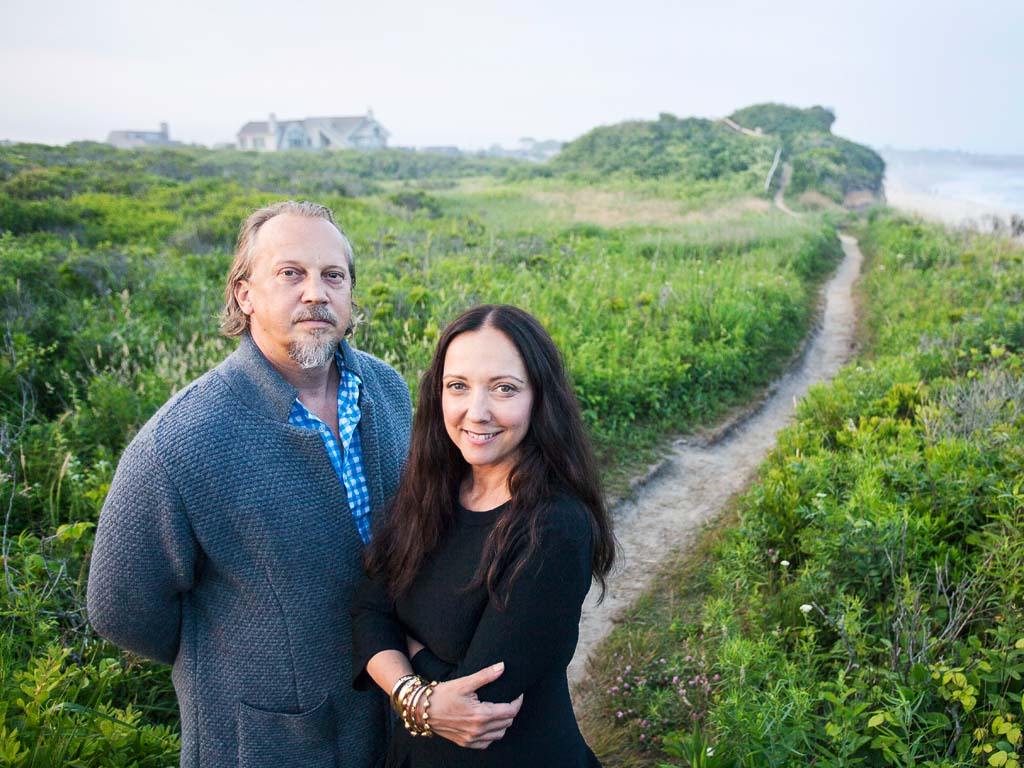
Robin and Stephen work well together. You notice it when the husband-and-wife team talk about modern design. Their answers complement each other without them even being in the same room. “Modern design is at a point that it’s old fashioned,” says Stephan. “I really feel that way. It’s a hundred years old; it’s tired.” Robin elaborates, “Modern design right now is about every day erasing the past. And we cannot continue to erase the past. We cannot take all the objects that are from yesterday and remove them.” “We don’t want to live in white boxes anymore,” explains Stephen. “We always say: the future is dirty! The future has to be dirty!” adds Robin with a smile. „Modern design right now is about every day reason the past. And we cannot continue to erase the past. We cannot take all the objects that are from yesterday and remove them.“ Born in New York, Robin worked many years in film as a visual consultant for Martin Scorsese. Stephan, a Malibu native, is a designer, photographer, painter and illustrator – a creative multi-talent. Their paths crossed in the ’90s in Hollywood – and their journey continued from there. They were in charge of the production design for over 20 films before founding their own company (named for their maternal grandfathers): Roman and Williams Buildings and Interiors. Hollywood picked up on the pair’s talents quickly. Ben Stiller, Kate Hudson and Gwyneth Paltrow have all had interiors designed by Robin and Stephen, and they’ve designed many different locations in New York, such as The Standard and it’s iconic nightclub The Boom Boom Room. Their house in Montauk, surrounded by lush greenery, exemplifies their design philosophy. Artwork meets furnishings and living accessories from global travels, radiating an air of timeless elegance. Paintings from various artists adorn the walls, there are shells on the antique wooden table and the flower arrangements look like they have just been picked from the garden – everything is meant to feel comfortable. Artwork meets furnishings and living accessories from global travels, radiating an air of timeless elegance. “Learning to be as brave with the clients as you are in your private life” is what they learned from this house, says Stephen. Robin, sitting next to him, can only agree: “Yeah.” Read more on FALKE footprints Explore Robin's and Stephen's hidden gems in New York:
READ MORE →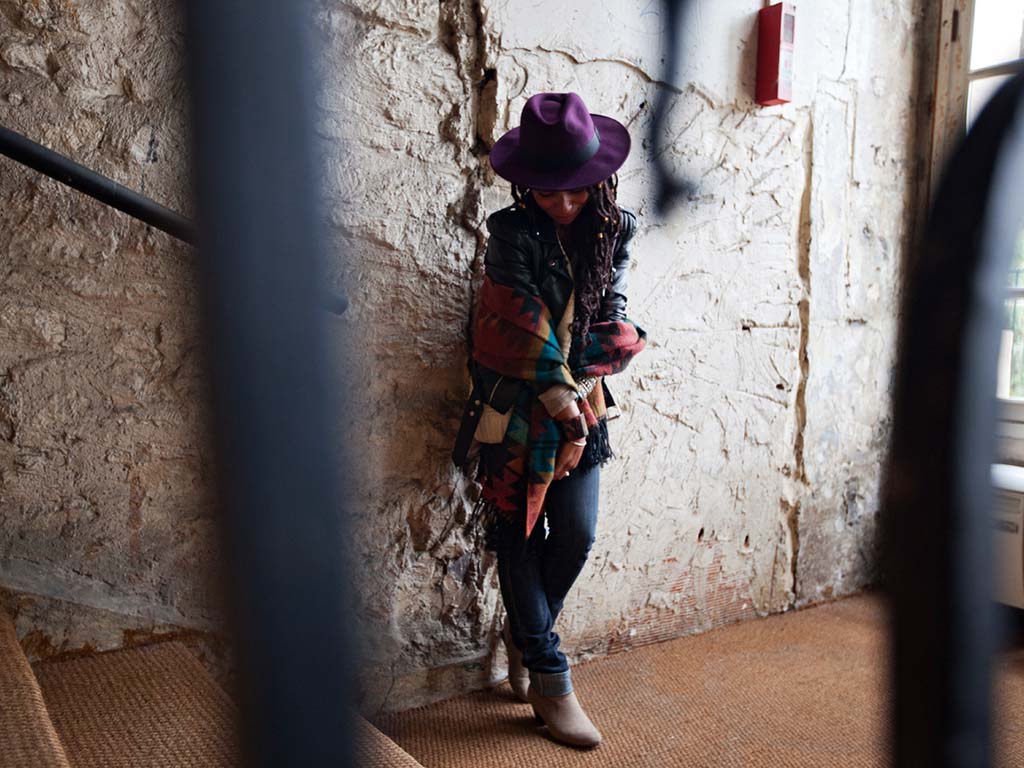
Laëtitia Dana enchants the hearts of Paris with her soulful voice. She’s a young musician who turns the city’s pulse into the beat of her songs. “A young singer needs to be strong and persistent. It’s no straightforward path. It’s complicated. People aren’t going to be jumping to get at you. Never sell out to the commercial stuff, whatever you do! Even if people don’t believe in what you’re doing, as long as you believe in it, you can convince anyone”. Laëtitia is a strong woman. I think she could do anything with her confidence. Thank God she chose music. Who told you you can sing first? “It was my mirror. Then one day my mom heard me and said, ‘Pas mal…not so bad’.” Laëtitia’s mother takes her to a talent show where the five-year-old sings a Creole song with lots of whooping and rhythmic sing-song: “AIihhhhiiiiaaaaiiihhhhh”. Laëtitia takes a deep breath, and suddenly transforms herself. As she lets out her wonderfully silky, soulful voice, her entire body starts to sway. “I always compose in French first. It’s very intimate. I can put my darkest thoughts on paper – they’re between me and my white page. Then I try to formulate the same thoughts in English and I show it to some people, ask them how they like it, do some corrections, et voilà!” Laëtitia comes from a humble background and, like other girls, needs to find work after finishing school. She takes a job as an office worker and keeps singing. “I used to sing on all of my friends’ voicemail. One day an agent heard my voice”. Laëtita gets her chance – she’s booked as the “opening act” for Michael McDonald at the Casino de Paris – a giant concert hall. But Laëtitia doesn’t find anybody who will release her music, so she takes it into her own hands. She founds her own label, FRESH RECORDS. She finances her own studio time, creates her own CDs and sells them herself, earning the money she needs with live performances. After just a few months she’s able to release her new album. Facebook and her growing network do the rest. “Pharcyde’s agent heard of me and asked if I would perform as an opening act for them at the LITTLE CASINO – which was huge. The crowd went nuts. After that we went tour as the opening act for Chestnut in all kinds of French cities, and the audience loved my music. After that, we were offered a contract”. Then Laëtitia starts rapping. Her syncopated singing voice breaks in, as she floats along with the throbbing beat. She’s beat boxing – her entire body vibrating to a deep rhythm, free, without any instrumental accompaniment. Rhythmic breaks push the beat forward, a strong pulse in her ribcage that thumps like a heartbeat. And suddenly it’s there, that big feeling, the excitement that entrances thousands. “When I’m singing, even if I’m singing about dark subjects, like in the song MEANNESS & PROFITS, there is always a touch of optimism. It’s important for me that, at the end of each of my songs, people in the audience have a smile on their faces. I’m an angel that smiles”. Watch the complete video portrait ! Laëtitia Dana showed us her favorite place in Paris ....
READ MORE →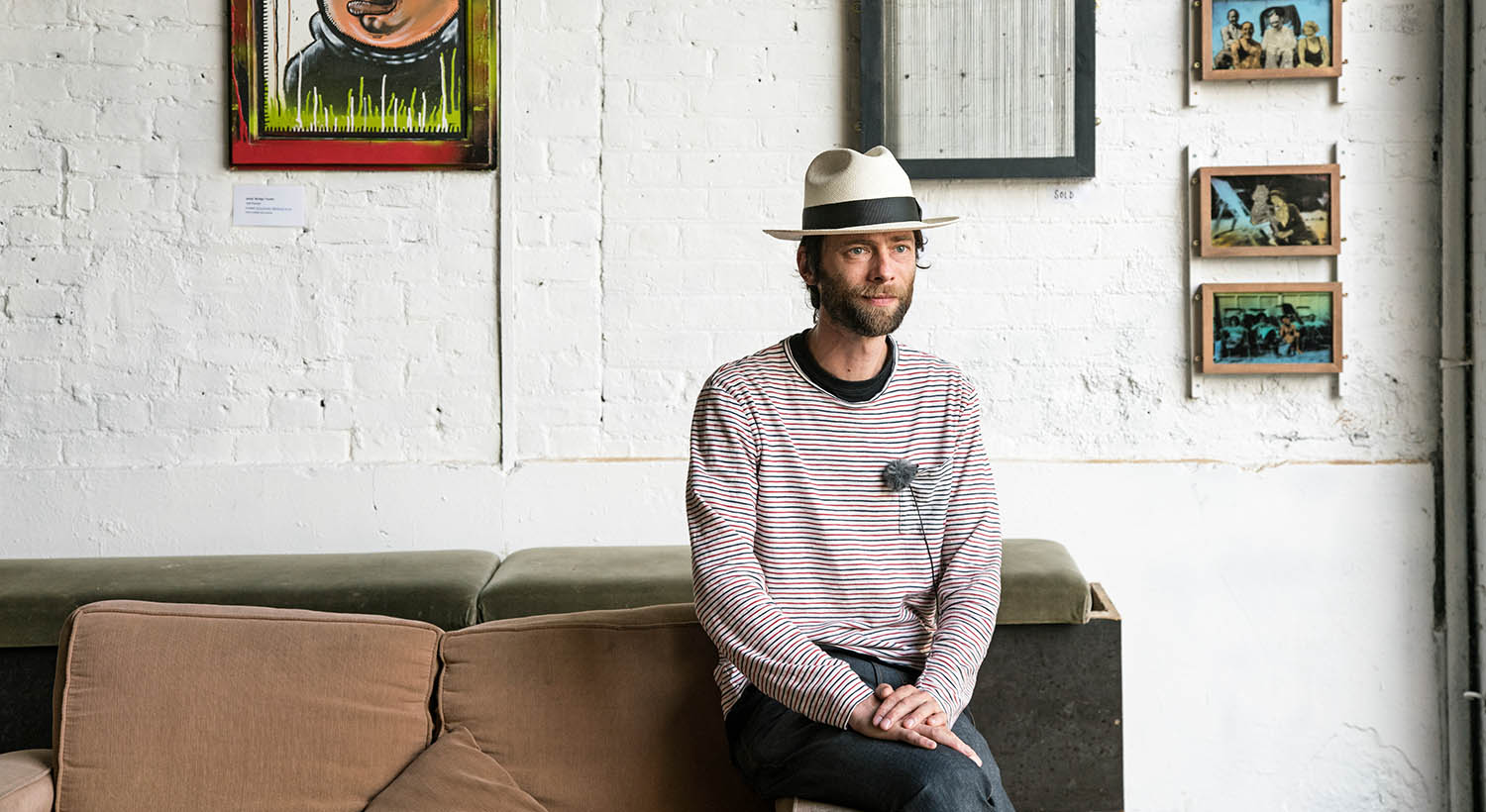
Moritz Waldemeyer is a humble man. So much so that we almost needed to remind him of just how influential his work has been around the world. We waited quite some time – in vain – for him to drop some names, which is why I’m doing it on his behalf: Mercedes-Benz, Audi, Swarovski, Bombay Sapphire, U2, Kylie Minogue and Rihanna. All these are just a few of his clients. He creates bespoke visual installations and costumes using a common element: light. Born in 1974 in Halle, Germany, Moritz left for London to study engineering at the renowned King’s College. Upon graduating, he went to work for Philips in the Netherlands for about three years before heading back to London. It was here that he found his passion for experimenting with light. "Suddenly, I was considered a pioneer." Moritz’s technical background gave him a slight advantage after he got started. Anyone looking to work with flexible lighting – art directors, musicians, architects, designers – began to go to him. Tiny battery-powered LEDs were suddenly put on clothing or the stages of rock concerts, made into giant installations for architecture or advertising or were put on display themselves as artwork. read the full story on the FALKE footprints website
READ MORE →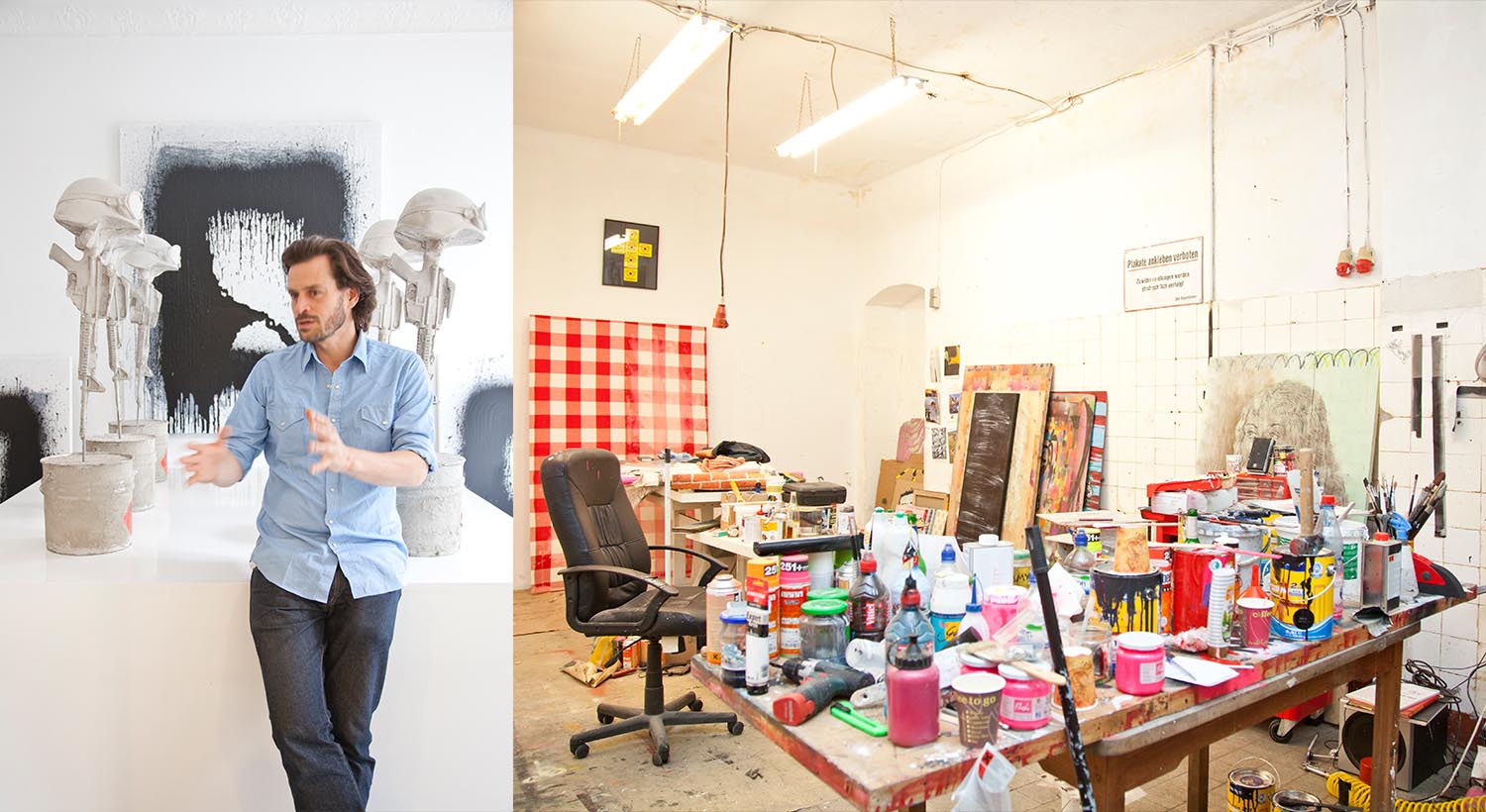
Outside to Inside
Street art in a gallery - isn't that something of a paradox? Marc Scherer doesn't think so. In his ATM Gallery in Kreuzberg he provides a platform for art from the street - and also gets his own hands dirty...
READ MORE →
Greener Act is the first mobile app that allows travellers to participate in local projects and support local causes when travelling the world. By using Greener Act participants and travellers will be able to engage with local organisations and start measuring their own positive impact and simultaneously improve their sustainable profile. By creating Greener Events and Greener Causes, organisations can raise local awareness and accomplish the following 2 objectives: 1) Give travellers the opportunity to discover, explore and engage with the local community; supporting sustainable and socially responsible actions and activities that benefit the local culture, environment and development. 2) Provide organisations a platform to promote and showcase their good practices; create events and causes and allow the traveller to plan from a reliable source of information, their transformative travel experience. Greener Act allows travellers and organisations to participate, promote and share activities through social media, increasing the global awareness for the need to improve the livelihood of local communities, protect the natural environment, whilst contributing to the sustainable development goals of the United Nations. More information and participation on www.greeneract.com Download app for IOS or for Android
READ MORE →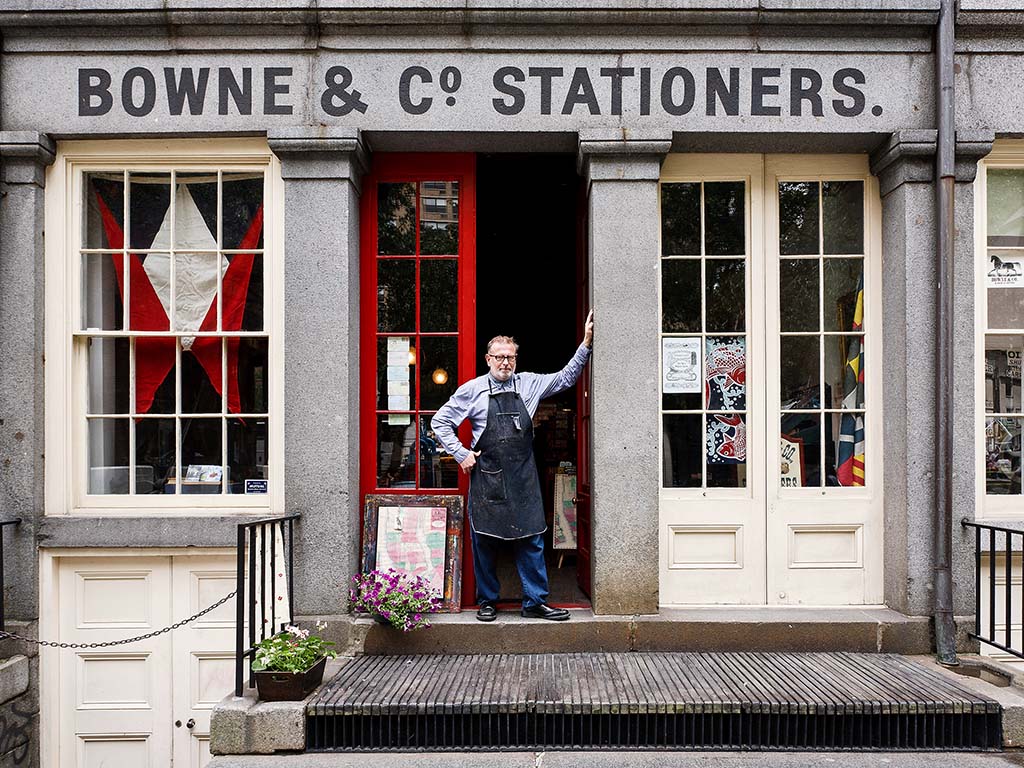
Located in the historic port district of downtown Manhattan, the South Street Seaport Museum preserves the history of the site and tells the intimate story of the port and its symbiotic relationship with New York. The museum resides in the Schermerhorn Row Block, a stretch of 12 houses built by Peter Schermerhorn, a Dutch merchant who ran a ship supply company in the post-Revolutionary War period. The four-story houses, built in a utilitarian Federal style, were heavily frequented as commercial spaces during the various heydays of the port. Completed in 1812, the Schermerhorn Row Block has survived until present day in near perfect condition, despite economic highs and lows and numerous natural disasters. Within the walls of this living artifact, the museum exhibits a collection of paintings by well-known maritime artists, scrimshaw, trade cards, 19th-century figureheads, and other works related to overseas and mercantile pursuits from the 18th to 20th centuries. Walking tours conducted by museum volunteers take the visitor onto cobblestone streets and under the shade of buildings that have stood firm for the last 200 years. Representative of mercantile architecture, in Federal, Georgian, and Greek Revival styles, the interiors of these stately buildings witnessed major formative commercial and social activity. If not for the South Street Seaport Museum, and particularly its founder, Peter Stanford, a Brooklyn native and naval veteran of World War II, the area would not be the center of cultural exchange that it is today. Having returned to its former glory, the port is a testament to the evolution of a city and a country. Established in 1967, the South Street Seaport Museum has brought tourists, retailers, New Yorkers, musicians, and artists to experience a taste of old New York. Even after Hurricane Sandy, when the Schermerhorn Row Block flooded, the museum continued its duties of educational initiatives at Bowne & Co. Stationers, a printing press established in 1775, and aboard two of its ships, the Ambrose and Peking. Around the corner from Bowne, the Maritime Craft Center, run by woodcarver Sal Polisi, gives visitors a taste of old-world building. Weathering the storm like an armada, the museum’s fleet of seven ships—some of which are over a century old—sits harbored in the port. Visitors can board these multi-purpose vessels and schooners, which have been kept in pristine condition. One of them, the Pioneer, built in 1885, still sails around Lower Manhattan and is open to visitors. All proceeds from sales, donations, and special events hosted in any of the museum spaces benefit the programs of the South Street Seaport Museum and contribute to keeping this national institution riding high across the waves of time.
READ MORE →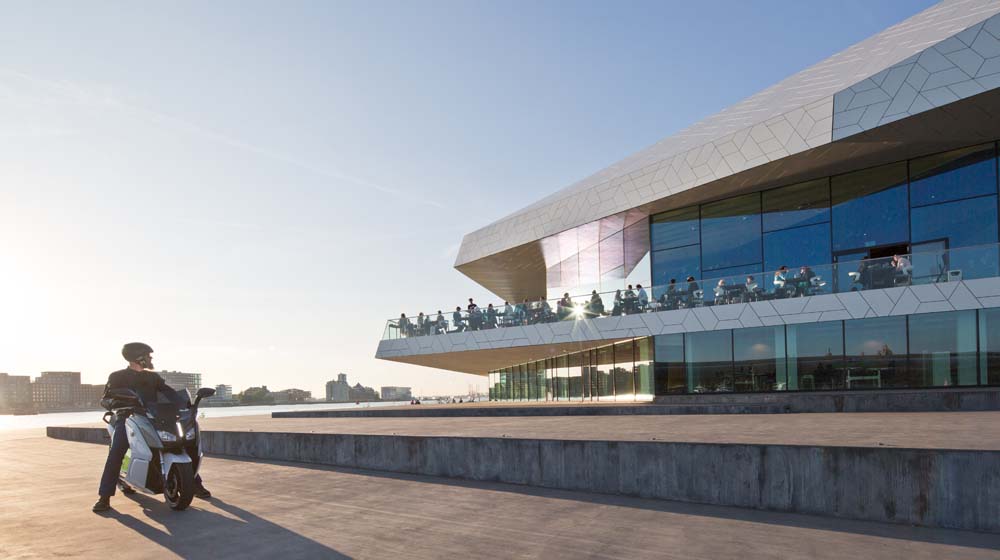
“Maybe I should set up my bed here”, says Martijn van Ooststroom, beaming from ear to ear. By ‘here’, the art historian means his place of work, the Stedelijk Museum 's-Hertogenbosch. It is clear to see that the 46-year-old has turned his passion into his profession. Even as teenager, he enjoyed going to the museum. At 16, he made the decision to study art history. As a marketing and communications manager for the Stedelijk Museum, he is now also infecting others with his enthusiasm for contemporary art. Martijn is just as enthusiastic about the cultural variety of Amsterdam. He showed us his favorite galleries, café, fashion stores and museums. Read the entire portrait Discover Martijns "gems" in Amsterdam
READ MORE →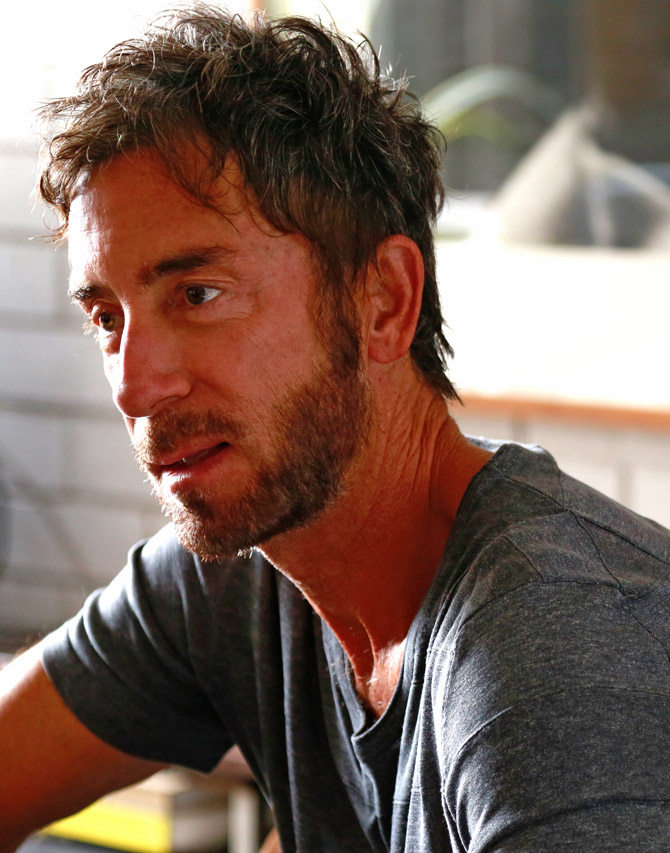
“For me, freedom is mostly being by myself and not having to talk,” says Jean-Marc Houmard. His honesty is disarmingly nonchalant. The 55-year-old is friendly if not a bit reserved. He shows up in jeans, a T-shirt and trainers – this guy is anything but pretentious, it would seem. You can see a twinkle in his eyes when he goes onto his flat’s balcony – which should come as little surprise, considering the superlative views of New York it affords him. There is no question that Jean-Marc loves this city. The Swiss native came here in the mid-’80s as an intern at a law firm. It seemed as if a career as a lawyer was written in stone, until he paid Indochine a visit that is. With a cult-like following, the stars were already flocking here then. This opened a door to a completely new and utterly fascinating world for the then 25-year-old Jean-Marc. He decided to apply as a waiter – and got the job. “Although I had almost no experience,” he adds. But talent, apparently. Gastronomy became his passion. In 1992, he took over Indochine with two partners. In the city that never sleeps, the restaurant serves as a place of consistency for its guests. “The come here and they know what they are getting,” explains Jean-Marc. In 2012, he opened Acme, whose kitchen is helmed by acclaimed Danish chef Mads Refslund, who experiments with the latest trends – drawing in a younger crowd. Tijuana Picnic is his latest project – a Mexican-Asian fusion restaurant. “But to be able to escape [the city] is important as well,” concedes Jean-Marc. He recently opened a luxury boutique hotel in Nicaragua – Tribal. He thinks there is a pretty good possibility he may continue in this direction. “That’s kind of everybody’s dream – to end up on the beach in an exotic place eventually. So I did the first step into that directions and we’ll see where it leads me.” Read more on eMagazine Falke footprints Some of Jean-Marc's recommendations in New York city
READ MORE →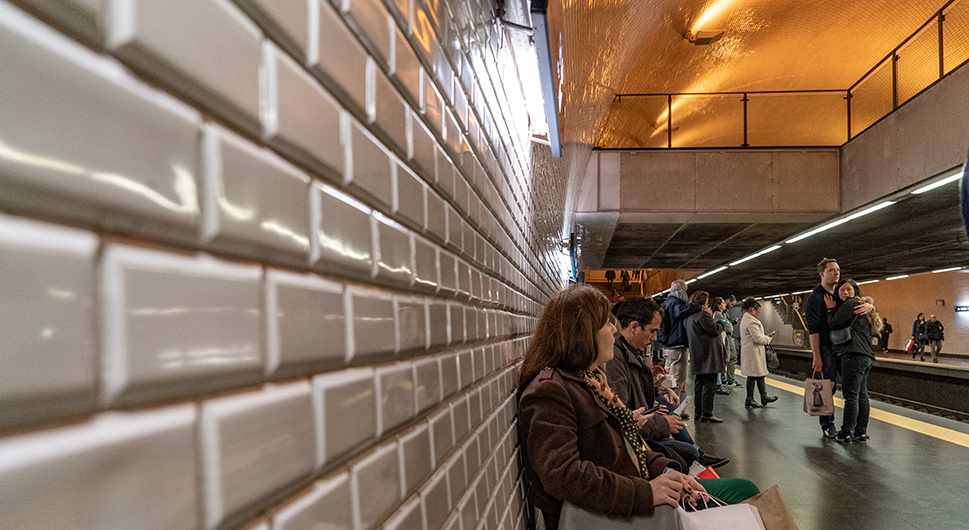
Melody Gardot Lisboa ai Lisboa The sorrow of your days gone byNow the hinterland of lovers should lay Beneath all your vacant skies Lisboa, LisboaFrom Alama's arms to Lisbendade Paper lanterns, falling embers Quiet cantors sing of sandade The ever twilight amber of your alleyways Paint the air of evening oh so well And strolls about the river bank Suggests there's history left to tell Ai Lisboa A paradise beside the sea There's a beauty To the absence of tainting all your scenery Oh oh Lisboa é luz boa Lisboa é Pessoa (também é) Lisboa tem chiado (também tem) Alfama e tem fado Da era severa De um tempo que já era Nas ruas de Lisboa eu vou (eu vou também) Das tuas colinas Milagres e simas Nas praças, rainhas Flores e rimas, eu vou (eu vou) Eu vou L-I-S-B-O-A L-I-S-B-O-A Lisboa L-I-S-B-O-A L-I-S-B-O-A (Lisboa) From her Album "Absence" Listening
READ MORE →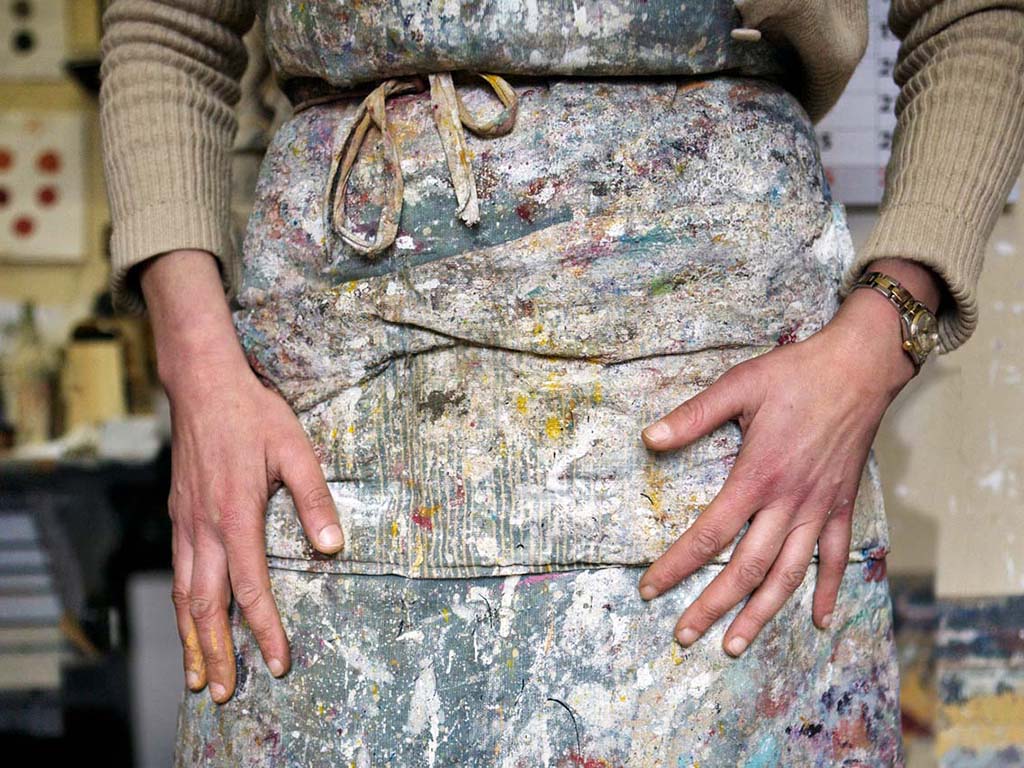
FRANCESCA WEZEL COLOURIST, OWNER OF FRANCESCA’S PAINTS LTD Read the complete article: www.falke-footprints.com Watch the video portrait: www.youtube.com/FalkeFootprints/FrancescaWezel Francesca Wezel is a colour artisan and founder and creative director of Francesca’s Paints. She’s made shades for everyone from Birkenstock to Prince Charles. When creating her colour collections, Francesca is inspired by landscapes and architecture of foreign countries. It’s all about the psychological effect and cultural significance of colours. She is wearing a randomly paint-splashed apron. ‘People have wanted to buy it!’ she says. It’s testament to the hands-on nature of her craft. There’s a little paint in her hair and nails, and she’s justifiably suspicious of the clean artisan. ‘You need to have a little bit of a paint spattering somewhere – it means you’re using the product.’ Francesca is a colourist that makes bespoke paint. She and her business partner Camillo – with her much-loved Tibetan Terrier, Bubu, underfoot – have their office and workshop at the Battersea Business Centre. I AM A COLOURIST – I NEED MY CREATIVE FREEDOM. Francesca has always had a powerful relationship with colour, and she learnt to express this talent and awareness through making paint when she was living and working in Sydney in the mid-1990s. She was trained in her craft at Porter’s Paints, a Sydney-based company that, since the early 1980s, has made premium paints based on the formulas of the founder’s grandfather (Fred Porter). When she left Australia in 1996 and decided to live in England, she interviewed with Farrow & Ball, one of England’s oldest paint companies. But the company wanted her to work with what they already had, rather than creating anew. ‘I am a colourist – I need my creative freedom.’ COLOURS IN DIFFERENT COUNTRIES MEAN DIFFERENT THINGS... MY DREAM IS TO WRITE A BOOK ABOUT THE ANTHROPOLOGY OF COLOUR. The key to using colour, she says, is to use tonal colours that flow. ‘I always say to my clients, “if somebody comes to your house and they go, ‘wow’, you have done too much.”’ Her own home is painted with earthy colours. ‘Brown, orange, terracotta – my bathroom is shocking pink.’ It’s not just the appearance and psychology of colour with which she is concerned. ‘Colours in different countries mean different things.... My dream is to write a book about the anthropology of colour.’ She reveals her favourite spots in London to Cool Cities...
READ MORE →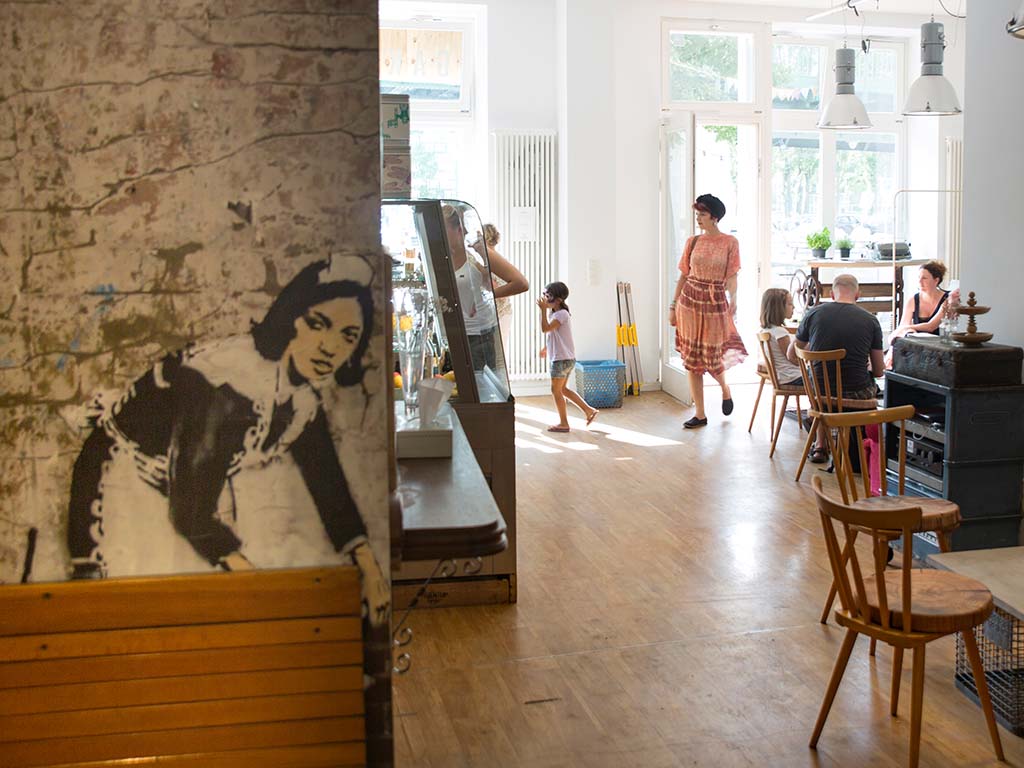
“It is a life-changing decision to have a family. We wanted to have more time for our daughter while realising a life-long dream.” Stanislaw and Kinga seem to be living the modern urban fairytale. “As a carpenter and interior designer, I had worked on various projects, bars, and clubs in Berlin. I was fortunate to get a lot of positive feedback, so I decided to channel my skills into my own project. The timing was perfect. My wife wanted to get away from the startup scene and we decided to take the leap together when she was on maternity leave.” As self-proclaimed foodies, they started gathering ideas an eventually came to the conclusion that their own project was going to place food and indulgence center stage. By chance, they met an artisanal ice cream maker through family, and the rest is history. A perfect addition to the burgeoning scene in Berlin, they developed a concept that focused on handmade ice cream, superfoods, and good coffee. Only the finest ingredients are employed in making their products. The milk comes from local farms that produce in small quantities. Due to high demand, they’ve branched out to no less than ten farms which meet the high quality standards. All of the products, from dairy to the sugar-free chocolate sorbet (perfect for vegans and diabetics), from the barista-made coffee to baked goods are held to their high standards. “I don’t like walking and eating at the same time. I need to sit down, relax, and relish in the moment.” Kinga wanted a place in which people would like to hang out, so Stanislaw furnished the café to be welcoming. He took vintage S-Bahn benches and made them into seats, brought in reclaimed relics from industrial workshops, and unique decorations made from old windows, which were donated by their lawyer. Each piece has its own story—upcycling was paramount in the design. And no ice cream parlor would be complete without an area for the children, an ode to the couple’s daughter. Why Oak & Ice? The couple thinks for a moment. “Oak is a natural and sustainable material that people relate to coziness and tradition. Ice is the base for our main product. We’re just glad to have something that brings a little bit of joy into peoples’ lives. Sustainable joy...that’s it!”
READ MORE →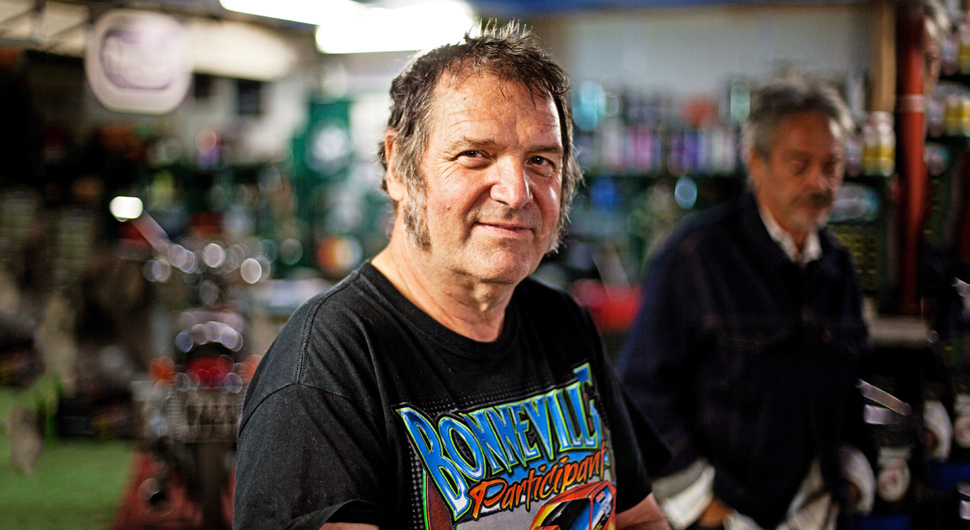
In the ’70s, Marco Raymondin became the first person in France to restore British motorcycles. Today he is a legend. In his grandfather’s workshop, he learned to love the smell of gasoline, the grime and the engine’s vibrations. It is his secret for endless youth. It’s hard to guess Marco’s age. He is wearing a coarse sweater, spotted chinos and he could be a fisherman from Normandy – the kind who doesn’t care about wind and rain as long as he can still go drink a glass of red wine in the evening with his friends. But Marco is no fisherman; he’s a motorcycle rider who turned his great passion into a career 50 years ago. He is cheerful, restless, with thoughts that overtake his English skills. “My father had a friend with a small motorcycle, a 125 cc. He wanted 50 francs for it”. Barely 16, Marco works several weeks at a butcher’s shop so he can afford the machine. He embarks on his first trips in the area, visits England, which is in the middle of a genuine cultural revolution. Marco is fascinated by the energy of the new BEAT GENERATION, its music, its lifestyle and its boisterous yearning for freedom Only a few of them can afford a car, but all have enough for a scooter or a motorcycle. Thus a new status symbol is born. The owners are called MODS or ROCKERS. Some wear ties and military jackets, polishing their two-wheeler like a mother does her silverware. The others follow their rough-and-ready role models, wearing leather outfits – sweaty and oil-smeared – like a second skin. Amongst these hundred motorcycles, which one is the most reliable? “I wouldn’t use ‘reliable’ to describe these machines”. I follow him to a motorcycle that consists only of steel tubing, a motor and the most important mechanical parts. “This is a racing machine. A Triumph T110 from 1955. Special tuning, special transmission, everything special. Doesn’t run on gas, but on methanol. We went to Bonneville, Utah with it, to break the world record. We almost did it”. Marco continues, “196 kilometres per hour was the record. We made it to 194. Then the motorcycle caught fire”. The three men grin, beaming with happiness. That seems to be it, the secret to endless youth. Valentin yells to me loudly, as the rattling becomes more deafening and the room begins to fill with thick wads of smoke, “If you step into this world, you stay 18, forever”. Read the full story at FALKE footprints Raymon and Valentins favourite spots in Paris are:
READ MORE →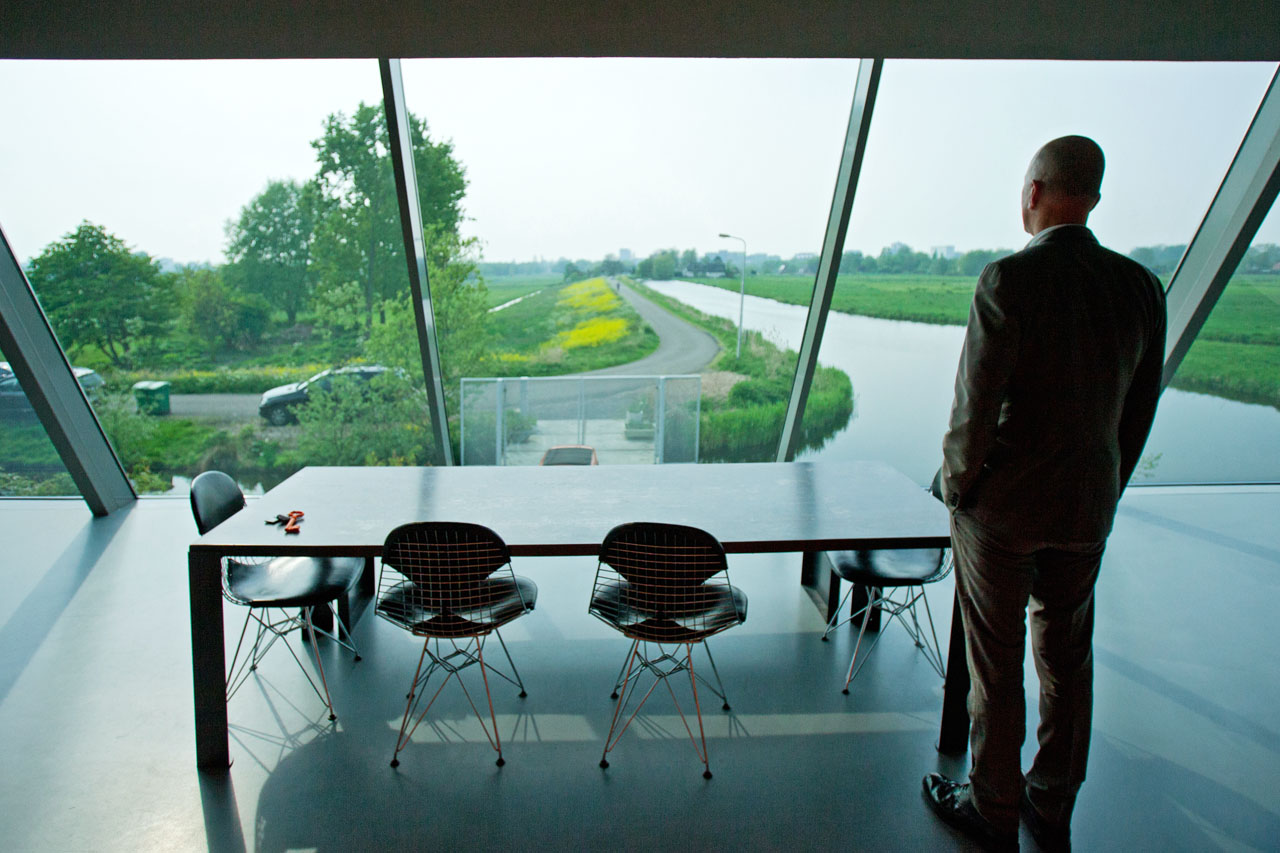
Don Murphy knows what he’s talking about. He came to Amsterdam 20 years ago and stayed. Here he encountered a society in upheaval. A lust for life everywhere and an unbridled desire to dare to try new things, not out of boredom but rather necessity. Space in the Netherlands is a precious resource, whether developed or not. Land is valuable and protected at all costs from drowning in seawater with all the technology available. More than 25 per cent of the Netherlands is below sea level. Development and city planning are a part of the survival of the entire society. The future has already begun here. Don Murphy feels comfortable in these changing times, and has been a prominent figure in theorising new concepts for years. He teaches worldwide as a professor, lecturer or simply works as a commissioned architect. Don Murphy quickly learned that what he wants as an architect could only be executed when he successfully influenced his clients and their opinions strongly from the beginning. He does this effortlessly, it seems – his intensity and expertise are outstanding. He is a passionate debater but never loses himself in unimportant technical jargon, rather always presents his arguments understandably. He even wrote a book about it: self-presentation and the importance of salesmanship for architects. A book that made him very unpopular with his colleagues, due to the fact that it calls the classical understanding of an architect in question. More on FALKE footprints Don Murphy’s recommended locations for Amsterdam:
READ MORE →